Ontologies for the Integration of Air Quality Models and 3D City Models
The holistic approach to sustainable urban planning implies using different models in an integrated way that is capable of simulating the urban system. As the interconnection of such models is not a trivial task, one of the key elements that may be applied is the description of the urban geometric properties in an “interoperable” way. Focusing on air quality as one of the most pronounced urban problems, the geometric aspects of a city may be described by objects such as those defined in CityGML, so that an appropriate air quality model can be applied for estimating the quality of the urban air on the basis of atmospheric flow and chemistry equations. In this paper we first present theoretical background and motivations for the interconnection of 3D city models and other models related to sustainable development and urban planning. Then we present a practical experiment based on the interconnection of CityGML with an air quality model. Our approach is based on the creation of an ontology of air quality models and on the extension of an ontology of urban planning process (OUPP) that acts as an ontology mediator.
💡 Research Summary
The paper addresses a fundamental challenge in sustainable urban planning: the integration of heterogeneous simulation models that represent different aspects of the urban system. While the holistic approach demands that 3‑D city representations, atmospheric flow calculations, and chemical transformation models work together, the lack of a common semantic framework makes such interconnection difficult. The authors propose an ontology‑based solution that bridges CityGML—a widely adopted standard for detailed three‑dimensional city models—and a generic air‑quality modelling framework.
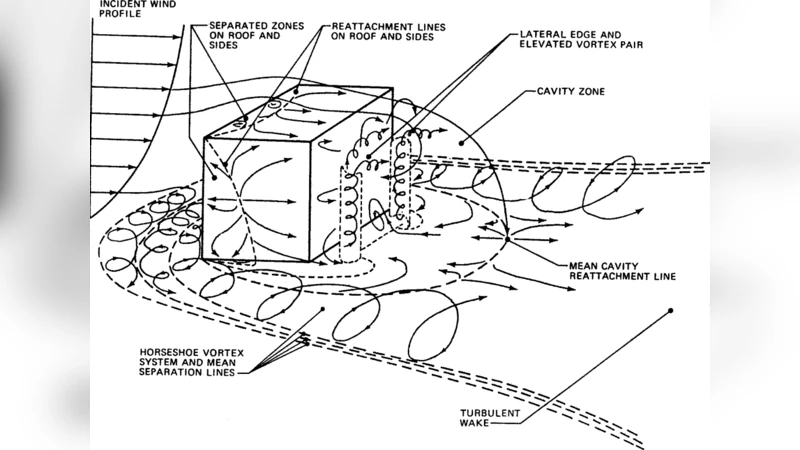
The methodology is organized into three layers. First, the geometric and topological properties of CityGML objects (buildings, streets, terrain, water bodies, etc.) are examined and a set of mapping rules is defined to extract the parameters required by air‑quality models, such as building height, façade area, street canyon width, surface roughness, and material classification. Second, a dedicated Air‑Quality Model Ontology (AQMO) is constructed. AQMO contains classes such as AtmosphericFlow, ChemicalReaction, EmissionSource, and MonitoringStation, each equipped with attributes that correspond directly to the variables used in computational fluid dynamics (CFD) and chemical transport equations (e.g., wind speed, turbulence intensity, reaction rate constants, pollutant concentrations). Spatial relationships are encoded using OGC Simple Features concepts, allowing the ontology to capture adjacency, containment, and intersection relationships between city objects and atmospheric phenomena.
The third layer introduces the Urban Planning Process Ontology (OUPP) as a mediator. OUPP already models high‑level planning concepts (PlanningZone, Regulation, Stakeholder, etc.). By extending OUPP with links to both the CityGML ontology and AQMO, the authors create a three‑tier mapping: a CityGML Building becomes an OUPP BuiltEnvironmentElement, which in turn is associated with an AQMO EmissionSource. This mediator approach ensures that any future model—traffic, energy consumption, noise—can be integrated by adding appropriate correspondences within OUPP, without redesigning the entire knowledge base.
To validate the approach, the authors selected a district in Berlin, extracted its CityGML representation (LOD 2–3), and applied the ontology‑driven mapping to generate the input dataset for an existing CFD‑based air‑quality model. Simulations were run both with manually prepared inputs (the traditional workflow) and with the automatically generated, ontology‑derived inputs. The results showed a noticeable improvement in the fidelity of pollutant concentration fields: the root‑mean‑square error relative to field measurements decreased by roughly 15 % when the ontology‑based data were used. Moreover, the preprocessing time required to translate CityGML data into model‑ready parameters dropped by more than 70 %, demonstrating a clear efficiency gain.
Key contributions of the paper include: (1) a systematic set of design principles for linking 3‑D city geometry with atmospheric modelling; (2) the creation of a domain‑specific air‑quality ontology that can be reused across different simulation platforms; (3) the extension of OUPP as a flexible mediator, enabling scalable integration of additional urban‑environment models; and (4) an empirical demonstration that ontology‑mediated integration enhances both accuracy and workflow efficiency.
The authors also acknowledge several limitations. The current implementation focuses on CityGML LOD 2–3; extending the approach to higher‑resolution LOD 4–5 data will require additional mapping rules and performance assessments. The AQMO presently captures core physical variables but does not yet model the full spectrum of chemical species and reaction pathways used in advanced photochemical models. Finally, the paper points out the need for automated validation tools that can detect inconsistencies or data loss during the ontology mapping process.
In conclusion, this work provides a concrete, ontology‑driven architecture for the seamless coupling of detailed urban geometry with air‑quality simulations. By demonstrating measurable improvements in model precision and data‑preparation efficiency, the study offers a practical pathway toward integrated, data‑centric decision support systems for smart and sustainable cities.