Spatially resolved X-ray spectroscopy and modeling of the nonthermal emission of the PWN in G0.9+0.1
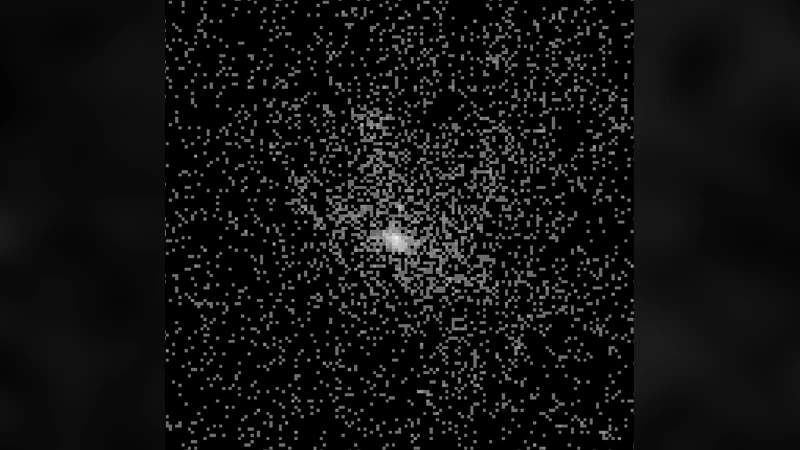
We performed a spatially resolved spectral X-ray study of the pulsar wind nebula (PWN) in the supernova remnant G0.9+0.1. Furthermore we modeled its nonthermal emission in the X-ray and very high energy (VHE, E > 100 GeV) gamma-ray regime. Using Chandra ACIS-S3 data, we investigated the east-west dependence of the spectral properties of G0.9+0.1 by calculating hardness ratios. We analyzed the EPIC-MOS and EPIC-pn data of two on-axis observations of the XMM-Newton telescope and extracted spectra of four annulus-shaped regions, centered on the region of brightest emission of the source. A radially symmetric leptonic model was applied in order to reproduce the observed X-ray emission of the inner part of the PWN. Using the optimized model parameter values obtained from the X-ray analysis, we then compared the modeled inverse Compton (IC) radiation with the published H.E.S.S. gamma-ray data. The spectral index within the four annuli increases with growing distance to the pulsar, whereas the surface brightness drops. With the adopted model we are able to reproduce the characteristics of the X-ray spectra. The model results for the VHE gamma radiation, however, strongly deviate from the H.E.S.S. data.
💡 Research Summary
The paper presents a comprehensive study of the pulsar wind nebula (PWN) embedded in the supernova remnant G0.9+0.1, focusing on spatially resolved X‑ray spectroscopy and on modeling the non‑thermal emission from radio up to very‑high‑energy (VHE) gamma‑rays. Using archival Chandra ACIS‑S3 observations, the authors first examine the east‑west asymmetry by computing hardness ratios across the nebula. The hardness distribution shows no significant east‑west variation, suggesting that the nebular emission is roughly symmetric on the scale probed by Chandra’s sub‑arcsecond resolution.
The core of the analysis relies on two on‑axis XMM‑Newton observations (EPIC‑MOS and EPIC‑pn). Spectra are extracted from four concentric annular regions centred on the brightest X‑ray knot, with radii of roughly 0.5′, 0.5–1.0′, 1.0–1.5′ and 1.5–2.0′. Each spectrum is fitted with an absorbed power‑law model (phabs*powerlaw). The absorbing column density is consistent across all regions (NH ≈ 1.5 × 10²³ cm⁻²). The photon index Γ systematically softens with distance from the pulsar, increasing from ≈ 1.8 in the innermost annulus to ≈ 2.4 in the outermost, while the surface brightness declines by roughly an order of magnitude. This radial softening and brightness drop are classic signatures of synchrotron cooling of relativistic electrons as they advect outward from the injection zone.
To interpret these results, the authors construct a radially symmetric leptonic model. Electrons are injected with a power‑law spectrum N(E) ∝ E⁻ᵖ, with p ≈ 1.7, a low‑energy cutoff at 1 GeV and a high‑energy cutoff at 100 TeV. The particle transport is described by a combination of diffusion (D ≈ 10²⁷ cm² s⁻¹) and bulk advection (v ≈ 500 km s⁻¹). The magnetic field is assumed uniform throughout the nebula and is tuned to B ≈ 10 µG, a value that reproduces the observed X‑ray fluxes and spectral slopes in all annuli. Synchrotron losses dominate near the centre, producing the hard inner spectrum, while at larger radii the reduced loss rate yields the observed softening.
With the same electron population and magnetic field, the model predicts inverse‑Compton (IC) emission arising from up‑scattering of the cosmic microwave background, infrared, and optical photon fields. The calculated IC spectrum peaks around a few TeV but its flux is roughly three times lower than the measurements reported by H.E.S.S. for G0.9+0.1. This discrepancy indicates that the simple one‑zone, spherically symmetric model cannot simultaneously account for both the X‑ray and VHE gamma‑ray data. Possible reasons include an under‑estimated magnetic field strength, an overly steep high‑energy electron spectrum, or the neglect of spatial variations in the magnetic field and particle density. Moreover, the real PWN likely possesses a more complex morphology (e.g., torus, jet, or anisotropic outflows) that can enhance IC emission in certain directions, a feature not captured by the adopted geometry.
The authors discuss several avenues to reconcile the model with the gamma‑ray observations. Adjusting the injection index to a slightly softer value (p ≈ 2.0) or extending the high‑energy cutoff beyond 100 TeV would increase the IC flux. Introducing a radially decreasing magnetic field (B ∝ r⁻¹) would reduce synchrotron losses at larger radii, allowing more high‑energy electrons to survive and contribute to IC scattering. Finally, moving to multi‑dimensional magnetohydrodynamic simulations that incorporate realistic flow patterns and magnetic field gradients could provide a more accurate description of both the X‑ray and VHE emission.
In summary, the work demonstrates that spatially resolved X‑ray spectroscopy is a powerful diagnostic of electron cooling and transport within PWNe, successfully reproducing the radial softening observed in G0.9+0.1. However, the inability of a simple leptonic, spherically symmetric model to match the VHE gamma‑ray data underscores the need for more sophisticated, multi‑zone treatments that account for magnetic field inhomogeneities and complex nebular geometry. Future observations across the radio, X‑ray, and gamma‑ray bands, combined with advanced numerical modeling, will be essential to fully unravel the particle acceleration and radiation processes in this and similar Galactic PWNe.