X-Ray Searches for Solar Axions
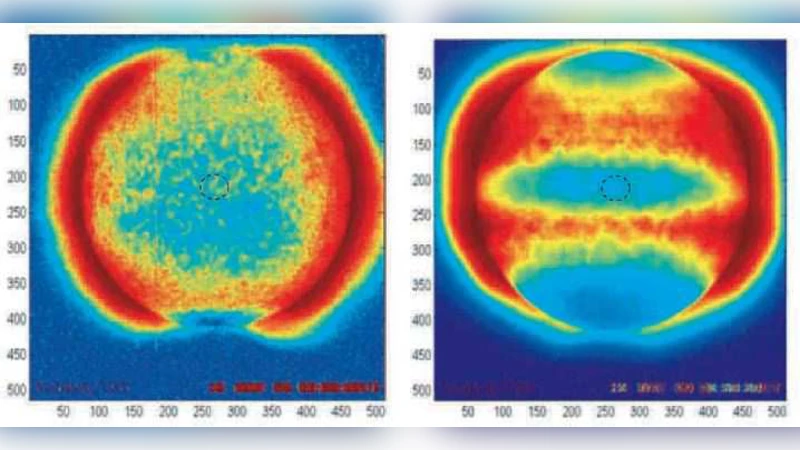
Axions generated thermally in the solar core can convert nearly directly to X-rays as they pass through the solar atmosphere via interaction with the magnetic field. The result of this conversion process would be a diffuse centrally-concentrated source of few-keV X-rays at disk center; it would have a known dimension, of order 10% of the solar diameter, and a spectral distribution resembling the blackbody spectrum of the solar core. Its spatial structure in detail would depend on the distribution of mass and field in the solar atmosphere. The brightness of the source depends upon these factors as well as the unknown coupling constant and the unknown mass of the axion; this particle is hypothetical and no firm evidence for its existence has been found yet. We describe the solar magnetic environment as an axion/photon converter and discuss the upper limits obtained by existing and dedicated observations from three solar X-ray observatories: Yohkoh, RHESSI, and Hinode
💡 Research Summary
This paper investigates the possibility of detecting solar axions—hypothetical low‑mass particles originally proposed to solve the QCD θ‑problem—through their conversion into X‑rays in the Sun’s atmosphere. Axions are expected to be thermally produced in the solar core via the Primakoff process, yielding a spectrum that mirrors a black‑body at the core temperature (≈1.3 keV). When these axions traverse regions of magnetic field in the solar transition region and corona, the axion‑photon coupling term (gₐγγ a F · F̃) enables a conversion probability Pₐ→γ that depends on the magnetic field strength B, the path length L, the axion mass mₐ, and the photon energy E. For typical solar atmospheric parameters (B ≈ 10–100 G, L ≈ 10⁴ km) and axion masses below ≈10 meV, the momentum mismatch q ≈ mₐ²/(2E) is small enough that the conversion remains coherent, leading to an appreciable conversion efficiency.
The authors model the expected X‑ray signal as a diffuse, centrally‑concentrated source covering roughly 10 % of the solar diameter (≈7 × 10⁴ km). Its spatial profile is dictated by the distribution of magnetic field and plasma density, while its spectral shape follows the core black‑body distribution, peaking in the few‑keV range. Detecting such a faint, extended source requires high‑sensitivity, low‑background solar X‑ray observations with good angular resolution.
To search for this signature, the paper re‑analyses archival data from three solar X‑ray missions:
-
Yohkoh/SXT – Provides long‑duration images in the 0.25–4 keV band. The authors select quiet‑Sun intervals, exclude flares and micro‑flares, and construct stacked images to improve the signal‑to‑noise ratio.
-
RHESSI – Offers coverage from 3–30 keV with high spectral resolution but uses rotating modulation collimators, which introduce complex imaging systematics. The analysis focuses on periods of low solar activity and applies sophisticated de‑modulation techniques to retrieve spatial information.
-
Hinode/XRT – Features modern CCD detectors with low background and a broad 0.2–10 keV response. Its superior point‑spread function allows a precise measurement of the central brightness profile.
For each instrument, the authors generate synthetic axion‑induced X‑ray maps using realistic magnetic‑field models (both simple dipole approximations and data‑driven MHD simulations). They then compare the observed radial intensity profiles with the simulated ones, employing χ² minimisation and Bayesian inference to place upper limits on the coupling constant gₐγγ as a function of axion mass.
The resulting constraints are gₐγγ ≲ (5–8) × 10⁻¹¹ GeV⁻¹ at 95 % confidence for mₐ ≲ 10 meV. These limits are comparable to, though slightly weaker than, those obtained by the CAST helioscope, but they are derived from a completely independent astrophysical method that exploits the Sun itself as a gigantic axion‑photon converter.
The discussion highlights several sources of systematic uncertainty: the assumed magnetic‑field topology, the plasma density profile, instrumental background modelling, and the treatment of solar variability. The authors argue that future missions—such as Solar Orbiter/STIX, the FOXSI sounding‑rocket experiment, and next‑generation solar X‑ray telescopes with higher angular resolution and lower detector noise—could improve the sensitivity to gₐγγ ≈ 10⁻¹¹ GeV⁻¹. Moreover, incorporating state‑of‑the‑art three‑dimensional MHD simulations of the solar corona would refine the conversion probability calculations, especially for axion masses where the coherence length becomes comparable to magnetic‑field scale lengths.
In conclusion, the paper demonstrates that solar X‑ray observations constitute a viable and complementary avenue for axion searches. While no positive detection is reported, the derived upper limits contribute valuable constraints to the axion parameter space and motivate further coordinated efforts between solar physics and particle astrophysics to exploit forthcoming high‑performance solar observatories.