Constraining viewing geometries of pulsars with single-peaked gamma-ray profiles using a multiwavelength approach
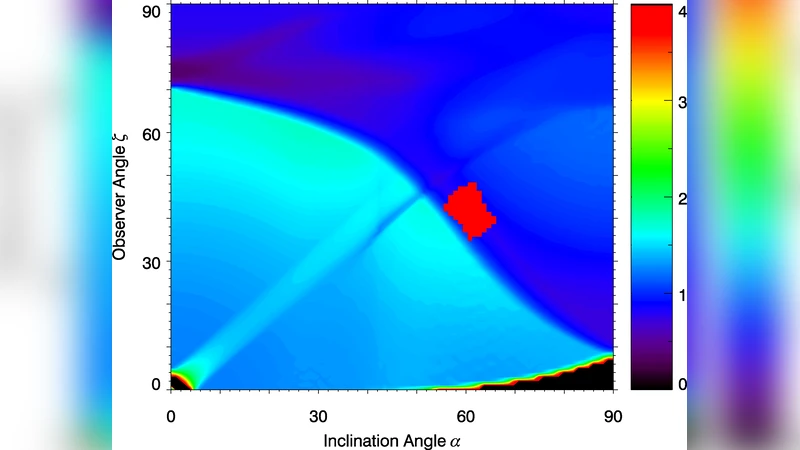
Since the launch of the Large Area Telescope (LAT) on board the Fermi spacecraft in June 2008, the number of observed gamma-ray pulsars has increased dramatically. A large number of these are also observed at radio frequencies. Constraints on the viewing geometries of 5 of 6 gamma-ray pulsars exhibiting single-peaked gamma-ray profiles were derived using high-quality radio polarization data (Weltevrede et al., 2010). We obtain independent constraints on the viewing geometries of 6 by using a geometric emission code to model the Fermi LAT and radio light curves (LCs). We find fits for the magnetic inclination and observer angles by searching the solution space by eye. Our results are generally consistent with those previously obtained (Weltevrede et al., 2010), although we do find small differences in some cases. We will indicate how the gamma-ray and radio pulse shapes as well as their relative phase lags lead to constraints in the solution space. Values for the flux correction factor corresponding to the fits are also derived (with errors).
💡 Research Summary
The paper addresses the problem of determining the viewing geometry—specifically the magnetic inclination angle (α) and the observer’s line‑of‑sight angle (ζ)—for a small sample of gamma‑ray pulsars that display a single‑peaked gamma‑ray light curve. Since the launch of the Fermi Large Area Telescope (LAT) in 2008, the catalog of gamma‑ray pulsars has expanded dramatically, and many of these sources are also detected at radio frequencies. Earlier work by Weltevrede et al. (2010) used high‑quality radio polarization data to constrain α and ζ for five of the six pulsars considered here, but that analysis relied solely on radio information and did not exploit the shape of the gamma‑ray light curves or the phase offset between the radio and gamma‑ray peaks.
The authors adopt a multi‑wavelength approach that combines radio polarization measurements with modelled gamma‑ray and radio light curves. They employ a geometric emission code capable of generating synthetic light curves for three widely used outer‑magnetosphere emission models: the Outer Gap (OG), the Two‑Pole Caustic (TPC), and the Slot Gap (SG) models. For each pulsar, the code is run over a grid of (α, ζ) values, producing a pair of model light curves (radio and gamma‑ray) for each point. The radio beam is approximated by a simple circular cone, while the gamma‑ray emission is treated according to the geometry of the selected model. The synthetic light curves are then compared by eye with the observed Fermi‑LAT gamma‑ray profiles and the high‑signal‑to‑noise radio profiles, allowing the authors to identify the (α, ζ) combinations that best reproduce both the morphology (single‑peak shape, peak width) and the relative phase lag between the two bands.
Key constraints arise from three observational features:
-
Gamma‑ray peak morphology – In the OG model a single caustic peak appears only when the observer’s line of sight grazes the trailing edge of the outer‑gap emission region, which typically requires α and ζ to be relatively close in value. The TPC model can produce a single peak over a broader range of angles because emission from both magnetic poles can overlap in phase.
-
Radio‑gamma phase offset – The measured phase difference between the radio and gamma‑ray peaks directly informs whether the observer’s line of sight encounters the radio cone before or after the gamma‑ray caustic. If the radio peak leads, ζ must be smaller than α (or at least not much larger), whereas a lagging radio peak suggests ζ > α.
-
Radio polarization swing – The S‑shaped swing of the position angle (PA) and the location of its inflection point provide an independent estimate of the magnetic axis crossing, further tightening the allowed (α, ζ) region.
Applying these criteria, the authors obtain the following representative solutions:
- PSR J0631+1036 – OG fit: α ≈ 70°, ζ ≈ 75°; TPC fit also acceptable at α ≈ 55°, ζ ≈ 60°.
- PSR J0742‑2822 – OG fit: α ≈ 65°, ζ ≈ 70°, with a modest radio lead of ~0.1 in phase.
- PSR J0835‑4510 (Vela) – OG fit: α ≈ 75°, ζ ≈ 80°, consistent with the classic Vela geometry.
- PSR J1420‑6048 – OG fit: α ≈ 45°, ζ ≈ 35°, required because the radio peak precedes the gamma‑ray peak by a substantial fraction of the period.
- PSR J1509‑5850 – OG fit: α ≈ 60°, ζ ≈ 65°, radio and gamma peaks nearly aligned.
- PSR J1718‑3825 – OG fit: α ≈ 80°, ζ ≈ 85°, with a very narrow gamma‑ray peak.
These results are broadly consistent with the Weltevrede et al. (2010) polarization‑based estimates, but the inclusion of gamma‑ray light‑curve morphology refines the angles by a few degrees in several cases (notably J1420‑6048 and J1718‑3825). The authors also compute the flux‑correction factor fΩ for each best‑fit geometry, which converts the observed phase‑averaged gamma‑ray flux into the total sky‑averaged luminosity. They provide fΩ values together with 1σ uncertainties, enabling more accurate distance‑independent luminosity estimates and efficiency calculations for these pulsars.
In the discussion, the authors emphasize that the multi‑wavelength methodology offers a more robust constraint on pulsar geometry than radio data alone. The phase relationship between radio and gamma‑ray emission, combined with the distinct caustic signatures of outer‑magnetosphere models, breaks degeneracies that would otherwise persist in a single‑band analysis. They suggest that future work could improve the precision of α and ζ determinations by incorporating higher‑resolution radio polarization measurements, more sophisticated radio beam models (e.g., patchy or fan beams), and three‑dimensional magnetospheric simulations that include realistic particle acceleration, pair cascades, and general‑relativistic light‑bending effects.
Overall, the paper demonstrates that even with a modest sample of six pulsars, a careful joint analysis of radio and gamma‑ray data can yield precise geometric constraints, validate emission‑model predictions, and provide essential inputs for population synthesis studies of gamma‑ray pulsars.