Scaling of Congestion in Small World Networks
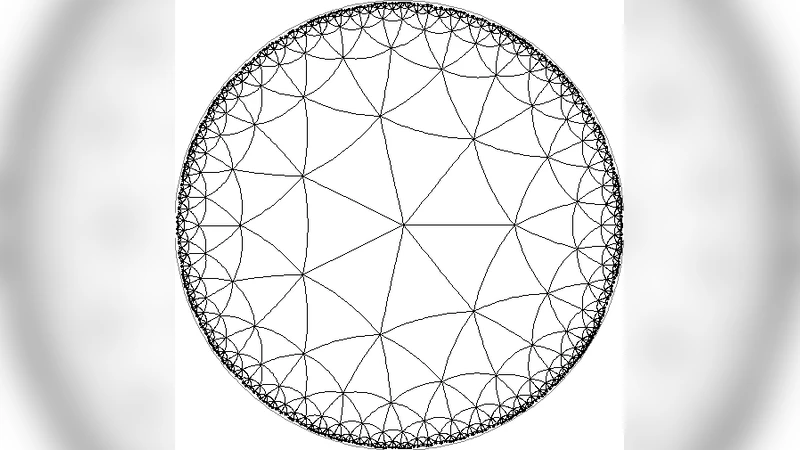
In this report we show that in a planar exponentially growing network consisting of $N$ nodes, congestion scales as $O(N^2/\log(N))$ independently of how flows may be routed. This is in contrast to the $O(N^{3/2})$ scaling of congestion in a flat polynomially growing network. We also show that without the planarity condition, congestion in a small world network could scale as low as $O(N^{1+\epsilon})$, for arbitrarily small $\epsilon$. These extreme results demonstrate that the small world property by itself cannot provide guidance on the level of congestion in a network and other characteristics are needed for better resolution. Finally, we investigate scaling of congestion under the geodesic flow, that is, when flows are routed on shortest paths based on a link metric. Here we prove that if the link weights are scaled by arbitrarily small or large multipliers then considerable changes in congestion may occur. However, if we constrain the link-weight multipliers to be bounded away from both zero and infinity, then variations in congestion due to such remetrization are negligible.
💡 Research Summary
The paper investigates how congestion scales in networks that exhibit the small‑world property, focusing on the interplay between planarity, growth rate, and link‑weight remetrization. The authors first consider a planar graph whose number of nodes grows exponentially with the graph radius (i.e., a “planar exponentially growing network”). By analyzing any possible routing scheme, they prove a lower bound: at least one vertex must carry traffic on the order of N² / log N when the network contains N nodes. The proof hinges on two facts: planarity forbids edge crossings, forcing all long‑distance routes to share a narrow “core” region, while exponential growth makes the node density drop sharply with distance, concentrating many source‑destination pairs through that core. This result dramatically exceeds the previously known O(N³⁄²) congestion bound for flat, polynomially growing planar networks, showing that the small‑world effect alone does not guarantee low congestion.
Next, the authors drop the planarity requirement and examine generic small‑world graphs, defined only by having average shortest‑path lengths that grow logarithmically with N. They demonstrate that for any arbitrarily small ε > 0 one can construct a small‑world network whose congestion scales as O(N^{1+ε}). The construction typically adds a modest number of long‑range shortcuts or embeds the graph in a higher‑dimensional space, thereby dispersing traffic across many alternative routes. This shows that, without the geometric restriction of planarity, the small‑world property can be compatible with near‑linear congestion scaling, far better than the exponential‑planar case.
The third major contribution concerns routing restricted to geodesic (shortest‑path) flows and the effect of scaling link weights. If each edge weight w(e) is multiplied by a factor λ that may be arbitrarily small or large, the set of shortest‑path routes can change dramatically, leading to potentially huge variations in congestion. However, the authors prove that when λ is confined to a bounded interval
Comments & Academic Discussion
Loading comments...
Leave a Comment