Is dislocation flow turbulent in deformed crystals?
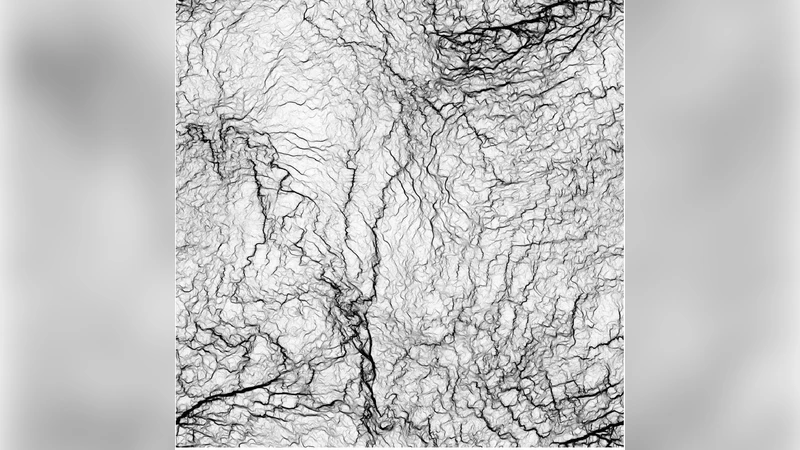
Intriguing analogies were found between a model of plastic deformation in crystals and turbulence in fluids. A study of this model provides remarkable explanations of known experiments and predicts fractal dislocation pattern formation. Further, the challenges encountered resemble those in turbulence, which is exemplified in a comparison with the Rayleigh-Taylor instability.
💡 Research Summary
**
The paper investigates whether the collective motion of dislocations in deformed crystals exhibits turbulence‑like behavior. The authors employ a Continuum Dislocation Dynamics (CDD) model in which the dislocation density tensor ρᵢⱼ evolves according to a nonlinear, non‑local partial differential equation (PDE):
∂ₜρᵢⱼ – εᵢₘₙ∂ₘ(εₙℓₖV_ℓρₖⱼ) = ν∂⁴ρᵢⱼ.
Here V_ℓ is proportional to the long‑range stress field generated by other dislocations plus any external stress, and ν is an artificial fourth‑order diffusion term added for numerical stability. The equation is intrinsically nonlinear, contains mixed hyperbolic‑parabolic character, and enforces glide‑plane constraints.
To draw an analogy with fluid turbulence, the authors compare the CDD equation with the compressible Navier–Stokes equations:
ρ(∂ₜv + v·∇v) = μ∇²v + f,
where μ is the dynamic viscosity (inverse of the Reynolds number). Both systems become “highly turbulent” when the dissipative term (ν or μ) tends to zero, leading to the formation of sharp gradients: δ‑function‑like dislocation walls in CDD and shock‑type density jumps (sonic booms) in fluids.
Numerically, the CDD equation is solved with a second‑order central upwind scheme and a generalized approximate Riemann solver, while the Navier–Stokes equations are integrated using the PLUTO code with a Roe approximate Riemann solver. Both solvers are designed to handle discontinuities, yet the authors find that as the grid spacing h → 0 (or ν, μ → 0) the solutions do not converge in the traditional L₂ sense. They quantify this by computing the L₂ norm of the difference between solutions at successive resolutions, ||ρ₂ᴺ – ρᴺ||₂. Initially the norm decays rapidly, but after a short transient (t ≈ 0.02–0.2) it grows, indicating that finer grids produce increasingly different fields. This non‑convergence is attributed to the emergence of singular structures (sharp dislocation walls, shock fronts) that are not uniquely defined by the continuum equations alone.
Despite the lack of pointwise convergence, statistical measures—such as the dislocation‑density correlation function, the energy spectrum, and velocity‑velocity correlations—exhibit robust power‑law scaling that is independent of grid resolution. This mirrors the practice in turbulence research, where the focus is on statistical invariants (e.g., Kolmogorov’s –5/3 law) rather than exact solutions of the Navier–Stokes equations.
To make the analogy concrete, the authors simulate the Rayleigh–Taylor instability in the Navier–Stokes framework. The instability creates interfacial “bubbles” and “spikes” that evolve into complex, self‑similar vortex structures, visually reminiscent of the fractal dislocation cell walls generated by the CDD model. As with the dislocation simulations, the Rayleigh–Taylor flow shows non‑convergence of the detailed field with decreasing h, yet its statistical properties (e.g., scaling of the interface width) remain consistent.
The paper concludes that while dislocation flow does not obey the same microscopic dynamics as fluid turbulence, the two systems share key hallmarks of nonlinear PDEs: multiscale structure formation, sensitivity to dissipative regularization, and the emergence of universal statistical laws. Consequently, describing dislocation dynamics as “turbulent” is useful for conceptual understanding and for guiding the analysis of experimental data, especially when focusing on statistical descriptors rather than exact field configurations. The work highlights the need for careful interpretation of continuum models that generate singularities, and it suggests that future progress will rely on statistical convergence and possibly on incorporating microscale physics to select physically relevant weak solutions.
Comments & Academic Discussion
Loading comments...
Leave a Comment