Rationality, irrationality and escalating behavior in lowest unique bid auctions
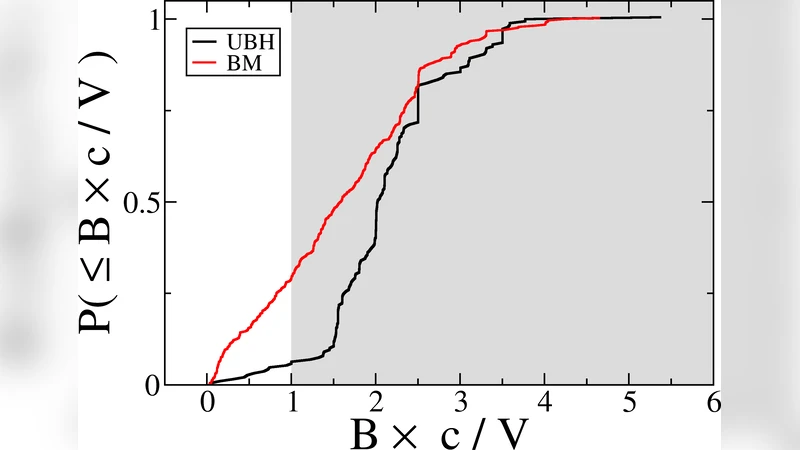
Information technology has revolutionized the traditional structure of markets. The removal of geographical and time constraints has fostered the growth of online auction markets, which now include millions of economic agents worldwide and annual transaction volumes in the billions of dollars. Here, we analyze bid histories of a little studied type of online auctions — lowest unique bid auctions. Similarly to what has been reported for foraging animals searching for scarce food, we find that agents adopt Levy flight search strategies in their exploration of “bid space”. The Levy regime, which is characterized by a power-law decaying probability distribution of step lengths, holds over nearly three orders of magnitude. We develop a quantitative model for lowest unique bid online auctions that reveals that agents use nearly optimal bidding strategies. However, agents participating in these auctions do not optimize their financial gain. Indeed, as long as there are many auction participants, a rational profit optimizing agent would choose not to participate in these auction markets.
💡 Research Summary
The paper investigates human behavior in a little‑studied online market mechanism known as the lowest unique bid (LUB) auction, where participants pay a fee for each bid and the winner is the holder of the lowest bid that no one else has placed. By scraping complete bid histories from three major LUB platforms (uniquebidhomes.com, lowbids.com.au, and bidmadness.com.au), the authors track every individual’s sequence of bid values. They compute the absolute differences between consecutive bids (jump lengths) and find that the distribution of these jumps follows a power‑law decay, P(Δb) ∝ |Δb|^{‑α}, with an exponent α≈1.1 ± 0.1. This scaling holds over three to four orders of magnitude, is symmetric for positive and negative jumps, and is robust across agents with different activity levels, across different stages of an auction, and across the three sites. The exponent distribution across agents is narrow (mean ≈ 1.3, mode ≈ 1.2, σ ≈ 0.23), indicating that most participants employ a Lévy‑flight‑like search strategy in the abstract “bid space”.
To understand why such a strategy emerges, the authors construct a stochastic model of the LUB game. They consider N agents each making T bids, modeled as discrete‑time Lévy flights on a one‑dimensional lattice of possible bid values (1…M). An agent with strategy α jumps from position j to i with probability proportional to |i‑j|^{‑α}. For the single‑bid case, the probability that a value i is occupied by exactly one bid is derived from a multinomial distribution, yielding u_γ(i)=N p_γ(i)
Comments & Academic Discussion
Loading comments...
Leave a Comment