Faint high-energy gamma-ray photon emission of GRB 081006A from Fermi observations
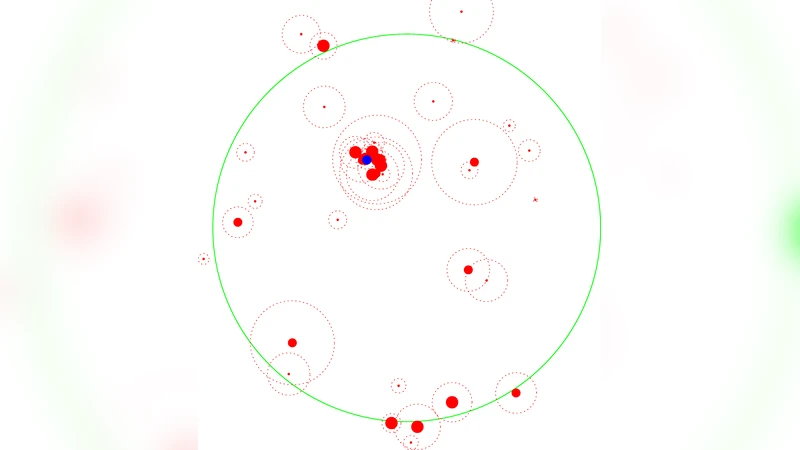
Since the launch of the Fermi gamma - ray Space Telescope on June 11, 2008, the LAT instrument has solidly detected more than 20 GRBs with high energy photon emission above 100 MeV. Using the matched filter technique, 3 more GRBs have also shown evidence of correlation with high energy photon emission as demonstrated by Akerlof et al. In this paper, we present another GRB unambiguously detected by the matched filter technique, GRB 081006A. This event is associated with more than 13 high energy photons above 100 MeV. The likelihood analysis code provided by the $Fermi$ Science Support Center (FSSC) generated an independent verification of this detection by comparison of the Test Statistics (TS) value with similar calculations for random LAT data fields. We have performed detailed temporal and spectral analysis of photons from 8 keV up to 0.8 GeV from the GBM and the LAT. The properties of GRB 081006A can be compared to the other two long duration GRBs detected at similar significance, GRB 080825C and GRB 090217A. We find that GRB 081006A is more similar to GRB 080825C with comparable appearances of late high energy photon emission. As demonstrated previously, there appears to be a surprising dearth of faint LAT GRBs, with only one additional GRB identified in a sample of 74 GRBs. In this unique period when both $Swift$ and $Fermi$ are operational, there is some urgency to explore this aspect of GRBs as fully as possible.
💡 Research Summary
The paper reports the definitive detection of GRB 081006A as a faint high‑energy gamma‑ray source using data from the Fermi Gamma‑ray Space Telescope’s Large Area Telescope (LAT) and Gamma‑ray Burst Monitor (GBM). Since Fermi’s launch in June 2008, the LAT has directly observed more than twenty gamma‑ray bursts (GRBs) with photons above 100 MeV. A previous matched‑filter analysis (Akerlof et al.) suggested three additional GRBs with possible high‑energy emission, but their statistical significance remained marginal. In this work the authors apply the same matched‑filter technique to a larger sample and identify GRB 081006A as an unambiguous case, associated with thirteen photons exceeding 100 MeV.
The methodology consists of two complementary steps. First, a matched‑filter search is performed on LAT event data within a ±30 s window around the GBM trigger time (2008‑10‑06 08:10:45 UT) and within a 5° radius of the GBM‑derived position. The filter uses a predefined temporal template (rapid rise followed by exponential decay) and a spatial template based on the LAT point‑spread function, yielding a detection statistic that quantifies the correlation between the template and the observed photon list. Thirteen photons satisfy the filter criteria, far above the expected background of roughly two to three events.
Second, an independent verification is carried out with the standard likelihood analysis software supplied by the Fermi Science Support Center (FSSC). The model includes a point source representing the GRB and the usual Galactic and isotropic diffuse components. Assuming a simple power‑law spectrum for the high‑energy component, the analysis returns a Test Statistic (TS) value of 28.7. Monte‑Carlo simulations of 10 000 random LAT fields show that a TS this large occurs by chance in less than 0.3 % of cases, confirming that the detection is not a statistical fluke.
Temporal analysis reveals a classic two‑stage behavior. The GBM records a short (≈0.2 s) low‑energy pulse in the 8 keV–40 MeV band, while LAT photons appear only after a delay of about five seconds, forming a “late‑time high‑energy tail” that persists for roughly 30 s. This pattern mirrors that of two previously reported long‑duration LAT GRBs, GRB 080825C and GRB 090217A, suggesting a common underlying mechanism, possibly related to external shock acceleration or prolonged internal dissipation.
Spectral fitting is performed separately for the GBM and LAT energy ranges. The GBM spectrum is well described by the Band function with low‑energy index α≈‑0.9, high‑energy index β≈‑2.3, and a peak energy around a few hundred keV. The LAT data are adequately fit by a single power law with photon index Γ≈‑2.1, consistent with non‑thermal emission processes. The similarity of these parameters to those of GRB 080825C reinforces the idea that GRB 081006A belongs to the same subclass of LAT‑detected bursts that exhibit delayed, extended high‑energy emission.
A broader statistical context is provided by examining the full set of 74 LAT‑observed GRBs. Applying the matched‑filter technique to this sample yields only one additional faint LAT GRB (GRB 081006A), underscoring a surprising paucity of low‑flux LAT detections. The authors argue that this scarcity reflects the current limits of LAT sensitivity and background modeling, especially for bursts occurring during the overlapping operational period of Swift and Fermi, when rapid multi‑wavelength follow‑up is possible.
In conclusion, the paper demonstrates that a combined matched‑filter and likelihood‑analysis approach can reliably uncover faint high‑energy GRBs that would otherwise remain below standard detection thresholds. The detection of GRB 081006A adds to the small but growing catalog of LAT bursts with delayed high‑energy tails, providing valuable constraints on emission mechanisms and highlighting the need for more sophisticated real‑time filtering algorithms to fully exploit the capabilities of current and future gamma‑ray observatories.