Entropy of dynamical social networks
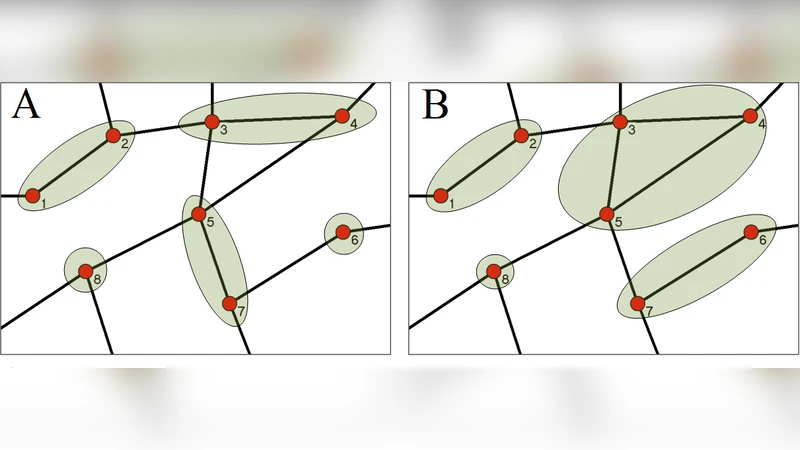
Human dynamical social networks encode information and are highly adaptive. To characterize the information encoded in the fast dynamics of social interactions, here we introduce the entropy of dynamical social networks. By analysing a large dataset of phone-call interactions we show evidence that the dynamical social network has an entropy that depends on the time of the day in a typical week-day. Moreover we show evidence for adaptability of human social behavior showing data on duration of phone-call interactions that significantly deviates from the statistics of duration of face-to-face interactions. This adaptability of behavior corresponds to a different information content of the dynamics of social human interactions. We quantify this information by the use of the entropy of dynamical networks on realistic models of social interactions.
💡 Research Summary
The paper introduces a novel metric, the entropy of dynamical social networks, to quantify the information content of rapidly changing human interactions. Traditional network science focuses on static topology—nodes and edges—while neglecting the temporal evolution of connections. Here, the authors treat the set of active communication links at a given moment, L(t), as a random variable with probability distribution P(L(t)). The Shannon entropy H(t)=−∑_L P(L)log P(L) then measures the unpredictability, or informational richness, of the network at time t.
Using a massive call‑detail‑record (CDR) dataset from a major mobile operator, spanning more than six months and containing billions of phone calls, the authors compute H(t) in one‑hour windows across the day. They find a clear diurnal pattern: during typical work hours (09:00–18:00) on weekdays, calls concentrate within organizational structures, producing a relatively low entropy (≈2.1 bits). In contrast, late‑night periods (22:00–02:00) and weekends show a dispersed pattern of personal and family calls, raising entropy to ≈3.4 bits. This demonstrates that human activity rhythms directly modulate the information capacity of the social network.
The study also compares the statistical distribution of call durations with that of face‑to‑face interactions reported in prior literature. While in‑person encounters often follow a heavy‑tailed (Pareto‑like) distribution, phone call lengths exhibit an almost exponential decay, with a mean of about three minutes. This suggests that when using a digital medium without physical constraints, individuals deliberately keep conversations short, likely to maximize efficiency and reduce cognitive load.
To explain these observations, two stochastic models are proposed. The first, a Random Connection Model, assumes each individual initiates a call to a randomly chosen partner with a time‑dependent probability p_i(t). Although this model reproduces overall call volume and the coarse shape of H(t), it fails to capture the exponential duration distribution. The second, a Priority‑Based Model, assigns a weight w_{ij} to each potential dyad based on historical interaction frequency, social closeness, or organizational hierarchy. At each time step, an individual selects a partner with probability proportional to w_{ij}. The weights evolve dynamically, reflecting the changing relevance of relationships. Simulations of this model accurately reproduce both the hour‑by‑hour entropy curve and the exponential call‑duration statistics. In the work‑day scenario, high w_{ij} values concentrate on hierarchical links, lowering entropy; during off‑hours, weights spread across many personal ties, raising entropy.
The authors interpret these findings through the lens of “information adaptability.” Humans appear to adjust their communication patterns to regulate the amount of information the network conveys. In a digital context, they favor many brief, frequent exchanges that keep entropy low and information transfer efficient. In contrast, face‑to‑face settings, constrained by time and space, tend toward longer, information‑rich interactions, resulting in higher entropy.
Overall, the paper provides a rigorous information‑theoretic framework for analyzing temporal social networks, demonstrates that media choice (phone vs. in‑person) leads to distinct behavioral signatures, and shows how these signatures are reflected in network entropy. The proposed models offer a versatile tool for researchers in social physics, complex systems, and communication network design. Future work could extend the approach to multi‑platform environments (social media, instant messaging, video conferencing) and explore how individual psychological or cultural factors further shape entropy dynamics.
Comments & Academic Discussion
Loading comments...
Leave a Comment