Electron-cylotron maser radiation from electron holes: Downward current region
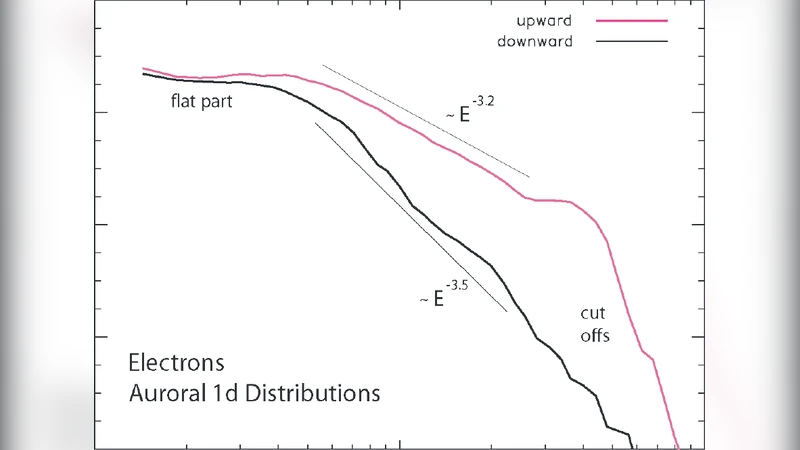
The electron-cyclotron maser emission from electron holes is applied to holes generated in the downstream current region of the aurora. We suggest that part of the fine structure observed in the auroral kilometric radiation is generated by the electron-cyclotron maser mechanism in the downstream current region. The argument goes that the main background auroral kilometric radiation source is still located in the partial electron ring (horseshoe) distribution of the upward current region while the fine structure is caused by electron holes generated predominantly in the downward current region. Since both regions always exist simultaneously they are acting in tandem in generating auroral kilometric radiation by the same mechanism though in different ways.
💡 Research Summary
The paper revisits the generation of auroral kilometric radiation (AKR) by focusing on the role of electron holes in the downward current region of the auroral zone. Traditionally, AKR has been attributed to the upward current region where a partial ring or horseshoe electron distribution provides a steep perpendicular velocity gradient (∂f/∂v⊥ > 0) that drives the electron‑cyclotron maser (ECM) instability. The downward current region, dominated by a cold ionospheric electron beam accelerated upward, has been considered inactive for ECM because it lacks such a distribution.
The authors argue that electron holes generated by the Buneman instability in the downward current region can locally create the required perpendicular gradients, thereby enabling ECM emission. Observations from the FAST 1773 spacecraft show electron densities of ~0.5–1 cm⁻³, plasma frequencies around 13 kHz, and cyclotron frequencies near 483 kHz, giving ω_pe/ω_ce ≈ 3 × 10⁻²—conditions under which ECM can operate. The upward‑moving electron beam reaches velocities >2 × 10⁴ km s⁻¹, well above the electron thermal speed, satisfying the Buneman threshold.
Electron holes formed under these conditions are low‑density structures that trap the ECM‑generated X‑mode (or Z‑mode) radiation inside their boundaries. Because the downstream region has a higher ambient electron density than the upward cavity, the growth and amplification rates of the trapped wave are significantly larger than those previously calculated for the upward region. The trapped wave remains in resonance with the hole for the hole’s lifetime (tens of milliseconds), allowing substantial amplification. When the hole decays, the wave is released; its frequency lies above the X‑mode cutoff, enabling it to escape into the surrounding plasma and eventually into free space.
Thus, radiation generated by electron holes in the downward current region can leak into the upward current cavity, where it manifests as fine spectral structure superimposed on the broader AKR background produced by the horseshoe distribution. The paper emphasizes three key mechanisms: (1) easy formation of electron holes via Buneman instability due to high beam speed; (2) enhanced ECM growth because of higher ambient density; and (3) trapping of the wave inside the hole, providing prolonged interaction time and higher amplification.
The authors also discuss the geometry of electron holes. Theoretical estimates give parallel extents of order 100 λ_D (≈ 5 km) and perpendicular scales limited by the electron gyroradius (≈ 10–30 m). Observations and simulations suggest that holes can be oblate, spherical, or filamentary, but regardless of shape they can span a wide range of perpendicular velocities (v⊥ ≈ 10³–1.5 × 10⁴ km s⁻¹), sufficient to generate the required ∂f/∂v⊥ > 0.
In conclusion, the paper proposes a unified picture in which both upward and downward current regions contribute to AKR: the upward region supplies the main broadband emission via the horseshoe distribution, while the downward region adds fine‑scale features through electron‑hole‑mediated ECM. This dual‑region model resolves previous difficulties with low growth rates in the upward region and offers testable predictions for future high‑resolution measurements and three‑dimensional particle‑in‑cell simulations.
Comments & Academic Discussion
Loading comments...
Leave a Comment