An Information-Theoretic Approach to PMU Placement in Electric Power Systems
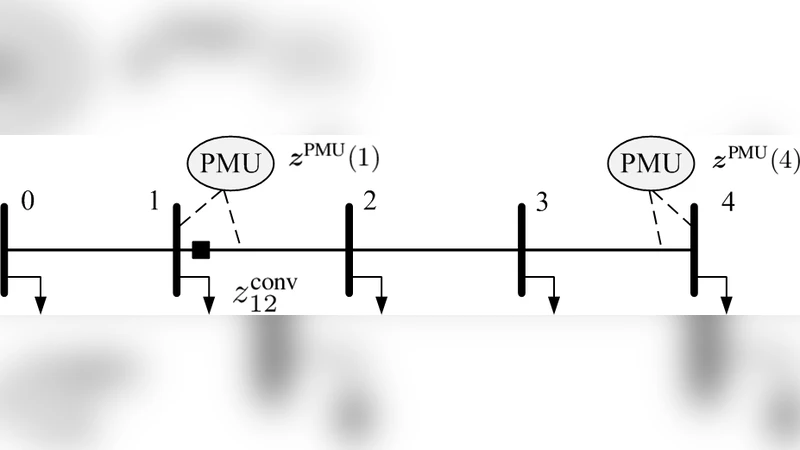
This paper presents an information-theoretic approach to address the phasor measurement unit (PMU) placement problem in electric power systems. Different from the conventional ’topological observability’ based approaches, this paper advocates a much more refined, information-theoretic criterion, namely the mutual information (MI) between the PMU measurements and the power system states. The proposed MI criterion can not only include the full system observability as a special case, but also can rigorously model the remaining uncertainties in the power system states with PMU measurements, so as to generate highly informative PMU configurations. Further, the MI criterion can facilitate robust PMU placement by explicitly modeling probabilistic PMU outages. We propose a greedy PMU placement algorithm, and show that it achieves an approximation ratio of (1-1/e) for any PMU placement budget. We further show that the performance is the best that one can achieve in practice, in the sense that it is NP-hard to achieve any approximation ratio beyond (1-1/e). Such performance guarantee makes the greedy algorithm very attractive in the practical scenario of multi-stage installations for utilities with limited budgets. Finally, simulation results demonstrate near-optimal performance of the proposed PMU placement algorithm.
💡 Research Summary
The paper tackles the problem of placing phasor measurement units (PMUs) in electric power networks from an information‑theoretic perspective. Traditional approaches rely on topological observability: they seek the smallest set of buses whose PMU measurements make the entire system observable in a binary sense. While this guarantees that every state variable can be reconstructed in principle, it ignores the quantitative uncertainty that remains due to measurement noise, model linearization, and possible PMU outages.
To address this gap, the authors propose using the mutual information (MI) between the vector of system states X and the vector of PMU measurements Y as the objective function. MI, defined as I(X;Y)=H(X)−H(X|Y), measures the reduction in the entropy of the state vector achieved by a given measurement set. Under the common DC power‑flow linearization, the state vector is approximated as Gaussian, which makes MI analytically tractable. Consequently, maximizing MI directly minimizes the residual uncertainty about the system after the PMU data are collected. Full observability appears as a special case where MI reaches its theoretical maximum, but the MI criterion also quantifies how “informative” a partially observable configuration is.
A central theoretical contribution is the proof that MI is a submodular set function with respect to the chosen PMU locations. Submodularity embodies a diminishing‑returns property: the marginal gain in MI from adding a new PMU diminishes as more PMUs are already installed. Maximizing a submodular function under a cardinality constraint is NP‑hard, yet a simple greedy algorithm that iteratively adds the bus yielding the largest marginal MI increase is guaranteed to achieve at least a (1‑1/e)≈63.2 % of the optimal value. The authors adopt this greedy scheme, calling it the “MI‑greedy” algorithm, and show that no polynomial‑time algorithm can guarantee a better approximation ratio unless P=NP. This establishes (1‑1/e) as the best possible performance bound for any practical algorithm.
Robustness to PMU failures is incorporated by assigning each PMU i a failure probability p_i. The placement problem is then reformulated to maximize the expected mutual information E