Enhance accuracy in Software cost and schedule estimation by using "Uncertainty Analysis and Assessment" in the system modeling process
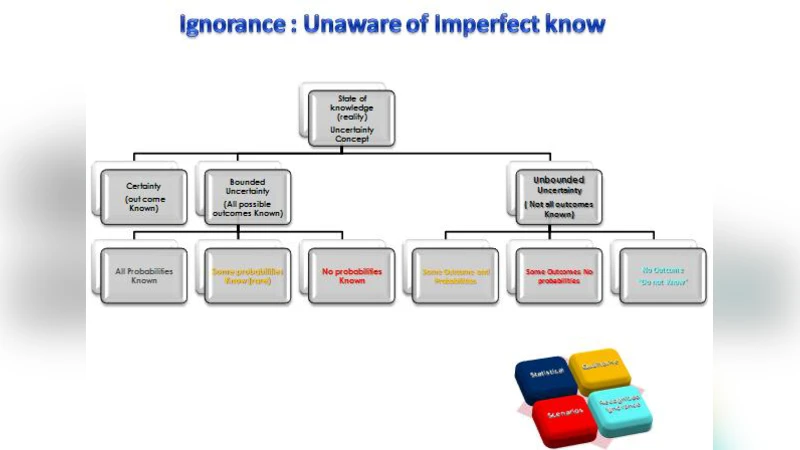
Accurate software cost and schedule estimation are essential for software project success. Often it referred to as the “black art” because of its complexity and uncertainty, software estimation is not as difficult or puzzling as people think. In fact, generating accurate estimates is straightforward-once you understand the intensity of uncertainty and framework for the modeling process. The mystery to successful software estimation-distilling academic information and real-world experience into a practical guide for working software professionals. Instead of arcane treatises and rigid modeling techniques, this will guide highlights a proven set of procedures, understandable formulas, and heuristics that individuals and development teams can apply to their projects to help achieve estimation proficiency with choose appropriate development approaches In the early stage of software life cycle project manager are inefficient to estimate the effort, schedule, cost estimation and its development approach .This in turn, confuses the manager to bid effectively on software project and choose incorrect development approach. That will directly effect on productivity cycle and increase level of uncertainty. This becomes a strong cause of project failure. So to avoid such problem if we know level and sources of uncertainty in model design, It will directive the developer to design accurate software cost and schedule estimation, which are essential for software project success. However once the required efforts have estimated, little is done to recalibrate and reduce the uncertainty of the initial estimates.
💡 Research Summary
**
The paper addresses the chronic problem of inaccurate cost and schedule estimates in software projects, attributing much of the difficulty to unmanaged uncertainty during the early phases of development. It begins by contrasting two broad families of development approaches—plan‑driven (traditional, heavyweight) and practice‑driven (Agile, lightweight). The authors argue that while plan‑driven methods rely on detailed upfront specifications, they become fragile when requirements change; Agile methods tolerate change but still need initial estimates, and poor early estimates can jeopardize the entire project.
To mitigate this, the authors propose a systematic “Uncertainty Analysis and Assessment” framework that is embedded directly into the modeling process. The framework consists of five steps: (1) identification of uncertainty sources (requirements volatility, technological complexity, resource availability, external environment); (2) classification of uncertainty types (aleatory, epistemic, judgmental); (3) construction of an “uncertainty matrix” that cross‑references development phases (requirements, design, implementation, testing) with uncertainty types; (4) mapping of fourteen established uncertainty‑assessment techniques (Monte‑Carlo simulation, Bayesian networks, fuzzy logic, sensitivity analysis, scenario planning, etc.) to the matrix cells, thereby guiding practitioners to the most appropriate quantitative or qualitative tool for each situation; and (5) formulation of risk‑mitigation actions such as buffer allocation, staged verification, and expert reviews based on the quantified uncertainty values.
The paper reviews each of the fourteen techniques, highlighting their data requirements, strengths, and limitations. For example, Monte‑Carlo provides probabilistic cost and schedule ranges but depends heavily on the quality of input distributions, whereas fuzzy logic excels at capturing expert opinion when hard data are scarce. By aligning these techniques with specific uncertainty categories, the framework enables a tailored assessment rather than a one‑size‑fits‑all approach.
A decision‑making guide is then presented that links the uncertainty matrix to the choice of development methodology. When the matrix indicates low uncertainty and well‑defined requirements, a plan‑driven approach is recommended for its efficiency. Conversely, high uncertainty and evolving requirements suggest an Agile or hybrid approach, with the matrix informing where additional buffers or iterative validation points are needed.
Although the paper does not include an empirical case study, it argues that applying the framework should reduce the frequency of re‑estimation, lower the probability of schedule and budget overruns, and provide a structured mechanism for continuous refinement of estimates throughout the project lifecycle. The authors conclude that uncertainty analysis is a critical, yet often overlooked, component of software cost and schedule estimation, and that integrating it into the modeling phase offers a practical path to higher project success rates. Future work is suggested to validate the framework with real‑world projects, develop domain‑specific matrices (e.g., embedded systems, cloud services, AI), and quantify the actual improvement in estimation accuracy.
Comments & Academic Discussion
Loading comments...
Leave a Comment