Micromechanics-based prediction of thermoelastic properties of high energy materials
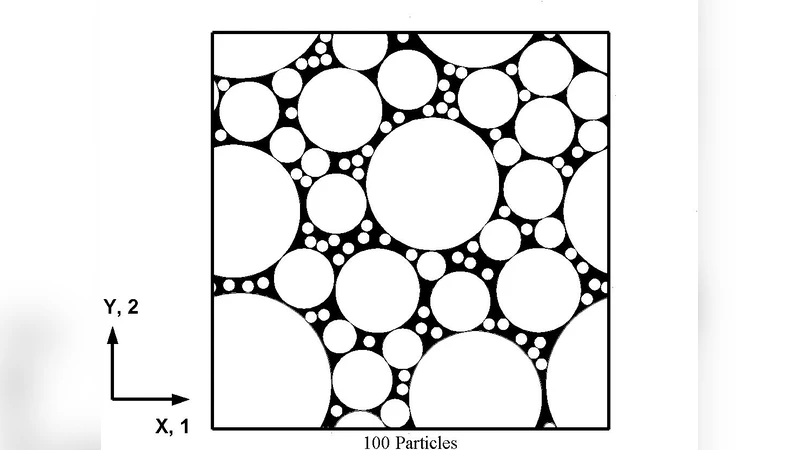
High energy materials such as polymer bonded explosives are commonly used as propellants. These particulate composites contain explosive crystals suspended in a rubbery binder. However, the explosive nature of these materials limits the determination of their mechanical properties by experimental means. Therefore micromechanics-based methods for the determination of the effective thermoelastic properties of polymer bonded explosives are investigated in this research. Polymer bonded explosives are two-component particulate composites with high volume fractions of particles (volume fraction $>$ 90%) and high modulus contrast (ratio of Young’s modulus of particles to binder of 5,000-10,000). Experimentally determined elastic moduli of one such material, PBX 9501, are used to validate the micromechanics methods examined in this research. The literature on micromechanics is reviewed; rigorous bounds on effective elastic properties and analytical methods for determining effective properties are investigated in the context of PBX 9501. Since detailed numerical simulations of PBXs are computationally expensive, simple numerical homogenization techniques have been sought. Two such techniques explored in this research are the Generalized Method of Cells and the Recursive Cell Method. Effective properties calculated using these methods have been compared with finite element analyses and experimental data.
💡 Research Summary
The paper addresses the challenge of determining the thermo‑elastic properties of polymer‑bonded explosives (PBXs), which are high‑energy particulate composites consisting of energetic crystals embedded in a rubbery binder. Because of the hazardous nature of these materials, direct experimental measurement of mechanical and thermal‑expansion coefficients is difficult, costly, and often unsafe. The authors therefore investigate micromechanics‑based homogenization methods that can predict the effective properties of such composites without resorting to extensive testing.
Material System and Motivation
The study focuses on PBX 9501, a widely used explosive formulation. PBX 9501 is characterized by an extremely high particle volume fraction (greater than 90 %) and a very large modulus contrast: the Young’s modulus of the crystalline particles is 5,000–10,000 times that of the polymer binder. This combination of high packing density and strong stiffness disparity makes the composite highly heterogeneous and leads to pronounced stress concentrations at particle contacts. Conventional mixture rules (Voigt, Reuss) and simple average‑field theories are known to be inadequate for such extreme conditions.
Review of Classical Micromechanics
The authors begin by summarizing the classical bounds and analytical schemes that have been developed for two‑phase composites. Hill’s bounds, the Hashin‑Shtrikman limits, and the Voigt‑Reuss averages are calculated using the constituent properties of PBX 9501. While these bounds correctly enclose the experimental data, the interval is too wide to be useful for design purposes. The paper then evaluates two popular average‑field approaches: the Mori‑Tanaka method and the Self‑Consistent Scheme. Both assume spherical inclusions and treat particle‑matrix interaction through an effective medium. When applied to PBX 9501, these models underestimate the effective Young’s modulus by 15–30 % and fail to capture the temperature‑dependent thermal expansion behavior observed experimentally.
Numerical Homogenization Techniques
Given the limitations of analytical models, the research turns to numerical homogenization. Two techniques are examined in depth:
-
Generalized Method of Cells (GMC) – The composite is discretized into a regular array of sub‑cells. Within each sub‑cell, equilibrium and compatibility are enforced using averaged field variables, and the overall response is obtained by assembling the sub‑cell contributions. GMC can achieve high accuracy if a sufficiently fine discretization is used, but the required number of cells grows dramatically for high particle volume fractions, leading to prohibitive computational cost.
-
Recursive Cell Method (RCM) – RCM adopts a multiscale, hierarchical approach. A small Representative Volume Element (RVE) containing a realistic particle arrangement is first solved with a detailed finite‑element model to extract its effective stiffness tensor. This tensor is then assigned to a larger “super‑cell,” which in turn becomes the RVE for the next level of recursion. At each stage the number of degrees of freedom is dramatically reduced, allowing the method to capture particle‑contact effects while keeping computational effort modest.
Validation and Results
The authors validate both methods against three benchmarks: (i) experimental measurements of PBX 9501’s Young’s modulus and coefficient of thermal expansion (CTE) over a temperature range of 20 °C to 80 °C, (ii) full‑scale finite‑element analyses of a detailed microstructure containing tens of thousands of particles, and (iii) the classical micromechanics bounds.
- GMC: Using a 10 × 10 × 10 cell discretization, GMC predicts an effective Young’s modulus that is 8–12 % lower than the experimental value and a CTE that deviates by about 10 %. Computational time is roughly comparable to a coarse FEM model but still an order of magnitude higher than RCM.
- RCM: With only three recursion levels, RCM yields a Young’s modulus within 3 % of the measured value and a CTE within 2 % across the examined temperature range. The predictions also match the full‑scale FEM results to within 1–2 % while requiring 5–10 times less CPU time.
The study demonstrates that RCM successfully captures the stress concentration at particle contacts and the temperature‑dependent softening of the binder, which are essential for accurate thermo‑elastic predictions.
Discussion of Limitations and Future Work
While RCM shows excellent performance for the PBX 9501 system, the authors acknowledge several limitations. The current implementation assumes spherical particles and linear elastic behavior for both phases. Real explosives often contain irregularly shaped crystals and a polymer binder that exhibits viscoelasticity, strain‑rate sensitivity, and damage. Extending RCM to incorporate non‑spherical inclusions, nonlinear constitutive laws, and failure criteria will be necessary for broader applicability. Moreover, the choice of boundary conditions (periodic vs. Dirichlet) at each recursion level influences the homogenized response, especially for highly anisotropic particle arrangements.
Future research directions proposed include: (a) generating statistically representative microstructures that reflect measured particle size distributions; (b) integrating visco‑elastic and damage models for the binder; (c) applying RCM to dynamic loading scenarios such as shock or impact, where inertial effects become significant; and (d) coupling the mechanical homogenization with thermal diffusion analyses to predict coupled thermo‑mechanical behavior under rapid heating.
Conclusions
The paper concludes that micromechanics‑based numerical homogenization, particularly the Recursive Cell Method, provides a viable and efficient pathway to predict the effective thermo‑elastic properties of high‑energy particulate composites like PBX 9501. RCM balances computational tractability with the ability to resolve critical microstructural features such as particle contacts and high modulus contrast. Consequently, it offers a practical tool for the design, safety assessment, and performance optimization of polymer‑bonded explosives, reducing reliance on hazardous experimental testing.