Investigating the Awareness of Applying the Important Web Application Development and Measurement Practices in Small Software Firms
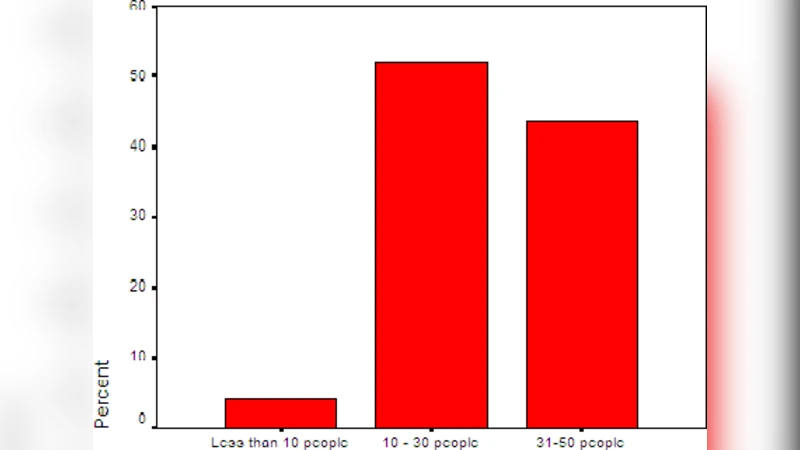
This paper aims to discuss the pilot study and analysis of the current development and measurement practices in Jordanian small software firms. It is conducted because most developers build web applications without using any specific development method and don’t know how to integrate the suitable measurements inside the process to improve and reduce defect, time and rework of the development life cycle. Furthermore the objectives of this pilot study are firstly; determine the real characteristics of small software firms in Jordan. Secondly, investigate the current development and measurement practices. Thirdly, examine the need of new development methodology for building web application in small software firms. Consequently, Pilot survey was conducted in Jordanian small software firms. Descriptive statistics analysis was used to rank the development and measurements methods according to their importance. This paper presents the data, analysis and finding based on pilot survey. These actual findings of this survey will contribute to build new methodology for developing web applications in small software firms taking to account how to integrate the suitable measurement program to the whole development process and also will provide useful information to those who are doing research in the same area.
💡 Research Summary
The paper presents a pilot investigation into the current software development and measurement practices employed by small software firms in Jordan, with a focus on web‑application projects. Recognizing that many developers in these firms build web applications without a formal development methodology and lack integrated measurement activities, the authors set out three primary objectives: (1) to characterize the small‑firm landscape in Jordan, (2) to assess the existing development and measurement practices, and (3) to evaluate the need for a new, tailored development methodology that incorporates appropriate measurement programs.
A questionnaire was designed covering four domains: firm demographics, development methodology usage (waterfall, iterative, agile, etc.), measurement techniques and tools (defect density, lines of code, code coverage, static analysis, continuous integration), and the purpose of measurement (schedule tracking, quality improvement, rework reduction). The survey was distributed to 30 firms with 22 valid responses (a 73 % response rate), primarily from project managers and senior developers. Prior to full deployment, the instrument was piloted to ensure clarity.
Descriptive statistics were used to rank the importance of various practices. The results reveal that a majority (68 %) rely on traditional waterfall or informal ad‑hoc processes, while only 12 % report any agile adoption. Basic metrics such as defect tracking and LOC are used by roughly half of the respondents, but more sophisticated measurement tools—code‑coverage analysis, static analysis, and CI pipelines—are employed by fewer than 10 % of firms. Moreover, measurement is largely viewed as a reporting activity for schedule monitoring rather than a strategic lever for quality improvement or rework reduction. Correlation analysis shows a weak positive relationship (r≈0.31) between the presence of a structured methodology and the use of measurement tools, indicating that these two aspects are not strongly coupled in the current environment.
The authors interpret these findings as evidence of a “measurement culture gap” in small Jordanian software firms. Resource constraints, limited awareness of modern development practices, and the perceived overhead of measurement tools contribute to the low adoption rates. Consequently, the paper argues for a lightweight, integrated development‑measurement framework specifically designed for small teams. Such a framework would prescribe a minimal set of process steps (lightweight requirements capture, short iterative cycles, simple automated testing), recommend low‑cost or open‑source measurement tools, and embed measurement results directly into schedule and quality control feedback loops.
Limitations of the study are acknowledged. The sample is geographically confined to Jordan, which restricts the generalizability of the findings. The reliance on self‑reported questionnaire data may introduce bias, and the absence of qualitative interviews limits insight into the underlying reasons for low adoption.
Future research directions include expanding the survey to a broader regional and industry base, employing mixed‑methods approaches that combine quantitative surveys with on‑site observations, and conducting a controlled pilot of the proposed integrated framework to empirically assess its impact on defect rates, rework effort, and project timelines. Additionally, cost‑benefit analyses of various measurement tools tailored to small‑firm budgets are recommended to develop practical guidelines for tool selection.
In summary, the pilot study provides empirical evidence that small software firms in Jordan largely operate without formal development methodologies and underutilize measurement practices, leading to inefficiencies and quality issues. The authors conclude that a customized, lightweight development and measurement approach is essential to enable these firms to improve product quality, reduce rework, and manage schedules more effectively, thereby contributing to the broader goal of enhancing software engineering practices in resource‑constrained environments.
Comments & Academic Discussion
Loading comments...
Leave a Comment