The kinetic theory of quasi-stationary collisionless accretion disc plasmas
Astrophysical plasmas in accretion discs are usually treated in the framework of fluid or MHD approaches but there are some situations where these treatments become inadequate and one needs to revert to the more fundamental underlying kinetic theory. This occurs when the plasma becomes effectively collisionless or weakly-collisional such as, for example, in radiatively inefficient accretion flows onto black holes. In this paper, we lay down the basics of kinetic theory in these contexts. In particular, we formulate the kinetic theory for quasi-stationary collisionless accretion disc plasmas in the framework of a Vlasov-Maxwell description, taking the plasma to be non-relativistic, axisymmetric, gravitationally-bound and subject to electromagnetic fields. Quasi-stationary solutions for the kinetic distribution functions are constructed which are shown to admit temperature anisotropies. The physical implications of the theory are then investigated and the equations of state and angular momentum conservation law are discussed. Analysis of the Ampere equation reveals the existence of a quasi-stationary kinetic dynamo which gives rise to self-generation of poloidal and azimuthal magnetic fields and operates even in the absence of turbulence and/or instability phenomena.
💡 Research Summary
The paper addresses a fundamental gap in the theoretical description of accretion‑disc plasmas that are effectively collisionless or only weakly collisional, such as those found in radiatively inefficient accretion flows (RIAFs) onto black holes. Traditional fluid or magnetohydrodynamic (MHD) models rely on collisional closure relations and therefore become unreliable when the mean free path exceeds the characteristic disc scale. To overcome this limitation, the authors formulate a kinetic theory based on the Vlasov‑Maxwell system, assuming a non‑relativistic, axisymmetric, gravitationally bound plasma subject to electromagnetic fields.
First, the kinetic state of each species (electrons and ions) is described by a distribution function f_s(r,v,t) that satisfies the Vlasov equation. By exploiting axisymmetry and the quasi‑stationary assumption (slow temporal evolution compared with particle orbital periods), the authors identify two exact invariants: the particle energy H_s and the canonical azimuthal angular momentum L_z. Using these invariants, they construct a class of quasi‑stationary solutions of the form f_s = F_s(H_s, L_z). Importantly, the chosen functional form permits temperature anisotropy, i.e., distinct perpendicular (T_⊥) and parallel (T_∥) temperatures relative to the local magnetic field. This anisotropy naturally emerges from the combined influence of the gravitational potential, electrostatic potential, and the toroidal vector potential A_φ.
From the anisotropic distribution functions the pressure tensor is derived, yielding separate parallel and perpendicular pressure components (p_∥, p_⊥). Consequently, the state equation for the plasma is no longer scalar but a tensorial relation that captures the non‑equilibrium thermodynamics of a collisionless disc. The authors then take the first velocity moment of the Vlasov equation to obtain an angular‑momentum conservation law. In this law, the electromagnetic torque (J×B) and the gravitational torque (ρ∇Φ_G) appear explicitly, while additional terms arising from pressure anisotropy provide a channel for angular‑momentum transport even in the absence of viscous stresses.
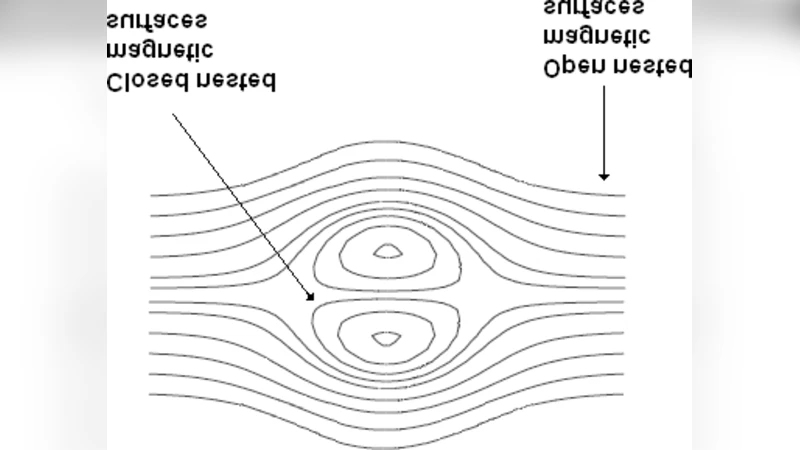
A central result concerns the Ampère law. The current density J, being the first moment of f_s, possesses both toroidal (φ) and poloidal (r‑z) components. The toroidal current is driven by the differential rotation of the disc and gives rise to a self‑generated azimuthal magnetic field B_φ, constituting an “azimuthal dynamo.” Simultaneously, the poloidal current originates from the pressure‑anisotropy term in the momentum balance and produces a self‑consistent poloidal magnetic field B_p. Remarkably, this kinetic dynamo operates without invoking turbulence, magnetorotational instability, or any external seed field; it is a direct consequence of the quasi‑stationary kinetic equilibrium.
The paper proceeds to discuss the physical implications of these findings. Temperature anisotropy and the associated magnetic self‑generation can explain the strong magnetic fields and low radiative efficiencies observed in RIAFs. Moreover, the kinetic framework predicts efficient angular‑momentum redistribution through collisionless processes, offering an alternative to the conventional α‑viscosity prescription. The authors suggest that extending the theory to a relativistic Vlasov‑Maxwell description and performing dedicated numerical simulations would be valuable next steps.
In summary, the work provides a self‑consistent kinetic description of quasi‑stationary, collisionless accretion‑disc plasmas. By constructing anisotropic distribution functions that respect the exact invariants of the system, the authors derive tensorial state equations, a robust angular‑momentum conservation law, and a novel kinetic dynamo mechanism capable of generating both poloidal and toroidal magnetic fields. This framework fills a critical theoretical void and opens new avenues for modeling low‑collisionality astrophysical discs where fluid and MHD approximations fail.