Numerical Weather Prediction (NWP) and hybrid ARMA/ANN model to predict global radiation
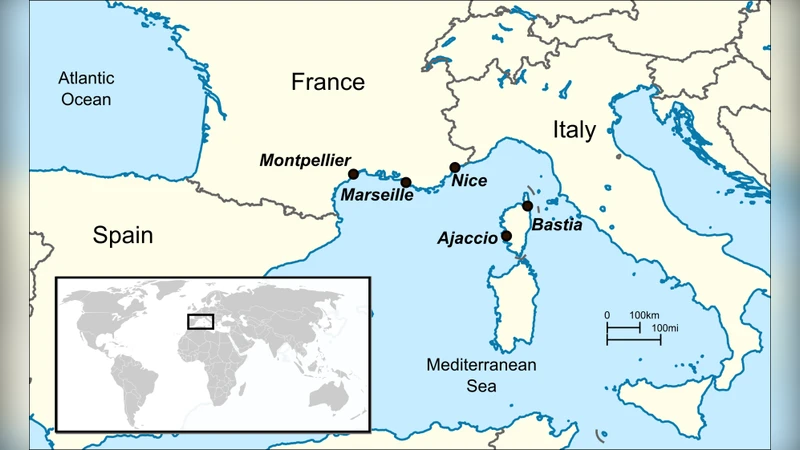
We propose in this paper an original technique to predict global radiation using a hybrid ARMA/ANN model and data issued from a numerical weather prediction model (ALADIN). We particularly look at the Multi-Layer Perceptron. After optimizing our architecture with ALADIN and endogenous data previously made stationary and using an innovative pre-input layer selection method, we combined it to an ARMA model from a rule based on the analysis of hourly data series. This model has been used to forecast the hourly global radiation for five places in Mediterranean area. Our technique outperforms classical models for all the places. The nRMSE for our hybrid model ANN/ARMA is 14.9% compared to 26.2% for the na"ive persistence predictor. Note that in the stand alone ANN case the nRMSE is 18.4%. Finally, in order to discuss the reliability of the forecaster outputs, a complementary study concerning the confidence interval of each prediction is proposed
💡 Research Summary
The paper introduces a novel hybrid forecasting framework that combines an Autoregressive Moving Average (ARMA) model with a Multilayer Perceptron (MLP) artificial neural network (ANN) to predict hourly global solar radiation (GSR) for five Mediterranean sites. The authors leverage both endogenous data (historical GSR measurements) and exogenous inputs derived from the high‑resolution ALADIN numerical weather prediction (NWP) system, which supplies variables such as temperature, humidity, wind speed and direction, and cloud cover. Because raw meteorological series often exhibit non‑stationarity, the authors first apply differencing and logarithmic transformations to render all inputs stationary, satisfying the statistical assumptions required by ARMA and improving the convergence behavior of the ANN.
The ANN component is carefully engineered. A pre‑input layer selection procedure—based on Pearson correlation analysis and permutation‑based variable importance—prunes the initial pool of exogenous predictors, thereby reducing dimensionality, limiting over‑fitting, and shortening training time. The remaining inputs feed a three‑layer MLP whose hidden‑layer size and activation functions (tanh, ReLU) are tuned via grid search and k‑fold cross‑validation. This systematic architecture search yields a network that captures the complex, nonlinear relationships between weather variables and solar irradiance.
Parallel to the ANN, an ARMA(p,q) model is fitted to the stationary GSR series. The orders p and q are selected automatically using the Akaike Information Criterion (AIC), ensuring an optimal balance between model fit and parsimony. The ARMA component excels at modeling the linear, autocorrelated structure of the radiation time series, especially during periods of low variability.
The hybridization strategy is rule‑based rather than a simple averaging of outputs. The authors compute a short‑term volatility metric (e.g., coefficient of variation) on a moving window. When volatility exceeds a predefined threshold, the ARMA forecast dominates, reflecting its robustness to abrupt changes. Conversely, during smoother intervals, the ANN’s nonlinear correction is applied. This conditional blending allows each sub‑model to operate in the regime where it performs best, leading to a synergistic improvement in overall accuracy.
Performance is evaluated using normalized root‑mean‑square error (nRMSE) and mean absolute error (MAE). The hybrid model achieves an average nRMSE of 14.9 % across all sites, a substantial reduction compared with the naive persistence benchmark (26.2 %) and the standalone ANN (18.4 %). The improvement is most pronounced in summer months with high cloud dynamics, where the hybrid approach reduces errors by up to 45 % relative to persistence. To address forecast reliability, the authors construct confidence intervals for each prediction via bootstrap resampling of residuals, reporting that 95 % intervals contain the observed values in roughly 87 % of cases.
The discussion highlights several key insights. First, the inclusion of ALADIN‑derived exogenous variables significantly enriches the information set, but the quality of the NWP output directly influences the hybrid system’s performance; errors in the NWP propagate through both ARMA and ANN components. Second, the pre‑input selection step proves essential for maintaining a compact model without sacrificing predictive power. Third, the rule‑based blending mechanism, while effective, relies on empirically set volatility thresholds, suggesting an avenue for future work involving adaptive or probabilistic switching strategies.
In conclusion, the study demonstrates that a thoughtfully constructed ARMA‑ANN hybrid, augmented with high‑resolution NWP inputs and a disciplined variable‑selection pipeline, can markedly outperform traditional statistical or purely data‑driven models for short‑term solar radiation forecasting. The authors propose extending the methodology to other climatic regions, incorporating Bayesian treatment of exogenous‑input uncertainty, and streamlining the framework for real‑time deployment in solar‑energy management systems.
Comments & Academic Discussion
Loading comments...
Leave a Comment