Constraints on the Progenitor System of the Type Ia Supernova SN 2011fe/PTF11kly
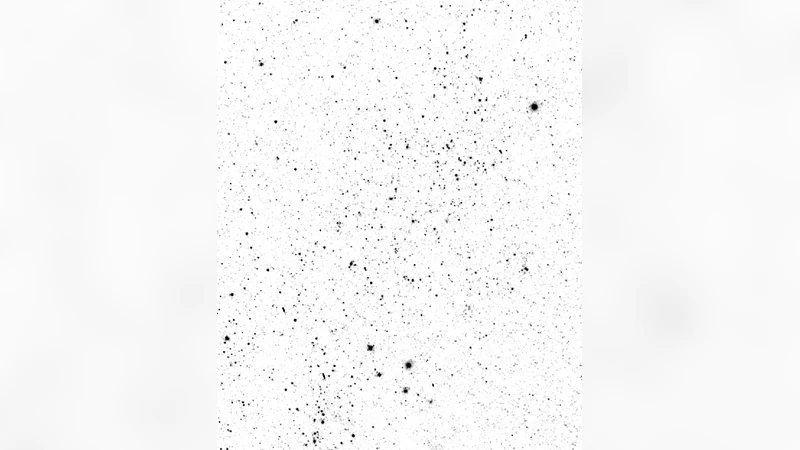
Type Ia supernovae (SNe) serve as a fundamental pillar of modern cosmology, owing to their large luminosity and a well-defined relationship between light-curve shape and peak brightness. The precision distance measurements enabled by SNe Ia first revealed the accelerating expansion of the universe, now widely believed (though hardly understood) to require the presence of a mysterious “dark” energy. General consensus holds that Type Ia SNe result from thermonuclear explosions of a white dwarf (WD) in a binary system; however, little is known of the precise nature of the companion star and the physical properties of the progenitor system. Here we make use of extensive historical imaging obtained at the location of SN 2011fe/PTF11kly, the closest SN Ia discovered in the digital imaging era, to constrain the visible-light luminosity of the progenitor to be 10-100 times fainter than previous limits on other SN Ia progenitors. This directly rules out luminous red giants and the vast majority of helium stars as the mass-donating companion to the exploding white dwarf. Any evolved red companion must have been born with mass less than 3.5 times the mass of the Sun. These observations favour a scenario where the exploding WD of SN 2011fe/PTF11kly, accreted matter either from another WD, or by Roche-lobe overflow from a subgiant or main-sequence companion star.
💡 Research Summary
The paper presents a comprehensive analysis of archival pre‑explosion imaging of the site of SN 2011fe (also known as PTF11kly), the nearest Type Ia supernova discovered in the digital era, to place stringent constraints on its progenitor system. SN 2011fe occurred in the Pinwheel Galaxy (M101) at a distance of ~6.4 Mpc and was discovered by the Palomar Transient Factory on 2011 August 24. Because the host galaxy had been intensively monitored for over a decade, high‑resolution Hubble Space Telescope (HST) images, as well as Chandra X‑ray and Spitzer infrared observations, exist for the exact location of the supernova prior to explosion.
The authors first obtained a precise astrometric solution for the supernova using a Keck II adaptive‑optics NIRC2 image, registering it to the HST/ACS mosaics with a 1‑σ uncertainty of 21 mas. In four HST filters (F435W, F555W, F814W, and F658N) no point source is detected at the SN position within an ~8‑σ error radius. The 5‑σ detection limits correspond to apparent magnitudes of ≈27.5 mag (B), 27.0 mag (V), 26.5 mag (I) and 26.0 mag (Hα). After correcting for distance and modest extinction, these translate into absolute‑V‑band limits that depend on the assumed effective temperature of the progenitor: M_V ≤ −0.5 mag for T_eff ≈ 5000 K and hotter, and M_V ≤ +1 mag for cooler temperatures around 3000 K. These limits are 10–100 times deeper (2–3 mag fainter) than previous constraints on any Type Ia progenitor.
By mapping these luminosity limits onto stellar evolution tracks, the authors exclude any companion star that would be as bright as a typical red‑giant or red‑supergiant donor. Specifically, a red‑giant donor would have to be fainter than M_I ≈ −2 mag, implying a radius R < 60 R_⊙ for T_eff ≈ 3500 K, which is inconsistent with known symbiotic systems such as RS Oph or T CrB. The helium‑star channel is also largely ruled out; only the peculiar helium nova V445 Pup marginally satisfies the limits. In contrast, the Roche‑lobe overflow (RLOF) channel—where a subgiant or main‑sequence star transfers mass to a near‑Chandrasekhar white dwarf—remains fully compatible with the data. Likewise, all double‑degenerate (DD) scenarios, involving the merger of two white dwarfs, predict no bright optical source and therefore also satisfy the non‑detection.
The authors also examined eleven archival Chandra observations from 2004, deriving X‑ray luminosity upper limits of (4–25) × 10^36 erg s⁻¹ (0.3–8 keV) at the SN site. These limits are insufficient to discriminate between supersoft X‑ray sources expected from steady nuclear burning in single‑degenerate systems and the modest X‑ray emission predicted for DD mergers. Mid‑infrared Spitzer IRAC data from 2004 provide limits of L_IR < (1–13) × 10^36 erg s⁻¹, which again rule out bright red‑giant donors (symbiotic channel) but are consistent with a faint RLOF companion or a DD merger that would radiate primarily in the infrared after a long cooling phase.
A search of twelve years of historical optical imaging revealed no nova outbursts at the SN location. Simulations suggest a ~37 % chance that a typical nova occurring within the previous five years could have been missed given the cadence of the observations, so the absence of a detected nova does not completely exclude recurrent‑nova progenitors, but it makes them unlikely.
Putting all constraints together, the paper concludes that the progenitor of SN 2011fe could not have been a symbiotic system with a luminous red‑giant donor, nor could it have been most helium‑star systems. The remaining viable channels are (1) a double‑degenerate merger of two white dwarfs, or (2) a single‑degenerate system in which the white dwarf accreted matter via Roche‑lobe overflow from a subgiant or main‑sequence companion. The authors note that the diversity observed among Type Ia supernovae may reflect the coexistence of multiple progenitor pathways, and they advocate for continued accumulation of high‑resolution, wide‑field pre‑explosion imaging to enable similar analyses for future nearby supernovae. This work demonstrates the power of archival data to place direct, model‑independent limits on supernova progenitors and advances our understanding of the long‑standing question of what systems give rise to Type Ia explosions.
Comments & Academic Discussion
Loading comments...
Leave a Comment