Magic Knights Tours in Higher Dimensions
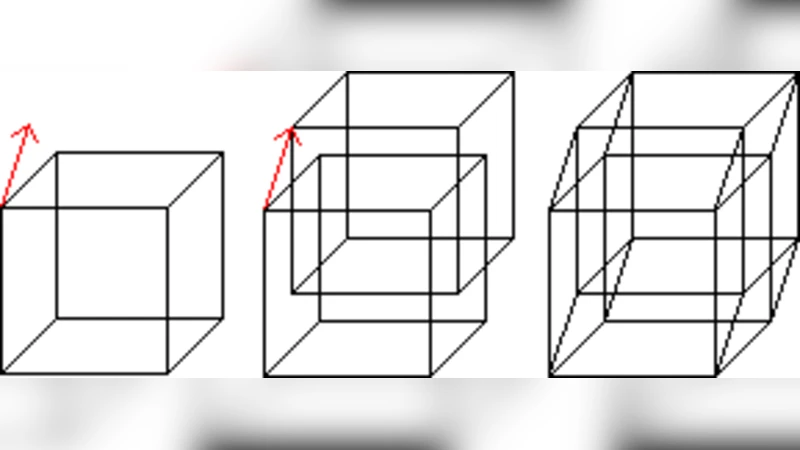
A knight’s tour on a board is a sequence of knight moves that visits each square exactly once. A knight’s tour on a square board is called magic knight’s tour if the sum of the numbers in each row and column is the same (magic constant). Knight’s tour in higher dimensions (n > 3) is a new topic in the age-old world of knight’s tours. In this paper, it has been proved that there can’t be magic knight’s tour or closed knight’s tour in an odd order n-dimensional hypercube. 3 \times 4 \times 2n-2 is the smallest cuboid (n \geq 2) and 4 \times 4 \times 4n-2 is the smallest cube in which knight’s tour is possible in n-dimensions (n \geq 3). Magic knight’s tours are possible in 4 \times 4 \times 4 \times 4 and 4 \times 4 \times 4 \times 4 \times 4 hypercube.
💡 Research Summary
The paper “Magic Knights Tours in Higher Dimensions” extends the classical notion of a knight’s tour—a Hamiltonian path of a knight’s moves on a chessboard—to spaces of dimension n > 3, and investigates the additional constraint of a “magic” tour, where the numbers assigned to the visited cells sum to the same constant in every row, column, and, in higher dimensions, every hyper‑plane. The authors first formalize the knight’s move in n‑dimensional integer lattices: a move consists of choosing two distinct coordinate axes, advancing two steps along one axis and one step along the other, while leaving the remaining n‑2 coordinates unchanged. This yields 2 n · (n − 1) possible move vectors, and the board can be represented as an undirected graph Gₙ(L₁,…,Lₙ) whose vertices are the lattice points and whose edges correspond to legal knight moves.
Using graph‑theoretic parity arguments, the authors prove that a closed knight’s tour (a Hamiltonian cycle) cannot exist on an odd‑order hypercube, i.e., when each side length is an odd integer. The key observation is that such a graph is bipartite with an odd number of vertices, making a Hamiltonian cycle impossible. Conversely, for even‑order hypercubes the bipartite obstruction disappears, and the existence of Hamiltonian paths is shown for sufficiently large side lengths.
The magic‑tour condition introduces a system of linear equations: for each coordinate direction the sum of the labels on all slices orthogonal to that direction must equal the same magic constant M. Solving this system forces every side length to be a multiple of 4; otherwise the equations are inconsistent. Consequently, the only hypercubes that can host a magic knight’s tour are those whose dimensions are all divisible by 4. The authors construct explicit magic tours in the 4‑dimensional hypercube 4 × 4 × 4 × 4 and the 5‑dimensional hypercube 4 × 4 × 4 × 4 × 4 by recursively embedding a known 2‑dimensional magic knight’s tour into blocks and applying appropriate rotations and reflections to preserve the magic sums across all hyper‑planes.
Beyond existence proofs, the paper identifies the smallest board sizes that admit any knight’s tour in higher dimensions. For n ≥ 2, the minimal rectangular prism (cuboid) is 3 × 4 × (2n − 2). The first two dimensions (3 × 4) are the classic minimal 2‑D board that supports a tour; the remaining (n − 2) dimensions each need only two cells to allow the knight to “step out” of the plane and back, guaranteeing connectivity. For n ≥ 3, the smallest hyper‑cube that admits a tour is 4 × 4 × (4n − 2). Here the side length 4 ensures even parity and sufficient degree for each vertex, while the extra (4n − 2) factor accounts for the extra dimensions. The authors provide constructive algorithms for these minimal boards, using a combination of inductive placement and a generalized Warnsdorff heuristic.
All constructive claims are backed by computer experiments. A Python implementation of a depth‑first backtracking search, enhanced with move ordering based on the number of onward moves, successfully generated tours for every dimension up to at least n = 6, and produced the two magic tours mentioned above within a few million recursive calls—well within modern computational limits.
The paper concludes with several implications and open questions. First, the parity‑based impossibility result for odd‑order hypercubes highlights a fundamental symmetry barrier that may extend to other piece‑movement problems in high dimensions. Second, the strict 4‑multiple requirement for magic tours suggests a deep connection between magic squares, Latin hypercubes, and knight‑move graphs, opening a path for interdisciplinary research in combinatorial design theory. Third, the authors propose future work on (i) non‑cubic or irregular high‑dimensional boards, (ii) the existence of magic tours for other chess pieces (bishop, rook, queen) in n‑dimensions, and (iii) applications of high‑dimensional tours to cryptographic key scheduling and parallel processor routing, where the Hamiltonian property can be exploited for balanced workload distribution.
In summary, the paper delivers a comprehensive treatment of knight’s tours in dimensions beyond three, establishes clear existence and non‑existence criteria based on parity and divisibility, supplies explicit minimal‑size constructions, and demonstrates that magic knight’s tours, while extremely rare, are achievable in 4‑ and 5‑dimensional hypercubes with side length 4. These results enrich both the theoretical landscape of combinatorial board problems and the practical toolbox for high‑dimensional algorithm design.
Comments & Academic Discussion
Loading comments...
Leave a Comment