Statistical Study of Coronal Mass Ejection Source Locations: II. Role of Active Regions in CME Production
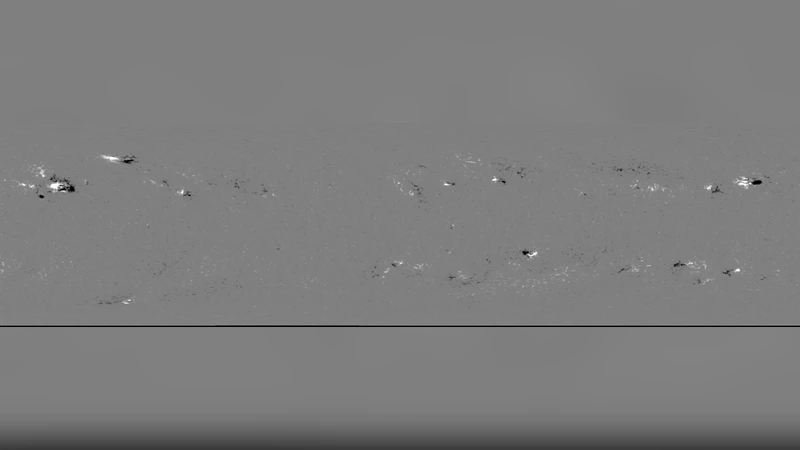
This is the second paper of the statistical study of coronal mass ejection (CME) source locations, in which the relationship between CMEs and active regions (ARs) is statistically studied on the basis of the information of CME source locations and the ARs automatically extracted from magnetic synoptic charts of Michelson Doppler Imager (MDI) during 1997 – 1998. It is found that about 63% of the CMEs are related with ARs, at least about 53% of the ARs produced one or more CMEs, and particularly about 14% of ARs are CME-rich (3 or more CMEs were generated) during one transit across the visible disk. Several issues are then tried to clarify: whether or not the CMEs originating from ARs are distinct from others, whether or not the CME kinematics depend on AR properties, and whether or not the CME productivity depends on AR properties. The statistical results suggest that (1) there is no evident difference between AR-related and non-AR-related CMEs in terms of CME speed, acceleration and width, (2) the size, strength and complexity of ARs do little with the kinematic properties of CMEs, but have significant effects on the CME productivity, and (3) the sunspots in all the most productive ARs at least belong to $\beta\gamma$ type, whereas 90% of those in CME-less ARs are $\alpha$ or $\beta$ type only. A detailed analysis on CME-rich ARs further reveals that (1) the distribution of the waiting time of same-AR CMEs, consists of two parts with a separation at about 15 hours, which implies that the CMEs with a waiting time shorter than 15 hours are probably truly physical related, and (2) an AR tends to produce such related same-AR CMEs at a pace of 8 hours, but cannot produce two or more fast CMEs (>800 km/s) within a time interval of 15 hours. This interesting phenomenon is particularly discussed.
💡 Research Summary
This paper presents a comprehensive statistical analysis of the relationship between coronal mass ejections (CMEs) and solar active regions (ARs) using data from 1997–1998. The authors combine two previously developed data sets: (1) a manually compiled catalog of 288 front‑side CMEs with accurately identified source locations (Paper I), and (2) an automatically generated list of 108 magnetic ARs extracted from SOHO/MDI synoptic charts using the method of Wang & Zhang (2008). After excluding events with low confidence or incomplete magnetic maps, the final sample consists of 224 CMEs (referred to as “LI” CMEs) and 108 ARs.
The first major result is that 141 CMEs (63 % of the sample) are associated with at least one AR, while 83 CMEs (37 %) have no identifiable AR counterpart. Conversely, 57 ARs (53 %) produce at least one CME during their transit across the visible disk, and 15 ARs (14 %) are classified as “CME‑rich” because they generate three or more CMEs. These percentages are lower than earlier studies (e.g., Subramanian & Dere 2001 reported 84 % association) because the present work includes all CMEs, not only well‑observed halo or bright events, thereby revealing a substantial population of weak, narrow CMEs that originate from quiet‑Sun regions.
To test whether AR‑related CMEs constitute a distinct kinematic class, the authors compare apparent speed, acceleration, and angular width for AR‑related and non‑AR‑related limb CMEs (where projection effects are minimized). Histograms show that the two groups have virtually identical mean speeds (≈400 km s⁻¹), accelerations (≈−5 m s⁻²), and widths (≈60°). A scatter plot of acceleration versus speed confirms the lack of systematic separation. Hence, CME kinematics appear insensitive to the presence of an AR, contradicting the long‑standing notion of two fundamentally different CME types (impulsive flare‑associated vs. gradual prominence‑associated).
The study then examines how AR magnetic properties influence CME productivity. Four quantitative parameters are extracted for each AR: (i) total area, (ii) total unsigned magnetic flux, (iii) average magnetic field strength, and (iv) a complexity index derived from the number of polarity inversion lines and magnetic gradient measures. Statistical tests (e.g., Pearson correlation, Kolmogorov–Smirnov) reveal that larger, stronger, and more complex ARs are significantly more likely to produce CMEs. In particular, all CME‑rich ARs belong to the βγ magnetic classification (or more complex), whereas 90 % of CME‑less ARs are simple α or β types. This confirms that magnetic free‑energy storage, as indicated by size and complexity, is a key driver of CME occurrence.
A novel aspect of the paper is the analysis of waiting times between successive CMEs originating from the same AR. The distribution shows two distinct regimes separated at ≈15 hours. CMEs occurring within 15 hours of a preceding event have an average spacing of about 8 hours, suggesting a physically linked “cascade” of eruptions, possibly driven by successive destabilizations of the same magnetic system. In contrast, intervals longer than 15 hours appear random and likely represent independent eruptions. Moreover, the authors find that an AR cannot produce two fast CMEs (speed > 800 km s⁻¹) within a 15‑hour window, implying that the magnetic energy required for high‑speed eruptions needs at least that amount of recovery time.
The paper concludes with several implications: (1) CME occurrence is not confined to ARs; a sizable fraction originates from quiet‑Sun regions, which tend to be weaker and narrower. (2) While AR magnetic parameters do not dictate CME speed or acceleration, they strongly control the likelihood and frequency of eruptions. (3) The two‑regime waiting‑time distribution provides an observational constraint for eruption models, indicating a minimum recharge time for high‑energy events. (4) The lack of clear kinematic differences between AR‑related and non‑AR‑related CMEs challenges the traditional dichotomy of impulsive versus gradual CMEs.
Overall, the work offers a robust, data‑driven perspective on CME–AR relationships, emphasizing the importance of magnetic complexity for CME productivity and introducing temporal constraints that should be incorporated into future predictive models of solar eruptive activity.
Comments & Academic Discussion
Loading comments...
Leave a Comment