Recommendation systems: a joint analysis of technical aspects with marketing implications
In 2010, Web users ordered, only in Amazon, 73 items per second and massively contribute reviews about their consuming experience. As the Web matures and becomes social and participatory, collaborative filters are the basic complement in searching on…
Authors: ** - **Vafopoulos Michalis** – 수학과, 아리스토텔레스 대학교(그리스) - **Oikonomou Michael** – 수학과, 아리스토텔레스 대학교(그리스) **
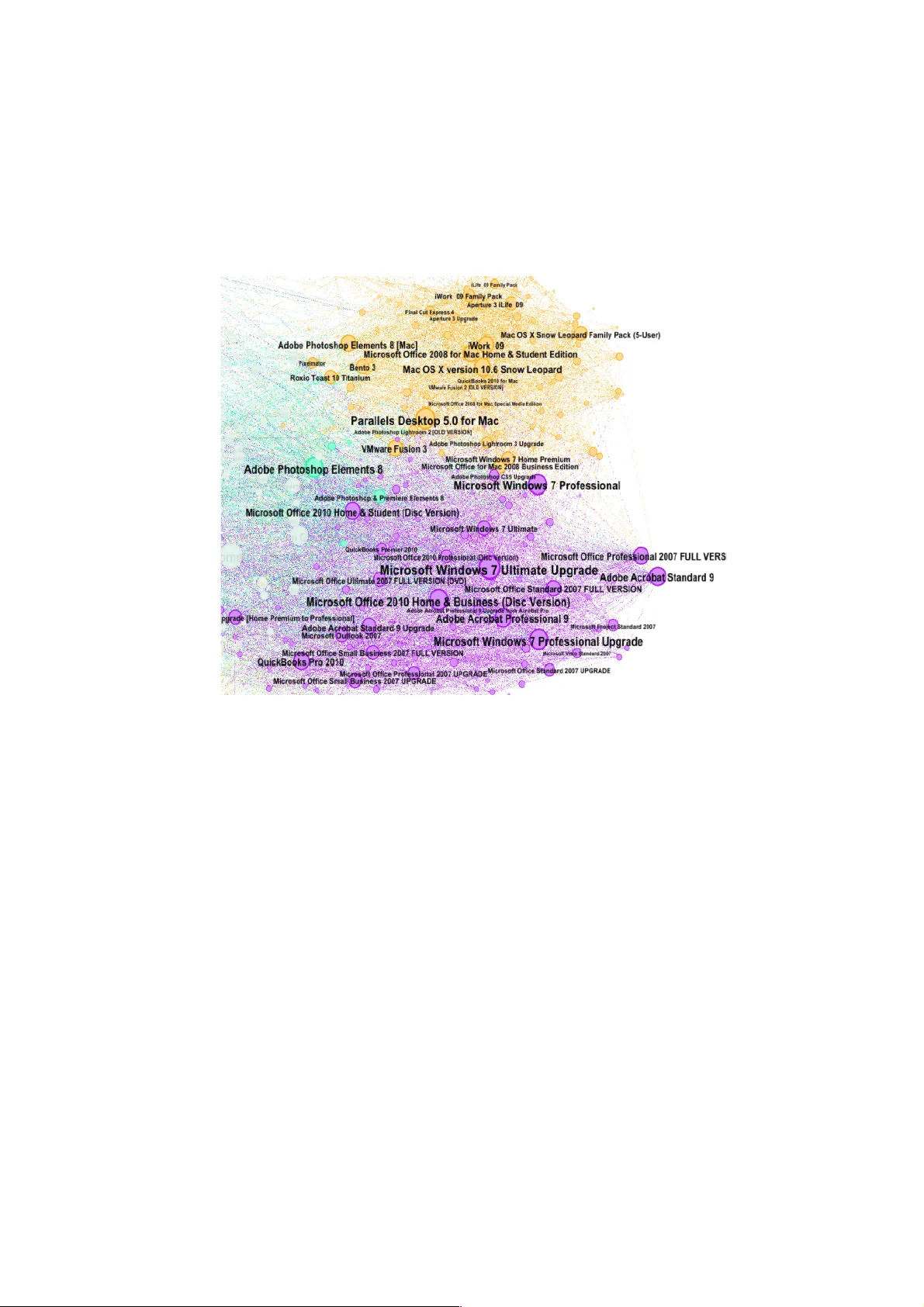
Recommendat ion s ystems: a joint analysis of technical aspects w ith marketing im plications Draft versi on Vafopoul os Mic halis Mathema tics Depart ment, Aristo tle Un iversi ty of Thess alonik i, Gre ece Oikonomou Michae l Mathema tics Depart ment, Aristo tle Un iversi ty of Thessaloniki, Greece ACM: H.3 .3 ; J.4 WSSC: websc ience. org/2 010/D.2 .4 ; websci ence. org/20 10/ E.1.1 .1 AMS: 90B60; 91D30; 62P25;97M10; 97M70 Abstrac t In 2010, Web use rs ordered, only in Amazo n, 73 items per second and massively contribute reviews about their consuming experience. As the W eb mature s and become s so cial and partic ipato ry, collab orati ve filter s are the b asic complement in searching online information about people, events and products. In W eb 2.0 , what connected consumers create is not simply conten t (e.g. reviews) but context . This new contextual framework of consumption emerges through the agg regation a nd collaborative filtering of personal preferences about goods in the Web in massive scale. More importantly, facilitat es connected consumers to search and navigate the complex Web more effectively and amplifies incentives for quali ty. The obje ctive o f the present article is to jointly rev iew the basic stylized facts of relevant research in reco mmendation system s in c omputer and m arketing studies in order to share some common insights. After provi ding a comprehensive definition of g oods and U sers in the W eb , we describe a classification of recommendation systems based on two fam ilies of criteria: how recommendations are formed and input data availability. The classification is presented under a common minimal matrix notation and is used as a bridge to relate d issues in the business and marketing literature. We focus our analysis in the fields of one - to - one marketi ng, network - based marketing Web mercha ndisi ng and atmosp herics and their implica tions in the proce sses of personalization and adaptati on in the Web. Ma rket basket anal ysi s is i nves tig ated in context o f recomm endation sys tems. Discussio n on f urthe r rese arch refers to t he business implicat ions and technologi cal challenges of recommendation systems. Preface Searching, social networking, recommendatio ns in va rious forms , blogg ing and micro - bloggi ng have become part of everyday l ife whilst the major ity of business applications have migrated to the Web. U nderstanding and modeling this enormous impact of the Web in macro (e.g. [1]) and micro scale (e.g. [ 2] , [3]) h as become a major task for computer and social scientists. T he tr ans- dis cipl inar y field i n th is d irec tio n h as bee n e nti tl e d “W eb Scie n ce” and is focused in the significant recip rocal relationsh ip among the socia l interactions enabled by the Web’s design, the scalable and open applications development mandated to support them, and the architectural and data requirements of these large - scale applications [4] , [5] , [6] . The W eb “curves” physical time and space by adding flexibilit y, universality [7] and more available options [8] , [9] and sources of risks [10] . At th e cu rrent Web 2.0 era, Users can easily edit , int erco nnec t, aggreg ate and comme nt text, images an d video in the Web . Most of these opp ortunities are engineered in a distributed and self - po wered level . In particular, r ecommendation systems have become m ainstream applications in the Web with ma ssive User particip ation affecting an important part of offline and online industries. During the last twent y year s, res earch and prac tice on recommen d ation systems i s growing in an increasing pace. This massificat ion creates new business opportunities and challenging research issues in software development, data mining , design of be tter algorithms, m arketing , managem ent and related issues. User and busi ness demands are now setting part of the research agenda in recommendation systems literature. Re cently, n ew research communities (e .g. network analysis) from diverse fields have started to i nvolve in the research of recommen dation systems in order to un de rstand the economic behavior of online consumers and its implications to business process and competition. Computer science literat ure and related fields are often enriched by bibliographic reviews on the advancements of recommendation systems ( [11] is th e most recent) . To the best of our knowledge, it does not ex ist an effor t to joint ly review th e technical and business aspects o f recom mendation systems. Thus, th e objective of the pre sent artic le is to ove r view the main aspects of relev ant rese arch in rec ommendation systems both in computer and m arketing studies in order to create a bridge and facili tate t he sharing of common insights. The arti cle is organized as fol lows. The first section is devoted in the description of the fundamental changes that the W eb brings i n the economy. Specifical ly, the role of recomme ndation sy stems is identified as a n impo rtant part in the tra nsition to more en ergetic an d interdep endent co nsumptio n patterns. The second section provides an overview of the technical aspects char acter izing recommen dation systems. After providing a targeted and comprehensive definition of goods and Users in the Web, we describe a classification of recommen dation systems base d on two families of criteria : h ow recomm endations are formed and input data availability. The classification is presented under a common minimal matrix notation. The third section reviews the rel ated issues of recommen dation systems in the busine ss and ma rketing literature. W e focus o ur analysis in the fields of one - to - one marke ting, network - based marketing, Web mercha ndisi ng and atmosp herics and their implica tions in the proce sses of personalization and adaptati on in the Web. M arket basket analysis is investi gated in the context of re commen dation s ystems. The f inal sectio n discu sses issues for further research. 1 Consumption in the Web 1 .1 Introduction Some economists expected that the W eb would gradually lead to perfect informatio n in consum ption, acu te price com petition and pricing at the marginal cost followed by low dispersi on [12] . The basic argum ents were based on low er search and fixed costs, less product differentiation and “frictionless com merce” via the Web . Th ere is not str ong ev idence th at man y things have changed in these directions in the markets of ordinary goods, since online prices are still d ispersed, not much lower than offline (see for instance [13] and [14 ] ) and many sectors continue to share oligopolist ic characteristics. But what actually changed, and not expected at all, was the emergence of new types o f c onsumption and production, new service sectors (e.g. Software as a Service) and the transformat ion of ex isting i ndustries (e.g. mass media). The resulting reconfiguration s in the triptych of production - exchange - consump tion stemmed from an u pdate in the fun damentals of the economy that the W eb brings. Basical ly, the Web is contribut ing one major new source of increasing returns in the e conomy : m ore cho ices with less transaction costs in production and consumption. This source of value arises from the orchest ration of digital and network characteristics of g oods in the Web. More choices in consumption are ranging from larger variety of available goods, to online consum er reviews , recommen dations and adaptive content. This updated mod e of co nnected consumption allows consumers to m ake more informed decisions and provides them with stron ger incentives to take part in the production and exchange of mainly infor mation - based goods. On the other hand, the provision of more choices with less transacti on cost in consum ption is not always coming without compensation. The leading native business model in the W eb is the forced joint consumption of online information and contextual advertisements in massive scale. Turning in the production side, many bu siness operations vi rtualized, went online and become less hierarchical, niche online markets and services emerged and traditional industries revolutionized. Decentral ized Peer product ion through loosely affiliated self - powered entities is based on a broader baseline of input and output to create a larger range of possibiliti es for both producers and consumers [15] . Moreove r, the recent emergen ce of “soci al comme rce” as a consu mer - driven online marketplace of personalized, individual - curated shops that are connected in a netwo rk, demo nstrates the volatile b oundaries am ong production , exchange a nd consumption in the Web. 1 .2 More e nerg eti c an d co nnec ted cons umpti on Due to the rapid penetra tion of the W eb in many technol ogical platf orms (e.g. mobile , TV) and social aspects, elect ronic c ommerce has become a m ajor activity in ordinary busine ss o perations. Alm ost every firm in the develop ed world has online presence that describes or/and provides its goods to potential customers. The migration of many business functions in the Web de creased operational costs, primarily, for service - oriented companies. Online commerce is one of the basic components of the Web economy and is gradually becoming an imp ortant sector for t he entire economy. The C ensus Bureau of the Departm ent of Commerce an nounced that the estimate of U.S. retail e - commerce sales for the first quarter of 2011 was $46.0 billion, an increase of 17.5% from the first quarter of 2010 while total retail sa les increased 8.6% in the same period. E - commerce sales in the first quarter of 2011 accounted for 4.5% of total sales 1 . The expansion of online comm erce has attracted many scholars from diverse disciplines such as E conomics, Business and Operation Research, C omputer and Information science, Law and oth ers (fo r a review of e - com me rce literature see [16] and [17] ). Trivial ly, the W eb has enabled consumers to access round - the - clock services and to search and compare products, prices, catalogues, descriptions, technical specifications and so forth. Apart from searching and comp aring t he characteristics of goods and services in the Web, consumers can comment and be informed from othe rs’ con sumers’ purcha ses an d com ments. Consu mption becomes more connected in the Web. In the rest if this sub section we describ e the basic characteristics o f connected consump tion as a broad economic phenomenon related to recomm endation systems . Basical ly, p ositive network effects characterize a good when more usage of the good by any User increases its value for other Users. These effect s are also called p ositive consumption or demand side externalities. As consumers become more connected in the Web ecosystem, the network effects are gradually based on the mutual benefits of consumpt ion , [18] . Connected con sumption defines a new form of direct complementari ty among c onsumers. When Users consume goods through the We b, reveal and con tribute priv ate inform ation abo ut their preferences and 1 http://www.census.gov/ retail/mrts/ www/data/pdf/ec_current.pdf 2 http://www.cim.co.uk/resources/under standingmarket/definitionmkting.as px). expectations, which is beneficial to other consumers if aggregated and made public. These publicly aggregated consumption pa ttern s and com ments are valuable in two w ays: (a) indirectly, by reducing search and transaction costs (e.g. tags, playlists, collaborativ e filtering) and (b) directly, b y increasing consum ption gains ( e.g. di scovery of complementary goods in co - purchase n etworks [19] ) . Actual ly, what connec ted consumers create is not simply cont ent (e.g. reviews) but context. This new contextual framework of consumption emerges through the aggregated personal preferences about goods in the Web in massive scale. More import antly, facilitates connected consumers to search and navigate the complex Web more effect ive ly and amplif ies ince ntiv es for quali ty. But how so many and heterogeneous consumers around the globe can coordinate their preferences and expectations? In the worl d of Coase , a s mall num ber of c onsumers can effe ctively coo rdinate their p references throu gh in formal agreem ents and formal contrac ts to captu re the benefits of network effects [20] . H owever, the co ordination of larg e num ber of consumers requires high tran saction costs. Hayek [21] argued that the price system acts as a coordination device that synchronizes substantial numbers of producers and consum ers. Spulber [18] extended Hayek ’s analysis of “spontaneous order” to include ma ny other mark et mechanis ms for accomplishing coordination at large. These coordinati on devices include mass media and marketing, mass communications and observation of other consumers. In the W eb era, searc h engines, s ocial networks and recom mendation systems of online retailers (e.g. Amazon, BestBuy) are the most prominent exampl es of mass coordin ation devic es of consume rs’ prefer ences. Searc h engines and social networks are general coordination devices that include the full spectrum of preferences. Recom mendation systems of the W eb me rchants a re focused in increasing the amo unt o f sales by sync hronizing purch asing patterns and adaptin g content prov ision in individ ual Users. It is b eyond the scop e of the present article to rev iew and analyze th e v arious dimensions of W eb economy and com merce, but rather to focus on a specifi c part of it: the business implic ations of the technical aspects characterizing recommen dation systems. 2 Recommendation systems in the Web: the technical aspect 2 .1 Introduction Recommendat ion systems are basic asp ects of the current collaborative W eb era that complement search engine algorithms in information discovery. Today, almost every Web commerce business uses information filtering techniques to propose products f or purchase like a “virtual” s alesperson. Actu ally, recomm endation systems are information filters that exploit user’s characteristics (e.g. demographics) an d preferences (e.g. v iews and purchases) to form recommen dations or to predict user’s future behavior . Commonly, recommen dations in the W eb are m ade automatically b ased on either individual or collective preferences (collaborative filtering) and are presented as hierarchical lists or schem es . For recent surveys on the technical aspects of implementing and analyzing recommendation systems you may re fer to [11] and [22] . In the rest of the section we provide a minimal descri ptive framework of existing research in recommendation systems that focus on understanding the main character isti cs of relate d function s in the Web. The proposed classificati on bui lds on the pre vious atte mpts in related research (see for insta nce Adoma vicius and Tuzhilin [23] ) and extends the underlying categories by taking into consideration the criteria of input data source and availability. In addition, the concepts of “items” an d “products” are specified to the m ore relevant concept of “Web Goods”. 2 .2 Web Go ods and Use rs Recommendat ion syst ems hav e emer ged t o el aborate eff icient searching of goods in the Web t hrough personalized and collective evaluation by the Web Users. Befor e going into the details of recommendation systems let us define what kind of goods are avai lable in the Web. First, Web Goods has been defined as sequences of binary digits, identified by their ass igned U RI an d hyp ertext fo rmat, an d affec t the utility of or the payoff to some individual in the econo my [24] . Their m arket v alue stem s from the digital informatio n they are comp osed from and a specific part of it, the hy perlinks , which link resources and facil itat e navigati on over a networ k of W eb Goods . Web g oods can be further elaborated in the following categories. Pure Web Goods are the primary foc us of the W eb Science research [25] because they are defined to include goo ds that are bas ically exchan ged and co nsumed in th e Web and are not tightly connected t o an ordinary good or a service (pre - ) existing in the physical world. For instan ce, a blog entry that comments the m arket of used cars is a pure Web Good , but a car sales advertisement is not. Accordi ng to a producti on incentives - based categorization, Web Goods are discriminated into commercial (e.g. sponsored search results) and non - commercial (e.g. W ikipedia entries). In contrast to commercial, non - comm ercial Web Goods are produced outside the traditional marke t mec hanisms of price and property and are b ased on openness, Peer product ion and qual itative ex post rewar d schemes. In rec ommendation system s literatu re , Web Goods are common ly refer red as “items” or “products”. In the present article we interchange ably use the term of “ Web Goods ” with the establ ished term s because it better describes the realistic spectrum of goods and services avai lable in an d through th e Web. Web Users (or simply U sers) produce and consume Web Goods. The emergence of the participatory Web highlighted the decisive role of Web Users in the collabo rative creatio n of on line conten t (refer to Vafopoulo s [24] which provides a simple and comprehensive categorization of Web Users based on motiva tions and economi c impa ct of thei r act ions in t he Web ecosys tem ). 2 .3 The main c lassification s of recommenda tion systems In the present article we adop t the minimal de scriptive def inition of recommen dation system s initiated by Berkovsky et al [26] in order to enable the comparative analysis of the technological characteristics w ith the emergent b usiness implications. For more formal and detai led definition of recommen dations systems refer to [11] . Initially, it is assume d the existence of 𝑁 Users with n distinct features, which may re quest reco mmendati ons f or 𝑀 Web Good s wi th 𝑚 distinct featur es. All possible User and Web Good pairs are described by a 𝑛 ! + ! 𝑚 dimensional space. In the simplest case, a single feature a s uniqu e identificat ion desc ribes U sers and Web Goods, resul ti ng a two - dimensional space. The 𝑁 ! 𝑥 ! 𝑀 User - Web Good rating ma trix represents the ratings given by the Users to Web Goods. These ratings co uld be formed explicitly or implicitly in a predefined scale. Explicitly is considered in the sense that are directly cont ributed by Users and not by the recommen dation system (imp licit). Table 1 : list of sym bolic repres entations of the m ain variab les in recommendatio ns system s’ framework U 1 , 2 , … ! , 𝑁 Users with n distinct features I 1 , 2 , … ! , 𝑀 Web goods wi th m distinct features User feat the user featu res (e.g. age, lo cation, incom e) User id a unique identifier of t he Users Web Go od feat Web Good feat ure s ( e.g. I D, p ric e, avai labi li ty) Web Go od id a unique identifier of t he Web Goods Rating the ratings giv en by the U sers to the W eb Good s R gen the general R ecomm endation fu nction R CF the Recom mendatio n function in collaborativ e filtering R CB the Recom mendatio n function in content bas ed filtering Exp CA Context - aware experience Context feat the context f eatures (e.g. p ersonal attitude s and tasks) Data Mod els Rating 𝑅𝑎𝑡𝑖𝑛𝑔 ~ ( 𝑛𝑢𝑚 𝑒𝑟𝑖𝑐𝑎𝑙 , 𝑜𝑟𝑑𝑖𝑛𝑎𝑙 ) Binary 𝑅𝑎𝑡𝑖𝑛𝑔 ~ ( 0 , 1 ) Unary 𝑅𝑎𝑡𝑖𝑛𝑔 ~ ( ∅ , 1 ) The genera l Recommendat ion funct ion ( R gen ) is described as follows: R gen : User feat x Web Good feat ra ting (1) Since in most cases (1) is n ot defined for all possible 𝑛 ! + ! 𝑚 Users - We b Goods pairs (sparsity problem) , a com pletion rule is need ed to fill the missin g values . There fore, t he main focus of analysis o f recommendation systems is two fold: (a) to estimate the ratings of Web Goods that have not been rated by the Users and (b) to provide methodo logies and techniques that will facilita te the formation of recommen dations (Table 1 co ntains the symbols u sed in this section ) . Miss ing values o f the n ot - yet - rated Web Goods can be assessed by ei ther empirical validation of specific heuristic forms of the recommendation function (1) (data - driven approach) or by estimating the r ecommendation f unction that optimizes statisti cal performance criteria (e.g. MSE) (model - driven approach). For a comprehen sive review according to the rating estimation approach refer to [23] . In the pre sent article, r ecom mendation systems are categorized acco rding to two se ts of different criteria : h ow recommendations are created and w hat kinds of data are available , and a u nified analytical framew ork is p rov ided under common symbolism. 2 .3.1 How recommenda tions are formed Regardi ng to how recommendations are formed , r ecommendation sy stems can be classified into the fol lowing three categories [27] : a. Conten t - based recommendations The U ser will be recommended Web Goods similar to her past preferences [28] . In the ca se of con tent - based recommendations the two - dimensional m atrix R CB is given by the followin g representa tion: R CB : User id x Web Good feat ra ting (2) where User id is a unique identifier of the U sers, Web Good feat refers to a feature space that represents the Web Good ’s fea tures and rating reflects the U ser’s evaluation for the Web Good’s features [26] . b . Collab orative reco mmenda tions The U ser will be recom mende d Web Goods that groups of Users with simila r tastes preferred in the past (e .g. co - purchase network of W eb Goods ) . In the c ase of collaborati ve filtering the two - dimensional matrix R CF is becom ing: R CF : User id x Web Good id ra ting (3) Cacheda et al [ 29] in their recent w ork c om pare different techniques of collaborative f iltering by identifying t heir main advantages and limitations . c . Hybrid recommendations In the hybrid a pproach, content - based and collaborative methods are orchestrated i n forming recommendations (for a survey see [30] ). Adomavic ius and Tuzhi lin [23] contributed a more detailed classification of recommen dation systems research by analyzing th e statistical method ology followed in each of the above main three categories . In particular, t hey discriminated user - based (or memory - or heuristic - or neighborhood - based ) and model - based recommendation techniques for each one of the content - based, collaborative and hybrid approaches. User - based filters consider that each U ser participates in a l arger group of similarly behaving individuals and therefore, physical or Web Goods frequently viewed, liked o r purchased, by group members of the group , are the m ain inpu t for re commenda tion algorithms [3 1] . User - based algorithms are heuristics that clas si fy items based o n the entire collection of previously rated Web Goods by the U sers. The model - based approach “ analyzes historical information to identify relations between different items such that the purchase of an item (or a set of items) often leads to the p urchase of anoth er item (or a set of items), an d then use these r elations to determine the recommen ded items. ” [31] . The most popular type o f mo del - based recommendations in We b commerce is referred to the literature as the “ item - based top - N recommend ation algorithm s” (exam ple is p resented in subs ection 3.4.4 ). These algorithms exploit the sim ilarities am ong v arious Web Goods to define the set of the m to be recommen ded (for an u pdated survey on collaborative filters re fer to [32] and [11] ). 2 .3.2 Data sources and data availability The second main category of recommendation systems is based on data sources and data availability . Regardin g th e d ata s ource , four different types of User’s feedback are identified : no feedback, explicit, im plicit and hybrid f eedback . Explici t feedback is formed by direct input of U sers regarding their preferences for specific items. For instance, Amazon reviews; Netfli x star ratings and similar high quality data can be used in collaborative filtering algorithms. In cases where explicit feedback is not available or in adequate for building efficient collaborative systems, implicit feedback is emp loyed. Implicit feedback data basically include browsing , usage patterns , purchase history and social network analysis. For instance, us age pat terns in hypermedia systems are employed to enable adaptation to the individual U ser’s needs (for a review see [33] ). The aforementioned i tem - based top - N recommenda tion algor ithms are based on implicit feed back mec hanisms. Accordi ng to Yifan Hu et a l [34] , collection of implicit da ta is characteriz ed by the followin g four main characteristics: 1. The option for U sers to express no negative feedback is usually absent. 2. Data is inherently n oisy. 3. The numerical values of implicit feedback declare confidence and not preference as in the case of explicit fe edback . 4. Evaluation of recommendation systems based on implicit feedback require updated statistical measures that accou nt for new features such as Web Good availability , competition and dynamic f eedback . Hybr id fe edback r ecomme ndation sy stems are jointly exploit ex plicit and implicit feed back from Users (see for insta nce [35]). Analys is of recommendati on systems can be also indexed on the basis of data availability . According to Bodapati [36] three differen t types of mod els are analyzed by the relevant literature, nam ely: the ratings , the binary and the unary data model s . Specifically, the above classificat ion refers to the availabilit y of data in the N x M User - Web Good rati ng matrix . In the firs t c ase of rat ings data mo del , each U se r provides explicit feedback by reporting a vote for a subset of Web Goods on a num erical (e.g., 1 - 6) or ordinal (e.g., like, indifferent or dislike) scale (Table 1) . The binary data is conside red to be a truncated ve rsion of the f irst model since U sers express either a positive or a negative feedback. Purcha sing a Web Go od or awarding it a rating that meets some threshold could identify positive feedback, commonly recorded as 1. On the contrary, the U ser declares negative feedback (recorded as 0) if she exp resses the intention n ot to purchase th e Web Good or if her rating falls below the thresh old. Finally, the unary data model is a restricted vers ion o f the bina ry da ta mo del b ecause only positive valen ces a re observed. Statistical analysis of item - based top - N recommenda tions is commonly based on the unary data model . 2 .3.3 Context - aware recommendation systems In the introducto ry part of this article we argue th at , th rough rec ommend ation and feedback systems , what connect ed consumer s create is not simply co ntent (e.g. reviews) but context. This new contextual fr amework of consumpt ion emerges through the aggregated personal preferences about goods in the Web an d enables connected consum ers to search and navigate more effectively an d a mplifi es in centi ves f or qua lity in t he pr oducti on of onli ne con tent. The investigat ion in different aspects of contextual informati on is gaini ng attention in fields not only technical such as the Semantic Web, data m ining, informatio n retrieval an d comp uti ng, but also in economics and business studies. There are many diver se defini tions of context. Cont ext in recommenda tion systems analysis could be defined to consist of five concrete aspects: environment, personal attitudes , task s , social and spatiotempora l in formation [3 7] . Recentl y, [38] Ad omavici us and Tuzhilin contributed a t horough review of context - aware recommendation s ystems . They highlight that co ntext - aware recommen dations are characteriz ed by comple xity and interactivity and they initiate three different algorithmic paradigms for incorporati ng contextual informatio n into the reco mmenda tion process . In order to capture the various dimensions of feedback and context McNee et al [39] generalized all possible forms of rating to evaluation and Berkov sky et al [26] extended the general Recomm endation function R gen to inclu de the experience (Exp) of User for a Web Good. Initially, “a n experience is defined as an evaluation func tion that maps a pair, the user tha t had th e experien ce and the item experienced by the user, to an evaluat ion. ” [26] . On this basis, the addit ional third dimension of context shapes the context - aware experience of the User in a recommen dation system. Form ally, is represented as follow s: Exp CA : User feat x Web Good feat x Context fe at ev aluation (4) The inclu sion of contex tual informa tion into the recom menda tion process creates new opportunities in p ersonalizing a nd adapting more efficie ntly online content through existing and innovative business p ractices. In the next section, w e discuss the marketing implicati ons of recommendation systems based on the understanding of c ore functional as pec ts that this sec tion has built. 3 Recommendation systems in the Web: the marketing aspect 3 .1 Introduction In the current W eb, almost every e - commerce business uses information filtering techniques to propose products for purchase like a “virtual” salesperson. Salespersons in the physical w orld are respons ible of making product recommen dations to custom ers, wh ich are integrated and aligned with the firm ’s market ing strateg y. According to the Charter ed Institut e of Marketing , Market ing is the managem ent process, wh ich fulfills the followin g objectives: iden tifying, anticipating and satisfyi ng customer requirements profitably 2 . Marke tin g in th e W eb (or internet marketing or e - marketi ng) is intuiti vely defined as the process of achieving the aforementioned objectives of traditional Marke tin g thro ugh mainly the Web ecosys tem [40] . Therefore , reco mmend ation systems in Web 2.0 , beyond their role as on line “ virtual ” salesperson s , extend firm’s marketing strategy by providing a hyper media two - way channel between 2 http://www.cim.co.uk/resources/under standingmarket/definitionmkting.as px). producers and distributors and customers. In particular, recommendation systems contribute in the fulfi llment of marketing objectives by: • Id enti fying cu stomer req uirements – facilitating massive, more detailed and cheaper data acquisition – extending one - to - one marketing analysis • Anticipati ng customer requiremen ts – enriching statistical modeling of customer’s behavior – extending Market Basket Analysis • Satisfying customer requi rements – provid ing more i nformed , per sonali z ed and adaptive recommendations – impleme nting one - to - one marketing analysis – facilitating better merchandisi ng and atmospherics 3 .2 One - to - one marketing, pers onalization and a daptation i n the Web One - to - one m arketing (a lso referred as per sonalized m arketing) instead of targeting an entire gro up of customer s, as in traditio nal marketing , is desig ned to increase the reve nue of a b usiness by servic ing eac h custom er ind ividually and fitting its needs perfectly [41] , [42] . Thus, the function of one - to - one m arketing is twofold: • understand each customer’s needs individually and • recomm end products th at suit the custo mer’s need s In p articular, o ne - to - one marketing is defined by four principles [43] , namely : (1) identify custome rs, (2) differentiate each custom er, (3) interact with each customer and (4) customize products for each cust omer. Despit e the fact that one - to - one marketing has been employed by researchers and practitioners before the Web , the adv ances on digital and W eb technologies accelerated its expansion. First to mention the contribution of new technology on one - to - one marketing were Gillen son and Sherrell [44] . They also underline d that although super markets dominate the shopping behav ior, customers s till want to be treated as ind ividuals. They highlighted that “One - to - one m arketing activitie s are characterized by a desire to interact individually with the most profitable customers of a firm. By learning the needs and desires of the mos t profitab le customers and responding to those desires, companies can build an intensely loyal and profitable clientele.” In the Web era, the m assive employme nt of recommen dation systems enables the realization of one - to - one marketing not only to “the most profitable customers” as Gillenso n and Sherrel l [44] suggests, but for all Web customers. Mainly, on e - to - one marketing employs content - based and hybrid recommendations. One - to - one marketing in the Web converges to the processes of personalization and adap tation, which have extensiv ely investigated in Com puter science and related fields. Web persona liz ati on coul d be cons ide red as the proc ess in which the co ntent, the layout and the functionality of a w ebsite are being changed dynamically, according to User’ s features in order to provide recommen dations that would fit her. For a n extensive discussion c oncerning v arious defin itions and approaches on personalization refer t o [45] , [46] , [4 7] and [42] . Kim [42 ] distinguishes the modes of personalization in two d ifferent asp ects: informatio n in the Web and one - to - one marketing. However, we s uggest tha t participatory Web commerce through recommendation and feedback mechanisms unifies these aspects. In practice, Web 2.0 merchants attempt to jointly deliver successfu l m arketing mixtu res w ith pe rsonalized and adap tive in formation. Go ing a step further, online content adaptation could be analyzed as system - driven personalization (not to be confused to adaptability which i s U ser - driven personalization) . 3 .3 Web Me rcha ndi sing and Atmosp herics Merch andi sin g and stor e atmosph eric s are the basi c aspect s of sati sfyi ng the customer requirements, w hich are included in the third axe of marketing objectives. In traditional marketing of physical stores, these fields are responsib le for efficient placing of products on the “shelf” and creating the appropriate store atmosphere to attract and sustain new customers. T he emergence of click - and - mortar commerce resul ted import ant trans fers and trans format ions in the busine ss functions of merchandi sing an d store at mospher ics. We briefl y discus s the relevant changes to reco mmendat ion s ystems in t he Web. Merch andi sin g “consists of the activities involv ed in acquiring particular products and making them available at the places, times, prices and in the quantity to enable a retailer to reach its goals” [48] . In the Web , there is no physical shelf, retailer or merchandiser but instead websites to present and dispose products (in the form of Web Goods, as have been defined in subs ection 2 .2 ). The se products are stored in stock centers, homes or database s (in the case of pu re Web Goods) . Web Merchan disi ng focuses on how to make available p roducts in the Web. O nline me rchandisers a re responsib le for produc t collection an d display, including p romotio ns, cross - selling and up - selling. Studies in Web Merchand ising could be divided in four areas [49] : (1) product as sortment, (2) merch andising cues, (3) shopping metaphor and (4) Web design features. Merch andi sin g cues are techniques for presenting and/or grouping products to motiva te purchase in online store s. A good example of merchandis ing cues is recommen dation systems apart from traditional prom otion methods [50] . Web design features share similar functionalitie s and analysis wit h Web atmospherics. Web Atmospherics is the con scious designing of Web env ironments to create positive effects in Users in order to increase favorable customer responses. Just like retailers p rovide imp ortant inform ation throu gh atmosp herics in con ventional stores, online retail ers also create an atmosph ere via their website, which can affect shoppers’ image and experience in the o nline store [5 1] . For a more extended overview on Web atmospherics refer to [52] , [53] and [54] . For example, Nanou et al [5 5] investig ate the effects of recommendations’ present ation on customer’s persuasion and satisfaction in a movie recommender system and they concluded that the most efficient presentation m ethod is based on the “ structured overview ” and the “text & video” int erfaces. Recommendat ion system s could be employed not only for the product’s placement, promotion and related functions but to improve the online environment and atmosphere via dynamic and adaptive features to the User’s and product’s characteristics. M ass merchants in the Web (e .g. Amazo n) u se v arious forms of recommen dations (b oth con tent - based and collaborative) to build the main part of their store ’s architectu re, func tionality an d adapta tion. Indicatively , the webp age of an item in A mazon 3 contains recommendations of the foll owing types: “Frequently Bought Together”, “W hat Other Items Do Customers Buy After Viewing This Item? ”, “Custo mers Who Bought This Item Also Bought”, “Customers Viewing This Page May Be Interested in These Sponsored Links”, “Product Ads from External W ebs ites”, “Cu stomer R eviews” , “Relate d Items” , “Tags Customers Associate with This Product”, “Customer Discussions”, “Listmania!”, “Recently Viewed Items” and “Recent Searche s”. To conclude, the transiti on from tradit ional marketing to marketing in the Web is not a trivial task. Recommen dation systems contribute in this transition as follows: • Market ing object ive s s usta in their core pri nci ples bu t ext end their fi eld of impleme ntation in a more in teractive com munica tion proces s between business and customers a nd among customers themsel ves. • In th is updated comm unication pro cess , reco mmendation systems play a prominent role by aggregating individual preferences and e nabling massive one - to - one marketing. • Recommendatio n systems also facilitat e personaliz ation and adaptation of Web commerce , which drastically aff ect Web m erchandising and atmospherics. We sugges t that one - to - one marketing, recommendation systems and adaptation in the Web are crucial functions that should be further explored, both in Marke tin g and Web studies, in orde r to enhance W eb merchan disin g and atmospherics. 3 The considered example refers to Apple MacBook Pro MC725LL/A 17 - Inch Laptop http://www.amazon.com/Apple - MacBook - MC725LL - 17 - Inch - Laptop/dp /B002C74D7A/ref=s r_1_5?s=pc&ie=U TF8&qid=13092 43292&sr=1 -5 3 .4 Market bask et anal ysi s 3 .4.1 Introd uction There is a class ic example of Market Basket anal ysis st ating, “ beers and diapers are often being purchased together in the same basket”. In t he Web, beers and diapers have been expanded to online music, movies and various types of servi ces. The new marketing strategy mix has to anticip ate changes in purchase behavior and customer requirements. Market Basket analysis is a prominent tool in this effort since a grow ing number of research communities are involving in understanding consumpti on patterns in Web commerce. Apart from traditio nal datab ase and data mining - orient ed research on Market Basket analysis, investigato rs in network analysis and ec onom etrics have recently contributed rich insights in this field. N etwork analysis is m ainly based on crawling publicly available data from recom mendation systems in the Web (e.g. Amazon). 3 .4.2 Definitio ns, hi story and ap plicat ions Let us first describe t he basic definitions and techniques of Market Basket analysis. Marke t Baske t is the s et of items purcha sed b y a custom er d uring one s ingle shopping occasion [56] . During a sh opping t rip, t he cust omers ar e in a “pi ck - any” - situation because they have the opt ion to c hoose no item, one or a ny o ther n umber of items from each category [57] . Mark et Baske t data are binary data (e.g . an item added or not added into basket) organized in sets of items bough t together by customers (often called transact ions [58]). Mark et Basket A nalysis (MBA ) studies the com position of shopping b askets in order to identify customer’s purchase behavior [56] . It is a lso known as association rule mining , w hich is a method of identifyin g custom er purch asing patterns by ext racting associa tions from stores’ transactional databases [59] . A mathemat ical definit ion of MBA is provided by Chen et al [59] : “Given two non - overlapping subsets of product items, X and Y, an associati on rule in form of X|Y indicate s a purchase pattern that if a custome r p urchases X then he or she also purchases Y. Two measures, support and confidence, are commonly used to select the a ssociation rules. Su pport is a measure of how often the transactional records in the da tabase contain both X and Y, a nd confidence is a me asure of the accuracy of the rule, defined as the ratio of the number of transactional records with b oth X a nd Y t o the n umber of transa ctional record s with X only. ” MBA is occupied for mainly marketin g purp oses. In particula r, could be helpful in des igning and implementing: • c ross and up - selling strategies 4 • p rom otion strategies and discounts • l oyalty programs • s tore atmospherics Chib et al [60] summarize the motivation of MBA in the followin g argumen ts: • Create improved estimates of brand - choice elasticitie s with respect to market ing mix variabl es, prope rly account ing for not just the direc t impact but also the indirect i mpact on brand - choice via category purchases [61] • Facilitate the understanding of what factors drive category purchase incidence and what i mpact marketin g - mix variables have at the brand level on catego ry purchases. • Describe the isolati ng correla tions amongst variou s product categorie s within the s hopping bask et in orde r to identify wh ich c ategories are comp lements and which are s ubstit utes. Before the advent of the Web, MBA was enhanc ed by the technolo gical evolutions on transactional system s in commerce (e.g. barcode implementations, RFID etc.) (see for example [62] and [56 ]). E lectronic transactions pro vided the first stream of massive M a rket Baske t data. Aggarwal et al [62] were the first to propose an influenti al algorithmic way for data mining in large transactions databases. One of the tools commonly used to perform MBA is A ffinity analysis . Affini ty Analys is is a techni que that discov ers co - occurrence relationships among transactions perform ed b y spec ific indiv iduals o r group s. For a literatu re revie w on MBA and related techniques refer to Mild and Reutte rer [56] who cla ssify relevant literature depending on the followed statistical ap proach (exploratory or explanatory analysis). The second stream of input data came from Web commerce transactio ns including clicks treams, log files and other brow sing data captured thro ugh voluntary and compulsor y collection pr ocesses. Hao et al [63] argue that MBA has become a key success factor in e - commerce and Kantar dzic [64 ] states “A business can use knowledge of these patterns to improve the Plac ement of these items in the store or the layout of mail - order catalog page and Web pages.” 4 Cross - selling and up - selling are strategies of providing existing customers the opportunity to purchase additional or more expensi ve items , respectiv ely. 3 .4.3 Market Basket A nalysi s and recommendation systems MBA and recommendation systems in Web commerce share the same input transaction data but employ d ifferent tech niques an d address their results to different end users. MBA identifies custome r’s purcha sing patter ns by extracting associations from the data to inform the decisions of marketing m anagers, while recommen dation systems prov ide relative information to Web Users. Traditi onal MBA in purc hasing d ata of physical stores is an ex clusive p roperty of storeowners and contains less information about t he customer’s pur chasing behavior than in online stores. Specifically, in W eb commerce every purchase is assigned with a unique time stamp of occurrence, U sers’ reviews an d evaluations are often contributed and purchasin g behavior could be inter - connected to general browsing patterns and website visits. These extra features of commerce data analysis in the Web offer a comparative advantage to online merchants and raises concerns of excessive market power and personal data abuse through selling to third parties an d profiling without permission. What is also chang ing in Web comme rce is that othe r enti tie s than the store owner/administrator can commence (partial) MBA by coll ecting online recommen dations. For example, Amazon, th e b iggest Web merchan t, is based on a successful item - based collaborative filtering system 5 providing a wide range of general and personalized recommendations. Specifically, the list of “most customers that bought this item, also bought” (BLB) recommended products prese nts r elated items that were co - purchased most frequently with the product under consideration. BLB recommendat ions form the store’s co - purchase network and can be represented as a directed graph in which nodes are products and directed lin ks connect each product with its recommended products. In such setup: “The virtual aisle location of a product is determined, in part collectively by consumers rather than being chosen based on fees paid by manufactur ers, or explicit strategic consideratio ns by the r etailer” [65] . 3 .4.4 Ne twork an alysis of M arket Ba sket data The idea of examining the Amazon BLB co - purchase network was initiated by Krebs [6 6] who proposed the analy sis of emergen t patter ns of connect ions that surround an individu al, or a com munity of inter est, based on book purchases . Dhar et al [67] extended considerably the analysis by assessing the influence of BLB networks on demand and revenue streams in Web commerce. They al so contributed new experimental veri fication about t he signific ance of visible i tem recommen dations on the lo ng tail of commerce in the Web. 5 For more detailed des criptions of colla bora tive filtering please refer to subsection 2.3.1. Oestre icher - Singer and Sundararajan conducted a series of research efforts to analyze time ser ies of co - purchase item networks incorporating methods f rom economic theory, econometrics and computer science. By repeatedly crawling the same items they create time series data for the books under consideration. In their initial resea rch Oestreic her - Singer and Sundararajan [6 8] , [69] , they em ployed a depth - first crawler to collect from Amazon approximately 250,00 0 distinct books during the peri od 2005 - 6. Their mai n focus w as to i nfer demand levels for each item and to evaluate if the network structure influences individual items. This influence was measured by adapting the PageRank algorithm to account for w eighted composite graphs. The variation in the demand distribution across categories was estimated by computing the G ini coef ficient [70] for each category. T heir conjecture was found to be in accordance to the “long tail” for demand phen omenon in ecom merce [7 1] . Their results also include the following: “(1) an increase i n the variance in the extent to which the network influenc es produc ts in a within a category increases the category’s dem and inequity. (which makes intuitive sense in the context of our theory of the ne twork “flatten ing” dem and), (2) The number of products in a category is positively associated with demand inequity, and (3) the average demand within a category is associated with an increase in the category’s demand inequity.” Using a similar to [68] , [69] , dataset Oestreiche r - Singer and Sundararajan [72] ec onometrically identified the influence that visible co - purchase networks have on demand of individual items. Based on a simple set of conditions, w hich imply minimal empirical restric tions on the network stru cture concluded that visible co - purchase network s more than triples the average influence that complem entary items have on demand. They als o estim ated that the magnitude of this social influence is high er for more pop ular and more rec ently publishe d books. On the contrary, p ricing, secondary market acti vity and assortative mixing across product categories are related by counter - intuitiv e ways w ith networ k position o f individual item s. Furtherm ore, in a new er investigation [65 ] the y found am ong others that within a books category an increase in the influence of the recommen dation netwo rk is cons istently related w ith a m ore even distribution of both revenue and demand and when the recomm endations are internal to a category itself, “the redistr ibution of attention they cause compensates demand more within th e category, rather than redirecting demand to a popular book in a different cat egory.” These resul ts have prac tical impl ications for Web commerce since it is becoming clear that conne cted consumption exists online. In 2009 , C armi et a l [73] extend [7 2] to address new research questions related to the diffusion of exogeno us sho cks in the Amazon co - purchase network. I n particular, they estimated how far these shocks propagate, how long they survive and if they affect demand of neighboring items and network st ructure. The initial dataset was augmented to include two years more data and book reviews about the books of Oprah Winfrey t hat appeared on the Oprah.com and “Sunday Book Review” secti on of the New York Times. They identifie d a consist ent relation ship bet ween the shape of the diffu sion curve and the level of cluster ing in the co - purchase network. They also concluded that two subsets of reviewed books exist: “those whose demand increase is substantiall y higher than the total increase for its neighbors, and tho se for which the total inc rease in deman d fo r th e ne ighbors is an order of magnit ude hi gher. ” Going a step furt her from the econo metric identi ficat ion of impac t that the visible co - purchase links have to demand [65] , Dhar et al [67] assessed whether co - purchase item networks contain useful predictive information about sales. In particular, they estimated a simple auto - regressive mo del, where d emand in th e next period is modeled as a li near combination of de mands in previous peri ods. By analyzing an exten sive dataset, which covers a diverse set of books spa nning over 400 categories over a period of three years with a total of over 70 million observations they concluded that changes in demand for each item can be predicted more accur ately using net work info rmation. Recentl y, in a relevan t experimenta l study , V afopoulo s et al [1 9] crawled a set of 226,238 products from all the thirty A mazon’s categories, which form 13,351,147 co - purchase connections. They introduce the analysis of local (i.e. dyads and triad s) and community structures for each catego ry and the more realistic ca se of differen t prod uct ca tegories (market basket analysis). Their main results concerning the purchasing behav ior of Web cons umers are the follow ing: • The cross - category analysis revealed that Amazon has evolved into a b ook - based multi - store with strong cross - category connections. • Co - purchase links not only manifest complementary consumption, but al so switching amo ng competitive products (e.g. the majority of consume rs switch from Kasper sky to Norton Internet security suite). • Top selling products are important in the co - pu rchase network , a cting as hubs, authorities and brokers (or “mediators”) in consumer preference patterns. • Ostensib ly competi tive products may be consumed as complements because of the existe nce of compa tibility and comp atible pro ducts tha t facilitate their join t consumption. Let us focus on the community anal ysis of the co - purchase network of products. For a given network, a community (or cluster, or cohesive subgroup) i s defined to be a sub - network whose nodes are tightly connected, i.e. cohesive. Since the structural cohesion of the nodes can be quantifie d in several different ways, many different formal defini tions of community structure s have been emerged [7 4] . Th e an alysis of community structures offers a deeper understanding for the u nderlying functions of a network. Figure 1 shows a part of the software products co - purchase network, where different colors indicate different community m embership. Different product co mmunities have been identi fied based on the spi n glass community detec tion algorithm [75] . Analys is indicat ed that the seem ingly com petitive produ cts of Apple and Micr osof t a re i n r eal ity consumed as if th ey we re com pleme ntar y. Microsof t (nodes with purple color) and Apple (nodes w ith orange color) product communities are “med iated” by compatibility like VM ware Fusion, Parallels Deskto p and compati ble p roduct s li ke Offi ce fo r Mac. Fig. 1 Microsof t and Apple soft ware pr ograms are c onsumed as co mplemen ts, because of compatibility (e.g. Parallel Desktops) and compatible (e.g. MS Office for Mac) products. 3 .5 Network - based marketing In parallel, apart of e- marketing studies has been recentl y emerged the field of network - based marketing. Network - based marketing refers to a collection of market ing technique s that take advantag e of links between consumers to increa se sales and should not be confused w ith network or m ultilevel marketing [76] . It could be also found in the literature as word - of - mouth and buzz marke ting [7 7] and viral marketing [7 8] . The main f ocus is to mea sure ho w prod uct ado ption propagates from consumer to consumer through recommendation systems [78] and customer feedback mechanisms [79], [80] . Contras tingly to tradition al mark eting studies, netw ork - based marketing models interd ependen t consumer prefer ences through explicit and impli cit links among consum ers. According to Hill et al [76] statistical research in network - based marketing includes six main fields: (1) econometric modeling, (2) network classification modeling, (3) surveys, (4) designed experiments with convenience samples, (5) diffusion theory an d (6) collaborative filtering and recommenda tion systems. Recommendat ion systems are relevant t o n etwork - based m arketing because share the same obje ctive t o exploit the underlying knowledge residing in the stored data that are related to custom er behavior (for a review in related literature refer to [8 1]). As Hill et al [76] highlight “Recommendation systems may well benefit from information abou t explicit consu mer interac tion as an ad ditional, perhaps quite i mportant, aspect of similarity.” Leskovec et a l [78] studied an extensive snapshot of Amazon’s person - to - person recommendation network of products. They modeled propagation of recommen dations and the cascade sizes according to a simple stochastic mo del and concluded that product purchases follow a ‘long tail’ and that on average recommen dations are not very effective at inducing p urchases. Based on Bay esian network analysis identified communit ies, pro duct, and pricing categories for which viral marke ting i s con sidere d to be ef ficie nt. 4 Discussion Makin g good produ ct recom menda tion s in the Web is not just matter of fast algorithms, but also a business task. Moreover, selling products and services in the Web has beco me a compl ex issue with equall y import ant techn ica l and busin ess aspects, because Users, apart from searching and comparing the characteristics of products, can comment and be informed from others’ Users’ purchases and comments. In Web 2.0, U sers reveal and contribute private information about their preferences and expectations, which is beneficial to other consumers if aggregated and made pu blic. Consumption becomes more connected in the Web. This fact calls for new ways of investiga ting related Web p henomen a and beha vior. In this article, we review recom mendation systems, not only as techn ical artifacts, but also as parts of the more general problem of studying online purchasing behavior. The main focus is to highlight useful connec tions among diverse research efforts, which share some common tasks and challenges. In particular, we discuss the specific fields of one - to - one marketing, network - based market ing, Web merchand ising and atmospheri cs and their implicat ions in the processes o f person aliza tion and ad aptation in the W eb. The trans formation of traditional mar keting metho dologies in the We b e cosystem is a mu ltifold task, in which r ecommenda tion sy stems co uld cont ribut e becau se (a) Market ing o bjec tiv es sustain their core principles but extend their field of implementation in a more interactive co mmunica tion process b etween bus iness and custo mers and among customers themselves, (b) i n this updated communication process , recommen dation systems play a pro minent role b y aggregating indi vidual preferences and enabling massive one - to - one m arketing and (c) r ecom mendation systems also facilitate p ersonalization and adap tation of Web commerce, which drastically affect Web merchandising and atmospherics. Marke t basket analy sis is anal yze d in the co ntext of recommendation systems. The discussed issues in related literature are micro - economic issues, which directly r efer to what types of recommendations are appropriate in achieving certain tasks. But participatory and interactive Web com merce ra ises a series o f issues rela ted to the W eb economy in the macro level. As more and more companies are participating in the Web commerce, finding and analyzing consumption patterns is an essential key to their success. Data is the “king” and trust th e “qu ee n” in W eb commerce and if are c ombined with navig ational patterns and social networking, give to online mass merchants a strong comparative advantage, not only against their direct com petitors in the Web but also against to the “bri ck - and - mortar” r etail ers . At the same time, t hese massi ve amount s of personal and market data raise concerns about privacy and excessive market power . To the best of our knowledge, there is no ye t scientific i nvestigation in t he economic or law litera ture concerning the excessive m arket pow er of Web merchants, which steams from data exploitation. As Clemons and Madhani [82] admit: “Some digital business models may be so i nnovati ve that they o verwhel m exist ing reg ulator y mechani sms, both legislati on and historical jurisprudence, and require extension to or modifi cati on of antit rust law.” An emergent challe nge for recommendati on syste ms will be the case of extensive application of Web 3.0 technologies in Web com merce (e.g. Good Relati ons ontology [83] ). The easier explorati on and co mpari son of Web Goods from Users will enable further competition and lower price dispersion. Sem i - automatic contracting and busines s rules formation [84] have t he potential to extend recommendation systems in a wider range of functionali ty. The researc h ag enda of economists, compu ter and information scientists is filling up with issues com ing from Web commerce and in our point of view, this is going to happen for many years. Experts in algorithms, statisti cs and business intelligence will expe riment with alternative r ecomme ndation and feedba ck systems (e.g. context - aware systems) but it seems that their efforts should account more seriou sly for data privac y concerns. An alt ernati ve and more generic approach may be to extend the Web architecture to support ex ante information transparenc y an d ac countability rather than ex post security and acce ss res trictions [85] : “ Consumers should not have to agree in advance to comple x policies with unpredictable outcomes. Instead, they should be confident that there will be redress if they are harmed by improper use of the information they provide, a nd otherwise they s hould not have to t hink about this at all ” . Consequen tly, future challenges in recommendatio n systems will not be purely technical or bus iness - oriented. They will involve issues like privac y , trust and provenance in sem antic a nd ubiq uitous Web env iro nment s , market competition and regulation . 5 References [1] R. A lbert and A. Barabási , “Stati stical mechanics of complex networks,” Reviews of Modern Phy sics , vol. 74, no. 1, pp. 47 - 97, 2002. [2] M. Vafopou los, T. Theodo ridi s, and D. Konto kost as, “Int er - Viewing the Amazon Web Salesper sons: Trends, Compleme ntari ties and Competit ion,” in 15th Panhellenic Conference on Informatics (PCI) , 2011, pp. 299 - 303. [3] I. A nagnostopoulos and P. Stavropoulos, “On the feasibility of applying capture recapture experiments for web evol ution estimations,” Applied Mathe matic s Le tter s , vol. 24, no. 6, p p. 1031 - 1036, 2011. [4] J. Hendler, N . Shadbolt, W . Hall, T . Berners - Lee, and D. Weitzn er, “Web science: an interdisciplinary ap proach to understanding the w eb,” Communicat ions of the ACM , vol. 51 , no. 7, pp. 60 – 69, 2008. [5] S. White and M . Vafopoulos, “Web Science: expanding the notion of Computer Sci ence,” in 43rd ACM Technical Symposium on Com puter Science Education , 2011. [6] M. Vafopo ulos , “Web Scienc e Subjec t Catego riza tio n (WSSC),” in Proceeding s of th e ACM WebSci’11 , 2011, pp. 1 - 3. [7] M. Vaf opou los, “Be ing, spac e an d ti me in the We b,” Met aphi loso phy , vol. forthcomin g , 20 12. [ 8] M. Vaf opou los, G. Gravva nis, and A. Pl ati s, The personal Grid e - workspace (g - work) , Grid Techn. WIT Press, 2006 , pp. 209 - 234. [9] M. Vafopou los, “A roadmap to the GRID e - workspace, ” in Advances in Web I ntel lig ence , 2005, pp. 1054 - 1056. [10] M. Vafopo ulo s, “Information S ociety: the two faces of Janu s,” Artificial Intelligence Applicatio ns and Innovation s , pp. 643 – 648, 2006. [11] C. Desrosie rs and G. Karypis, “A comprehensive survey of neighbor hood - based recommendation methods,” Recommender Systems Handboo k , pp. 107 – 144, 2011. [12] G. Elliso n and S. F. Ellison, “Lessons about Markets from the Inter net,” The Journal of Economic Pers pectives , vol. 19, no. 2, pp. 139 – 158, 2005. [13] E. Brynjolfsson, Y. Hu, and M. Smith, “Consumer Surplus in the Digital Economy : Estim ating the Value of Increas ed Product Variety at On line Booksell ers,” Manage ment Sci ence , vol. 49 , no. 11, pp . 1580 - 1596, Nov. 2003. [14] M. Baye , J. Morg an, and P. Schol ten, “Inf ormat ion, sear ch, and price dispersion,” Econo mics and Information syst ems , vol. 1, pp. 32 3 – 373, 2006. [15] Y. Benkler, The wealth of networks: H ow social production transforms market s and freed om , vol. 19, no . 2. 2007, pp . 278 - 282. [16] E. Ngai and F. Wat, “A literature review and classificat ion of electronic commerce research,” Information & Managem ent , vol. 39 , no. 5, pp. 415 – 429, 2002. [17] C. C. Wang and C. C. Chen, “Electronic Commerce Research in Latest Decade: A Literat ure Review,” In ternational Journal of Electro nic Commerce , vol. 1, no. 1, pp. 1 - 14, 2010. [18] D. Spu lber, “C onsumer C oordinatio n in the Sma ll and in the L arge: Implications fo r Antitrust in M arkets with Network Ef fects,” Journal of Competit ion Law and Econ omics , vol. 4, no. 2, p. 2 07, 2008. [19] M. Vafopou los, T. Theodo ridi s, and D. Konto kost as, “Int er -V iew ing the Amazon Web Salesper sons: Trends, Compleme ntari ties and Competit ion.” 23 - May - 2011. [20] R. Coase, “The Problem of Social Cost,” Journal of Law & E conomics , 1960. [21] F. Hayek, “Spontaneous (’grown') order and organized ('made') order,” Marke ts, hierarchies and networks: the coordination of social life , p. 29 3, 1991. [22] D. Jannach, M. Zanker, A. Felf ernig , and G. Friedrich, Recommender Systems: An Introduct ion . Cambrid ge Univ P r, 2010. [23] G. Adomavi cius an d A. Tuzhi lin, “T oward the Next Gene ra tion of Recommender Systems ! : A Survey of the State - of - the - Art and Possible Extensions ,” Knowledge Cre ation Diffusi on Uti lizati on , vol. 17, no. 6, pp. 734 - 749, 2005. [24] M. Vafopo ulo s, “Model ing the Web Economy ! : W eb Use rs and Go ods,” in WebSci ’1 1, J une 14 - 17, 2011, Koblenz, Germany , 2011. [25] J. Hendler, N . Shadbolt, W . Hall, T . Berners - Lee, and D. Weitzner, “Web science: an interdisciplinary ap proach to understanding the w eb,” Communicat ions of the ACM , vol. 51 , no. 7, pp. 60 – 69, 2008. [26] S. Berkovsky, T. Kuflik, and F. Ricci, “Mediation of user m odels for enhanced personalization in recommender systems,” User Modeling and User - Adapted Interac tion , vol. 18, no. 3, p p. 245 - 286, Nov. 2007. [27] M. Bala bano vi ć and Y. Shoha m, “Fab : cont ent - based, collaborative recommen dation,” Communicati ons of the A CM , vol. 4 0, no. 3, p p. 66 – 72, 1997. [28] M. Morit a and Y. Shinoda , “Inf orma tion filt erin g based on user behavi or analysis and best match text ret rieval,” in Proceedings of the 17th annual internationa l ACM SIGIR confere nce on Research an d develo pment in informatio n retrieval , 199 4, pp. 272 – 281. [29] F. Cacheda, V. Carneiro, D. Fernández, and V. Formoso, “Comparison of collaborative filtering algori thms: Limitations of current te chniques and proposals for scalable, high - performance recommender syst ems,” ACM Transactions on the Web ( TWEB) , vol. 5, no. 1 , p. 2, 2011. [30] R. Burke, “Hybrid recommende r systems: Survey and experiments,” User Model ing and Use r - Adapted Interac tion , vol. 12, no. 4, pp . 3 31 – 370, 2002. [31] M. Deshp ande and G. Karypis , “Item - Based Top - N Recommen dation Algori thms, ” vol. 22, no. 1, pp. 143 - 177, 2004. [32] X. Su and T. M . K hoshgoftaar, “A survey of collabora tive filtering techniq ues,” Advances in Artifi cial Int elligenc e , vol. 2009 , p. 4, 2009. [33] A. Kobsa and J. Koenemann , “Per sonali zed Hypermedia Presen tati on Techniques for Improving Online Customer Relationship s,” The Knowledge Enginee ring Re view , vol. 16, no. 2, p . 111, Dec. 2000. [34] Y. Hu, Y. Koren, and C. Volinsky, “Collabor ative filt ering for implicit feedback datasets,” in Data Mining, 2008. ICDM’08. Eighth IEEE International Con ference on , 2008, p p. 263 – 272. [35] P. Resnick, “Recommender syst ems,” Communi cations of th e ACM , 1997. [36] A. V. Bodapat i, “Recommend ation Syste ms with Purchase Data,” Journal of Marketing Research , vol. 45, no. 1, pp. 77 - 93, Apr. 2008. [37] N. Samaan and A. Karmouch , “A mobili ty prediction archit ectur e based on contextual knowledge and spatial conceptual maps,” IEE E Transactions on Mobile Comput ing , vol. 4, no. 6, p p. 537 – 551, 2005. [38] G. Adomavici us and A. Tuzhilin, “Context - aware recommen der systems,” Recommender Sy stems Handboo k , pp. 217 – 253, 2011. [39] S. McNee, S. Lam, and J. Konstan, “In terfaces for eliciting new user preferences in recommender systems,” User Model ing 20 03 , 2003. [40] D. Chaffey, F. Ellis - Chadwick, R. Mayer, and K. Johnston, Internet Marke ting Str ategy Imp lemen tati on a nd Pr acti ce . prentice Ha ll, 2009. [41] L. Hung, “A per sonalized recommend ation system based on pro duct taxonom y fo r on e - to - one marketing online,” Expert Systems with Applicat ions , vol. 29, no. 2, p p. 383 - 392, Aug. 2005. [42] W. Kim, “Perso nal iza tio n: Defin iti on, st atu s, and chall enge s ahead, ” Journal of objec t technology , vo l. 1, no. 1, pp. 2 9 – 40, 2002. [43] D. Pit ta, “Marketing one - to - one and its dependence on knowledge discovery in databases,” Journal of Consumer M arketing , vol. 15, no. 5, pp. 468 - 480, 1998. [44] M. Gill enso n and D. Sherrel l, “Infor mati on Te chnology as the enabler of one - to - one marketing tutorial,” Communicat ions of the AIS , vol. 2, no. September, 19 99. [45] J. Blom , “Person alization: a taxonomy,” in CHI’00 extende d abstracts on Human f actors in computi ng sys tems , 2000, no. Apr il, pp. 313 – 314 . [46] I. Cingil, A. D ogac, and A. Azgin, “a broader a pproach to personalization, ” Communica tions of the ACM , vol. 43, no. 8, pp . 136 – 141, 2000. [47] P. Germanakos and C. Mourlas, “Adaptation and Personalizati on of Web - based Multimedia Content, ” Media , pp. 1- 29, 2000. [48] B. Berman and J. R. Evans, Retail management: a strategic approach . Prentice Hall, 1998. [49] J. Lee , M . Pod laseck, E. Scho nberg, R . H och, an d S . Go mory, “Analysis and visualization of metrics for online merchandising,” Web Usage Analysis and User Profiling , pp. 126 – 141, 2000. [50] J. Lee, M. Podlaseck, E. Schonberg , and R. Hoch, “Visualization and analysis of clickstream data of online stores for understanding web mercha ndisi ng,” Data Mini ng and Knowled ge Dis covery , vol. 5, n o. 1, pp. 59 – 84, 2001. [51] K. A. Machleit , S. A. Erogl u, and S. P. Mantel, “Onlin e retail atmospherics: empirical test of a cue typology,” Journal of Consumer Psychology , vol. 9, no. 1, pp. 29 – 42, 2000. [52] E. E. Manganari , G. J. Siomkos, and A. P. Vrechopoulos, “Sto re atmosphere in w eb retailing,” European Journa l of Marke ting , vo l. 43, no. 9/10, pp. 1140 - 1153, 2009. [53] G. Siomkos, A. Vrechopoulo s, and E. Manganar i, “Web - Atmosph eric Effects on Online Consumer Behavior: A Review of the Literature,” in Proceeding s of IADIS In ternational Conference e - Commerce , 2006, no . 1973, pp. 333 – 337. [54] A. Vrechopoul os, R. O’ Keefe, G. Doukidi s, and G. Siomkos , “Virtual store layout: an experimental comparison,” Journal of Retailing , 2004. [55] T. Nanou, G. Lekakos, and K. Fousk as, “The effects of recommendations’ presentation on persuasion and satisfaction in a movie recommender system,” Multi media Sys tems , vol. 16, pp. 219 – 230, 2010. [56] A. Mild and T. Reutte rer, “An improved coll aborat ive filteri ng approach for pred icting cro ss - category purchases based on binary market basket data,” Journal of Retailing and Consumer S ervices , vol. 10, no. 3, pp. 123 – 133, 2003. [57] Y. Boztug and L. Hildebra ndt, “A market basket analysis conducted with a multivariate logit model,” SFB 649 Discu ssion Papers , 2005. [58] C. C. A ggarwal , C. Procopiu c, and P. S. Yu, “Finding localiz ed associations in market basket data,” Knowledge and Data Engineeri ng, IEEE Transa ctions on , vol. 14, n o. 1, pp. 51 – 62, 2002. [59] Y. Chen, K. Tang, R. Shen, and Y. Hu, “ Mark et basket ana lysi s in a multi ple store environmen t,” Decisio n Suppo rt Sy stems , vo l. 40, no. 2, pp. 339 - 354, Aug. 2005. [60] S. Chib, P. Seetharaman, and A. St rijnev, “Analysis of multi - category purchase incidence decisions using IRI market basket data, ” Advances in Econometric s , vol. 16, pp . 57 – 92, 2002. [61] J. Chiang, “A simultaneous approach to the whe ther, what and how much to buy que stions,” Marketi ng Scien ce , vol. 10, no. 4, pp . 297 – 315, 1991. [62] C. C. Aggarwal, J. L. Wolf, and P. S. Yu, A new m ethod for similarity indexing of mar ket bask et data , vo l. 28, no. 2. Ne w York, New York, USA: ACM, 1999, pp. 407 - 418. [63] M. Hao, U. Dayal, and M. Hsu, “Vis uali zat ion of dire cted associ atio ns in e- commerce transaction data,” Data Vi suali zatio n , 2001. [64] M. Kantar dzi c, Data mining: concepts , models, methods , and algori thms . Wile y - Interscience, 2003. [65] G. Oestrei cher - Singer and A. Sundararajan, “Recommendation Networks and the long tail of electronic comm erce,” Working Papers , n o. January. NET Ins titut e , 2009. [66] V. Krebs, “The Social Lif e of Books: Visu alizi ng Communit ies of Inte rest via Purchase Patt erns on the WWW,” 1999. [67] V. Dhar, G. Oestr eicher - Singer, A. Sundararajan, and A. Umyarov, “The gestalt in graphs: Predicti on using economic networks, ” 2009. [68] G. Oestre icher - Singer and A. Sundararajan, “Network Structur e and the Long Tail of ECommerce Demand,” 2006. [69] G. Oestreic her - Singer and A. Sundararajan, “Linking Network Structure to Ecomm erce Dema nd ! : Theory and Evidence from Amaz on . com’s Copurchas e Network, ” in 34th Telecommunications Policy Research Conferen ce , 2007, pp. 1 - 14. [70] S. Yitzhaki, “Rel ative deprivat ion and the Gini coeffici ent,” The Quart erly Journal of Economics , vol. 93, no. 2 , pp. 321 – 324, 1979. [71] C. Ander son, The long tail . Gramedia Pustaka Utama, 20 06. [72] G. Oestreich er - singer and A. S undararajan, “The Visible Hand of Social Network s in Elect ronic Markets ,” Ele ctronic Commerce Resear ch , 2008. [73] E. C armi, G. Oestr eicher -S inger, and A. Sundararaja n, “Spreading the Oprah Effec t: The Diffusi on of Demand Shocks in a Recommendat ion Network ,” 20 09. [74] S. Boccaletti, V. Latora, Y. Moreno, M. Chavez, and D. U. Hwang, “Complex networks: Structure and dynamics,” Physics reports , v ol. 424, no. 4 - 5, pp. 175 – 308, 2006. [75] J. Reichardt and S. Bornholdt, “Statistical m echanics of community detection,” Phy sical Re view E , vol. 74, no. 1, p. 0 16110, 20 06. [76] S. Hill, F. Provost, and C. Volinsky, “Network - Based Marketing: Identifying Li kely Adopters via Consumer N etworks,” Statistical Sci ence , vol. 21, no. 2, pp. 256 - 276, May 2006. [77] E. Rosen, The anatomy of buzz: How to create word - of - mouth market ing . Crown Busi ness, 2002. [78] J. Leskovec , L. Adamic, and B. a Huberm an, “The dynamics of vi ral market ing,” ACM Transactio ns on the W eb , vol. 1, n o. 1, p. 5 - es, May 2007. [79] C. Dellar ocas, “The digitiz ation of word of mouth: Promise and challenges of online feedback mechanisms,” Man ageme nt Scie nce , pp. 1407 – 1424, 2003. [80] C. D ellar ocas, “E fficiency and robustness of binary feedback mechanisms in trading en vironmen ts with mora l hazard,” 20 03. [81] L. Getoor and B. Taskar, Introduction to statistical relational learning . The MIT Pre ss, 2007. [82] E. K. Clemons and N. M adhani, “Regulation o f Digital B usinesses w ith Natura l Monopol ies or Third - Party Payment Business Models: Antitrust Lessons from the Analysis of Google,” Journal of Management Information System s , vol. 27, no . 3, pp. 43 – 80, 2010. [83] M. Hepp , “Go odre lati ons : An ont olog y for d escribing products and services offers on the web,” Knowledge Engi neering : Pract ice and Patterns , pp. 329 – 346, 2008. [84] H. Boley, S. Tabet, and G. Wagner, “Design rationale of RuleML: A markup language for semant ic web rules,” in International Semantic W eb Worki ng S ympos ium ( SWWS) , 2001, pp. 381 – 402. [85] D. Weitzner, H. Abelson, T. Berners - Lee, J. Feigenbaum, J. Hendler, and G. J. Sussma n, “In formati on ac counta bilit y,” Communications of the ACM , vol. 51, no . 6, pp. 82 – 87, 2008.
Original Paper
Loading high-quality paper...
Comments & Academic Discussion
Loading comments...
Leave a Comment