An ACO Algorithm for Effective Cluster Head Selection
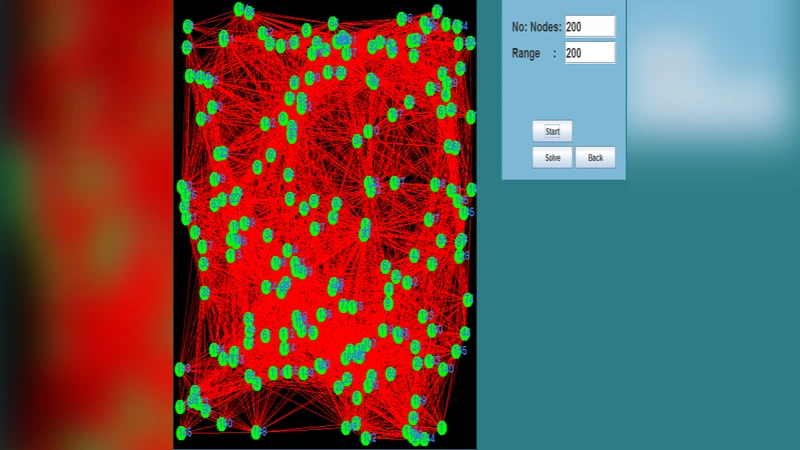
This paper presents an effective algorithm for selecting cluster heads in mobile ad hoc networks using ant colony optimization. A cluster in an ad hoc network consists of a cluster head and cluster members which are at one hop away from the cluster head. The cluster head allocates the resources to its cluster members. Clustering in MANET is done to reduce the communication overhead and thereby increase the network performance. A MANET can have many clusters in it. This paper presents an algorithm which is a combination of the four main clustering schemes- the ID based clustering, connectivity based, probability based and the weighted approach. An Ant colony optimization based approach is used to minimize the number of clusters in MANET. This can also be considered as a minimum dominating set problem in graph theory. The algorithm considers various parameters like the number of nodes, the transmission range etc. Experimental results show that the proposed algorithm is an effective methodology for finding out the minimum number of cluster heads.
💡 Research Summary
**
The paper addresses the problem of selecting cluster heads in Mobile Ad‑hoc Networks (MANETs) by formulating it as a Minimum Dominating Set (MDS) problem, which is known to be NP‑hard. Traditional clustering schemes—Lowest‑ID (LIC), Highest‑Degree, K‑CONID (a hybrid of ID and connectivity), and Weighted‑Cluster Algorithm (WCA)—are each described, and their limitations (e.g., reliance on static identifiers, uncontrolled cluster size, lack of resource awareness) are highlighted. To overcome these drawbacks, the authors propose a meta‑heuristic solution based on Ant Colony Optimization (ACO).
In the proposed ACO‑based algorithm, each node is characterized by two dynamic attributes: (1) visibility, defined as the number of neighboring nodes that would be covered if the node becomes a cluster head (reflecting connectivity, distance, mobility, and energy factors), and (2) pheromone concentration, which accumulates each time the node is selected as a cluster head during iterative runs. The probability of selecting a node i as the next cluster head is computed as
\
Comments & Academic Discussion
Loading comments...
Leave a Comment