The Fermi Paradox, Self-Replicating Probes, and the Interstellar Transportation Bandwidth
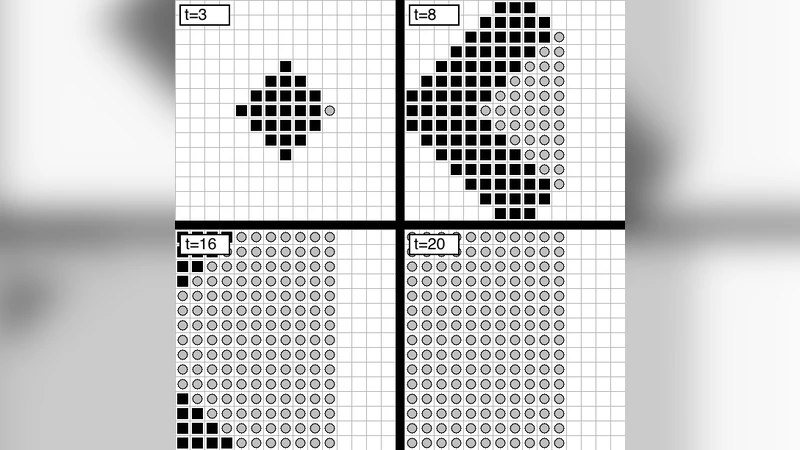
It has been widely acknowledged that self-replicating space-probes (SRPs) could explore the galaxy very quickly relative to the age of the galaxy. An obvious implication is that SRPs produced by extraterrestrial civilizations should have arrived in our solar system millions of years ago, and furthermore, that new probes from an ever-arising supply of civilizations ought to be arriving on a constant basis. The lack of observations of such probes underlies a frequently cited variation of the Fermi Paradox. We believe that a predilection for ETI-optimistic theories has deterred consideration of incompatible theories. Notably, SRPs have virtually disappeared from the literature. In this paper, we consider the most common arguments against SRPs and find those arguments lacking. By extension, we find recent models of galactic exploration which explicitly exclude SRPs to be unfairly handicapped and unlikely to represent natural scenarios. We also consider several other models that seek to explain the Fermi Paradox, most notably percolation theory and two societal-collapse theories. In the former case, we find that it imposes unnatural assumptions which likely render it unrealistic. In the latter case, we present a new theory of interstellar transportation bandwidth which calls into question the validity of societal-collapse theories. Finally, we offer our thoughts on how to design future SETI programs which take the conclusions of this paper into account to maximize the chance of detection.
💡 Research Summary
The paper revisits the classic Fermi‑Paradox question—why we see no evidence of extraterrestrial intelligence—by focusing on self‑replicating probes (SRPs), also known as Von Neumann probes. The author argues that the disappearance of SRP discussions from recent literature is largely due to a decades‑old debate between Tipler (who championed SRPs) and Sagan‑Newman (who warned of their existential danger). By constructing a simple Drake‑like estimate (N_r = N_s · f_r · n_r · G_r) the author shows that, even with conservative assumptions (10⁵ ≤ N_s ≤ 10¹⁰, f_r ≥ 0.1, 1 ≤ n_r ≤ 10, G_r ≥ 0.01), the number of SRPs that should currently be in the Solar System ranges from 10² to 10¹¹. This “over‑population” of probes underlies the paradox.
Two major objections to SRPs are examined. The first, from Sagan and Newman, claims that autonomous probes could mutate into “cancerous” machines that consume all matter. The author counters this by pointing out modern engineering error‑rates (≈10⁻¹⁵ per bit) and the robustness of error‑detecting/correcting schemes, arguing that the probability of a catastrophic mutation across galactic‑scale replication is far lower than the human body’s cancer risk. A “biological bias” is identified: critics implicitly assume that machine intelligence must share human biological vulnerabilities, which is unwarranted for super‑intelligent, engineered probes.
The second objection, from Chyba and Hand, suggests that mutated probes would become predators, creating an ecological web that stalls expansion. The paper argues that such predators must first be capable of catching the original probes—a non‑trivial requirement—and that highly engineered probes would likely evolve cooperative resource‑sharing rather than destructive predation.
The author also introduces the concept of a fully computerized civilization, where exploration and colonization are not separate phases but occur simultaneously via high‑speed starships that also self‑replicate. In such a scenario, SRPs become redundant, and the galaxy could be colonized at speeds comparable to SRP‑driven models.
Beyond SRPs, the paper critiques percolation models of galactic colonization for ignoring realistic inter‑stellar distances, energy costs, and material transport limits. It then evaluates societal‑collapse explanations of the Fermi paradox, proposing a new “interstellar transportation bandwidth” (ITB) framework. ITB quantifies the limited flux of matter and energy between star systems; consequently, a collapse in one civilization would not rapidly cascade across the galaxy, weakening collapse‑based paradox resolutions.
A revised Drake equation incorporating ITB is presented, allowing more nuanced estimates of the number of active, expanding civilizations. Finally, the author offers concrete SETI recommendations: search for anomalous metallic clouds or high‑energy signatures that could be SRP remnants, monitor irregularities in interstellar material flows, and complement traditional radio searches with multi‑wavelength, multi‑method surveys.
In conclusion, the paper asserts that SRPs remain the most plausible mechanism for rapid galactic exploration, that existing objections are insufficiently grounded, and that incorporating ITB reshapes our understanding of societal‑collapse scenarios. It calls for a broader, evidence‑driven SETI strategy that explicitly accounts for the possible presence of self‑replicating probes.
Comments & Academic Discussion
Loading comments...
Leave a Comment