Supergiant Fast X-ray Transients as transient sources in High Mass X-ray Binaries
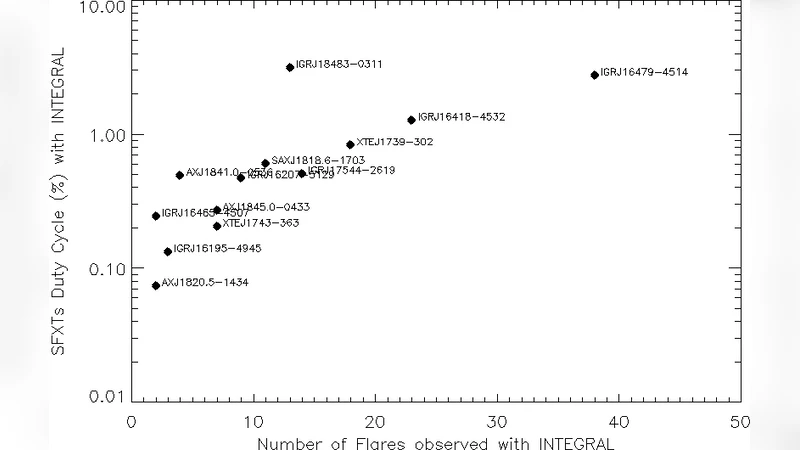
Supergiant Fast X-ray Transients (SFXTs) represent the most extreme case of X-ray variability in High Mass X-ray Binaries hosting blue supergiant companions. Mainly discovered thanks to the INTEGRAL monitoring of the Galactic plane, these hard X-ray transients display dynamic ranges which can span five orders of magnitude. This intensity variability is associated with accretion onto Galactic compact objects (mostly neutron stars) through a physical mechanism which is still poorly understood. A review of the current status of our understanding on these sources is presented and discussed. Finally, I present recent XMM-Newton results about the SFXT IGRJ16418-4532, proposing that its variability behavior is due to a transitional accretion regime, intermediate between pure wind accretion and Roche Lobe Overflow. This same regime could explain the X-ray activity of other “intermediate” SFXTs with narrow orbits.
💡 Research Summary
Supergiant Fast X‑ray Transients (SFXTs) are a recently identified subclass of high‑mass X‑ray binaries (HMXBs) that host early‑type blue supergiant donors. Discovered primarily through the long‑term monitoring of the Galactic plane by INTEGRAL, these systems display the most extreme X‑ray variability known in HMXBs, with dynamic ranges that can reach five orders of magnitude. Their outbursts last from a few hundred to a few thousand seconds, reaching peak luminosities of 10³⁶–10³⁷ erg s⁻¹, while the quiescent or low‑state emission is typically 10³³–10³⁴ erg s⁻¹ and shows a softer spectrum. About half of the known SFXTs are X‑ray pulsars, with spin periods ranging from a few seconds to over a thousand seconds, and orbital periods spanning 3.3 d to 165 d.
The paper first reviews the observational phenomenology of SFXTs. In bright flares the spectra are well described either by a flat power‑law (photon index Γ≈0–1) with a high‑energy cutoff around 10–30 keV, or by a thermal bremsstrahlung model with kT≈15–40 keV. In low‑intensity states a softer power‑law (Γ≈1–2) plus a soft thermal component (kT≈0.2–0.3 keV) is required, the latter likely originating from the shocked supergiant wind. Occasionally a double‑component continuum (blackbody plus Comptonized plasma) is seen in the least absorbed sources. The soft excess observed during flares can be modeled with a photo‑ionized wind (ionization parameter ξ≈125 erg cm s⁻¹).
Several physical mechanisms have been proposed to explain the dramatic variability. The “clumpy wind” scenario attributes flares to the accretion of dense wind clumps, but this alone cannot explain why classical supergiant X‑ray binaries (SGXBs) with similar winds show persistent emission. The centrifugal or magnetic barrier model invokes very high magnetic fields (B≈10¹⁴–10¹⁵ G) and long spin periods to intermittently halt accretion; however, many SFXTs lack such extreme parameters. Orbital geometry (separation, eccentricity) also influences the accretion rate, yet some SFXTs have shorter orbits than persistent SGXBs, suggesting that orbital parameters are not the sole driver.
The core of the paper focuses on new XMM‑Newton observations of the SFXT IGR J16418‑4532, a system with one of the shortest known orbital periods (P_orb≈3.74 d) and a long spin period (≈1200 s). This source belongs to the “intermediate” SFXT subclass, showing a dynamic range of only two orders of magnitude (5×10³⁴–5×10³⁶ erg s⁻¹). The 2011 XMM‑Newton dataset reveals: (1) flaring activity with a dynamic range of ~100, (2) a hint of quasi‑periodic flares on ~10⁴ s timescales, (3) a double‑peaked pulse profile during low‑luminosity intervals (single peak in earlier observations), (4) a lower absorption column (N_H≈8×10²² cm⁻²) compared with 2004 (N_H≈19×10²² cm⁻²), and (5) a soft excess consistent with a photo‑ionized wind. The light curve bears a striking resemblance to simulations by Blondin & Owen (1997) of a “transitional” accretion regime that lies between pure wind accretion and full Roche‑lobe overflow (RLO).
In this transitional regime, the supergiant nearly fills its Roche lobe but does not yet undergo stable RLO. The dominant mass‑loss channel remains the fast radiatively driven wind, yet a weak tidal gas stream is pulled toward the neutron star. The interaction between this stream and the bow shock surrounding the compact object creates large, rapid fluctuations in the accretion rate, producing the observed flares and quasi‑periodic variability. The asymmetry of the combined wind‑stream flow can also generate temporary, short‑lived accretion disks with alternating angular momentum directions, naturally explaining the observed changes in pulse profile morphology.
The authors argue that this transitional accretion picture can also account for other intermediate SFXTs with short orbital periods (e.g., IGR J16479‑4514, XTE J1739‑302). In these systems the donor star’s proximity to its Roche lobe, combined with a structured, possibly inclined outflow, leads to episodic enhancements of the mass‑transfer rate without a full RLO. Consequently, SFXTs and persistent SGXBs may represent a continuum of accretion regimes rather than distinct classes.
The paper concludes by emphasizing the need for high‑time‑resolution X‑ray monitoring (e.g., NICER, future Athena observations) and three‑dimensional radiation‑hydrodynamic simulations to quantify the key parameters of the transitional flow: wind density, stream mass‑loss rate, magnetic field strength, and the degree of wind clumping versus orbital separation. Complementary optical/IR spectroscopy of the donor stars would help assess how close the supergiants are to filling their Roche lobes and characterize wind geometry. By integrating these multi‑wavelength data, the community can test whether the transitional accretion regime truly bridges the gap between classical wind‑fed SGXBs and the extreme flaring behavior of SFXTs, thereby advancing our understanding of mass transfer and accretion physics in massive binary systems.
Comments & Academic Discussion
Loading comments...
Leave a Comment