Short-term forecast of the total and spectral solar irradiance
Among several heliophysical and geophysical quantities, the accurate evolution of the solar irradiance is fundamental to forecast the evolution of the neutral and ionized components of the Earth’s atmosphere.We developed an artificial neural network model to compute the evolution of the solar irradiance in near-real time. The model is based on the assumption that that great part of the solar irradiance variability is due to the evolution of the structure of the solar magnetic field. We employ a Layer-Recurrent Network (LRN) to model the complex relationships between the evolution of the bipolar magnetic structures (input) and the solar irradiance (output). The evolution of the bipolar magnetic structures is obtained from near-real time solar disk magnetograms and intensity images. The magnetic structures are identify and classified according to the area of the solar disk covered. We constrained the model by comparing the output of the model and observations of the solar irradiance made by instruments onboard of SORCE spacecraft. Here we focus on two regions of the spectra that are covered by SORCE instruments. The generalization of the network is tested by dividing the data sets on two groups: the training set; and, the validation set. We have found that the model error is wavelength dependent. While the model error for 24-hour forecast in the band from 115 to 180 nm is lower than 5%, the model error can reach 20% in the band from 180 to 310 nm. The performance of the network reduces progressively with the increase of the forecast period, which limits significantly the maximum forecast period that we can achieve with the discussed architecture. The model proposed allows us to predict the total and spectral solar irradiance up to three days in advance.
💡 Research Summary
**
The paper presents a novel operational approach for short‑term forecasting of total solar irradiance (TSI) and solar spectral irradiance (SSI) using an artificial neural network (ANN). The authors base their methodology on the widely accepted premise that most of the variability in solar irradiance is driven by the evolution of the Sun’s surface magnetic field. To capture this evolution in near‑real time, they ingest quick‑look (JPEG) line‑of‑sight magnetograms and continuum intensity images from the Helioseismic and Magnetic Imager (HMI) aboard the Solar Dynamics Observatory (SDO). These images are available with a latency of about 15 minutes, making them suitable for operational use despite their non‑linear digital scaling and relatively low spatial resolution (1024 × 1024 pixels).
Data preprocessing and feature extraction
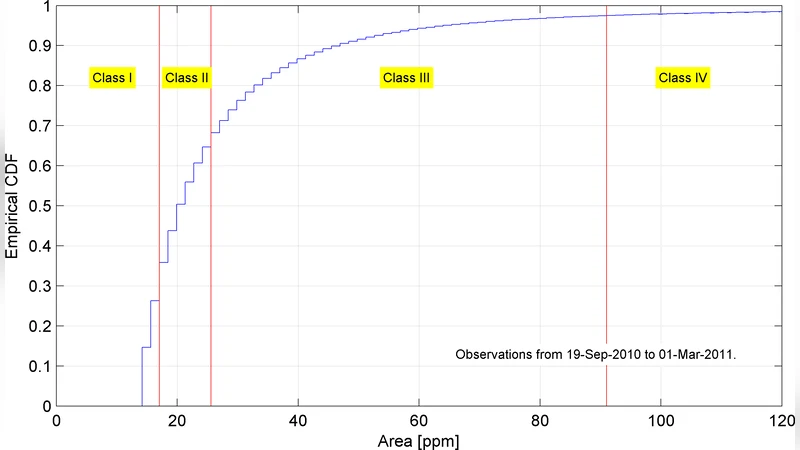
The raw images are first trimmed to isolate the solar disk, then segmented using fixed thresholds on magnetic field strength and intensity to produce binary masks that separate quiet Sun, magnetic active regions, and sunspots. A four‑connected component labeling algorithm identifies individual magnetic structures, and small artifacts (<10 pixels) are discarded. For each identified structure the fractional area of the solar disk it occupies (the “filling factor”) is computed. The distribution of filling factors is examined over a month of data and divided into four size classes (small to large) for both active regions and ephemeral regions. Together with the quiet‑Sun and sunspot filling factors, this yields a seven‑dimensional input vector for the ANN.
Neural network architecture
The authors employ a Layer‑Recurrent Network (LRN), essentially an Elman‑type recurrent ANN. The first hidden layer uses a hyperbolic‑tangent (tanh) activation function, while the output layer is linear. A single‑step feedback loop from the hidden layer to itself introduces temporal memory, allowing the network to smooth out outliers and capture short‑term dynamics. Network weights, biases, and the recurrent feedback coefficient are optimized using Bayesian regularization (MacKay 1992), which balances data‑fit against model complexity and mitigates over‑fitting.
Training, validation, and performance
Training data consist of SSI measurements from the SORCE mission (TIM for TSI, SOLSTICE for 115–180 nm, and XPS for 180–310 nm) spanning September 2010 to December 2011. The dataset is split into 70 % for training and 30 % for validation. Forecasts are generated for horizons of 6 hours (near‑real‑time), 24 hours, 48 hours, and 72 hours. For the 24‑hour horizon, the model achieves a mean absolute error (MAE) of less than 5 % in the 115–180 nm band, while errors increase to up to 20 % in the 180–310 nm band. Errors grow roughly linearly with forecast length, reaching 10–30 % for the 48‑ and 72‑hour forecasts. The degradation reflects the limited memory depth of the simple LRN architecture; longer‑term solar magnetic evolution would require more sophisticated recurrent structures or physics‑based flux‑transport models.
Comparison with existing models
Traditional empirical SSI models (e.g., SATIRE) compute irradiance by assigning fixed intensity spectra to magnetic components and integrating over the solar disk. Semi‑empirical models such as Solar2000 use proxy indices (Mg II, F10.7) to reconstruct SSI. The presented ANN approach differs by directly learning the mapping from observed filling factors to measured irradiance, thereby bypassing the need for calibrated intensity spectra or proxy regressions. This yields faster computation suitable for real‑time operations, while still achieving comparable accuracy for the UV bands that are most relevant to ionospheric and thermospheric modeling.
Limitations and future work
The reliance on JPEG quick‑look images introduces non‑linearities and potential over‑estimation of magnetic area, especially at low resolution. The authors acknowledge that higher‑resolution, calibrated HMI Level‑2 data (4096 × 4096) would improve filling‑factor accuracy. The current model also excludes flare‑related transients, focusing on timescales longer than one hour. Future extensions aim to (i) incorporate a flux‑transport model to provide month‑scale forecasts, (ii) expand the spectral coverage into the visible and near‑infrared, and (iii) explore deeper recurrent architectures (e.g., LSTM) to enhance long‑term memory.
Conclusions
The study demonstrates that a relatively simple Layer‑Recurrent Neural Network, fed with near‑real‑time magnetic filling factors derived from HMI images, can forecast total and spectral solar irradiance up to three days ahead with acceptable accuracy for operational space‑weather applications. The approach bridges the gap between high‑fidelity research models and the latency/continuity constraints of operational forecasting, offering a viable pathway for integrating SSI predictions into thermospheric and ionospheric models used by satellite operators and atmospheric scientists.
Comments & Academic Discussion
Loading comments...
Leave a Comment