Applications of Monotone Rank to Complexity Theory
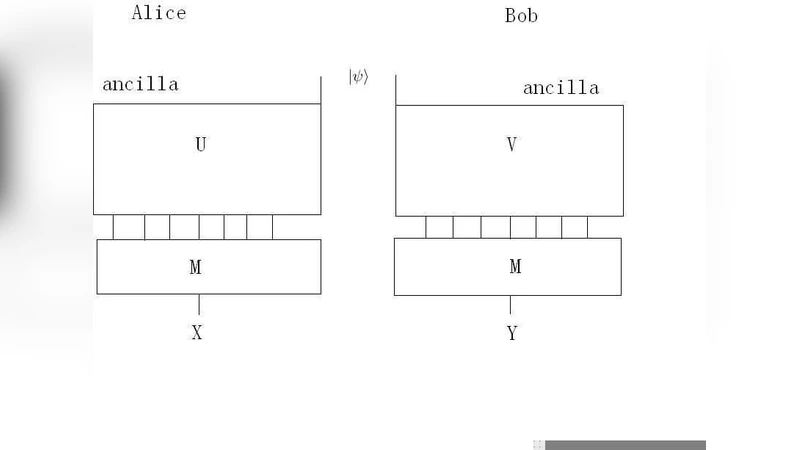
Raz’s recent result \cite{Raz2010} has rekindled people’s interest in the study of \emph{tensor rank}, the generalization of matrix rank to high dimensions, by showing its connections to arithmetic formulas. In this paper, we follow Raz’s work and show that \emph{monotone rank}, the monotone variant of tensor rank and matrix rank, has applications in algebraic complexity, quantum computing and communication complexity. This paper differs from Raz’s paper in that it leverages existing results to show unconditional bounds while Raz’s result relies on some assumptions. We show a super-exponential separation between monotone and non-monotone computation in the non-commutative model, and thus provide a strong solution to Nisan’s question \cite{Nis1991} in algebraic complexity. More specifically, we exhibit that there exists a homogeneous algebraic function $f$ of degree $d$ ($d$ even) on $n$ variables with the monotone algebraic branching program (ABP) complexity $\Omega(d^2\log n)$ and the non-monotone ABP complexity $O(d^2)$. In Bell’s theorem\cite{Bel1964, CHSH1969}, a basic assumption is that players have free will, and under such an assumption, local hidden variable theory still cannot predict the correlations produced by quantum mechanics. Using tools from monotone rank, we show that even if we disallow the players to have free will, local hidden variable theory still cannot predict the correlations produced by quantum mechanics. We generalize the log-rank conjecture \cite{LS1988} in communication complexity to the multiparty case, and prove that for super-polynomial parties, there is a super-polynomial separation between the deterministic communication complexity and the logarithm of the rank of the communication tensor. This means that the log-rank conjecture does not hold in high dimensions.
💡 Research Summary
The paper investigates the monotone rank (mr), the non‑negative analogue of matrix and tensor rank, and demonstrates its power as a lower‑bound tool in three distinct areas of theoretical computer science: algebraic complexity, quantum information theory, and multiparty communication complexity. After reviewing the definition of monotone rank and recalling that computing it is NP‑hard, the authors collect several known lower bounds (e.g., Euclidean distance matrices have mr ≥ log n) and set up the necessary algebraic preliminaries (ABP, monotone ABP, the relationship between ABP size and matrix rank, etc.).
Algebraic complexity. Working in Nisan’s non‑commutative algebraic branching program (ABP) model, the authors construct a homogeneous polynomial f of even degree d on n variables whose coefficients are squares of differences of a bijection g mapping d/2‑tuples to integers in
Comments & Academic Discussion
Loading comments...
Leave a Comment