Boutroux curves with external field: equilibrium measures without a minimization problem
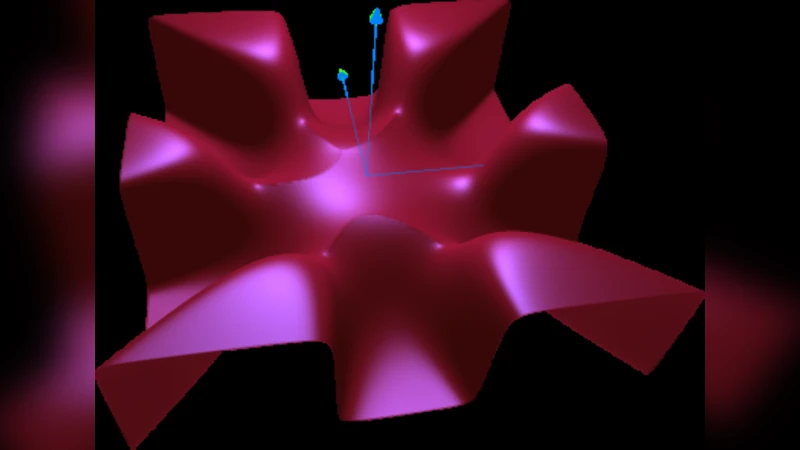
The nonlinear steepest descent method for rank-two systems relies on the notion of g-function. The applicability of the method ranges from orthogonal polynomials (and generalizations) to Painleve transcendents, and integrable wave equations (KdV, NonLinear Schroedinger, etc.). For the case of asymptotics of generalized orthogonal polynomials with respect to varying complex weights we can recast the requirements for the Cauchy-transform of the equilibrium measure into a problem of algebraic geometry and harmonic analysis and completely solve the existence and uniqueness issue without relying on the minimization of a functional. This addresses and solves also the issue of the ``free boundary problem’’, determining implicitly the curves where the zeroes of the orthogonal polynomials accumulate in the limit of large degrees and the support of the measure. The relevance to the quasi–linear Stokes phenomenon for Painleve equations is indicated. A numerical algorithm to find these curves in some cases is also explained. Technical note: the animations included in the file can be viewed using Acrobat Reader 7 or higher. Mac users should also install a QuickTime plugin called Flip4Mac. Linux users can extract the embedded animations and play them with an external program like VLC or MPlayer. All trademarks are owned by the respective companies.
💡 Research Summary
The paper presents a novel approach to the equilibrium measure problem that arises in the asymptotic analysis of generalized orthogonal polynomials with varying complex weights. Traditionally, the construction of the g‑function—a central object in the nonlinear steepest descent method for rank‑two Riemann–Hilbert problems—relies on solving a variational problem: one minimizes a logarithmic energy functional that includes an external field. This minimization leads to a free‑boundary problem, because the support of the equilibrium measure is a priori unknown and must be determined as part of the solution.
In contrast, the authors replace the variational formulation with a purely algebraic‑geometric and harmonic‑analytic framework. They introduce a polynomial
\
Comments & Academic Discussion
Loading comments...
Leave a Comment