Geostationary Antenna for Disturbance-Free Laser Interferometry (GADFLI)
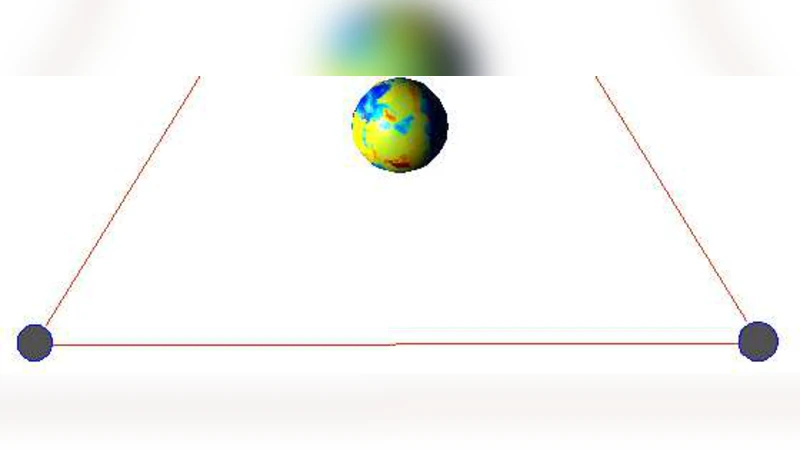
We present a mission concept, the Geostationary Antenna for Disturbance-Free Laser Interferometry (GADFLI), for a space-based gravitational-wave interferometer consisting of three satellites in geostationary orbit around the Earth. Compared to the nominal design of the Laser Interferometer Space Antenna (LISA), this concept has the advantages of significantly decreased requirements on the telescope size and laser power, decreased launch mass, substantially improved shot noise resulting from the shorter 73000 km armlengths, simplified and less expensive communications, and an overall lower cost which we (roughly) estimate at $1.2B. GADFLI preserves much of the science of LISA, particularly the observation of massive black-hole binary coalescences, although the SNR is diminished for all masses in the potential designs we consider.
💡 Research Summary
The paper proposes a new space‑based gravitational‑wave observatory concept called GADFLI (Geostationary Antenna for Disturbance‑Free Laser Interferometry). The mission would consist of three identical spacecraft placed in a geostationary orbit (≈35 800 km altitude) forming an equilateral triangle with arm lengths of roughly 73 000 km (2·cos 30°·42164 km). This arm length is more than an order of magnitude shorter than LISA’s 2.5 million‑km arms, which has profound implications for the hardware, cost, and science performance.
Key engineering advantages
- Reduced optical requirements – Because shot noise scales with received photon flux, the much shorter arms allow the telescope aperture to be reduced from the ~30 cm class envisioned for LISA to 15 cm, and the laser power can be lowered from a few watts to 0.7 W.
- Lower spacecraft mass – Smaller optics, lower‑power lasers, and the elimination of a large propulsion module lead to a lighter payload. The authors argue that a Falcon 9 Block 2 launch vehicle could deliver the three spacecraft, saving roughly $300 M relative to a LISA‑class launch.
- Simplified communications and operations – A geostationary constellation can down‑link data continuously, enabling near‑real‑time analysis and rapid electromagnetic follow‑up of merger events. The orbit also avoids Earth eclipses, improving thermal stability.
- Potential for servicing – Because all three spacecraft share a single GEO orbit, a servicing mission could replace a failed unit without the complexity of a heliocentric transfer.
Primary technical challenges
- Acceleration (force‑noise) environment – The GEO environment is much noisier than the deep‑space environment LISA assumes. The authors model three scenarios for the residual acceleration noise of the drag‑free system: 10×, 1×, and 0.1× the LISA DRS specification (3 × 10⁻¹⁵ m s⁻² Hz⁻¹/²). The “optimistic” case (0.1×) brings the acceleration noise down to the level of the galactic white‑dwarf binary confusion background, beyond which further improvement yields little scientific gain. The “pessimistic” case (10×) would severely degrade low‑frequency sensitivity, essentially eliminating detection of EMRIs and most galactic binaries.
- Station‑keeping – The 23° inclination of a GEO orbit relative to the ecliptic subjects the constellation to solar‑ and lunar‑induced torques that would cause a drift out of the plane. The authors estimate a Δv requirement of ≈45 m s⁻¹ per year, which translates into a Doppler shift of about 25 MHz per year for a 1 µm laser. By sampling the interferometric phase at 50 MHz (twice the Doppler shift), the mission could operate for two years without active propulsion. Consequently, the baseline mission lifetime is limited to two years to avoid the cost and mass of a full propulsion system.
Sensitivity and science performance
Using the Larson‑Hellings‑Bender sensitivity model (including the Hils‑Bender white‑dwarf binary confusion), the authors generate noise curves for the three GADFLI scenarios (named GAD‑HI, GAD‑MED, GAD‑LO) and compare them to LISA and the NGO (eLISA) designs. The key findings are:
- Massive black‑hole binary (MBHB) mergers – All three GADFLI variants retain strong sensitivity to the high‑frequency portion of MBHB inspiral‑merger‑ringdown signals (≈10 mHz–1 Hz). In the optimistic GAD‑HI case the signal‑to‑noise ratio (SNR) for a 10⁶–10⁸ M⊙ merger is comparable to LISA, and the number of detectable events (based on merger‑tree simulations with small and large seed populations) remains high (≈2 400 events for the small‑seed model, ≈720 for the large‑seed model).
- Extreme‑mass‑ratio inspirals (EMRIs) – Only GAD‑HI shows modest SNR (>10) for a subset of EMRIs; GAD‑MED is marginal, and GAD‑LO essentially cannot detect them.
- Galactic binary background – GAD‑HI’s acceleration noise is low enough that the white‑dwarf confusion limit dominates below ≈1 mHz, similar to LISA. GAD‑MED and GAD‑LO are limited by acceleration noise in this band.
Because the GEO constellation can down‑link data continuously, the authors argue that early electromagnetic identification of merger counterparts could be facilitated, potentially improving sky localisation and enabling rapid multi‑messenger observations.
Cost estimate
Adopting the NASA SGO “high‑price‑point” methodology (subtracting from a $1.8 B LISA baseline), the authors estimate a total mission cost of $1.2 B. The main savings stem from reduced launch mass, a two‑year operational lifetime (lower personnel and operations costs), and the omission of a large propulsion module. They acknowledge that this is a rough back‑of‑the‑envelope figure and that a detailed cost‑engineering study would be required.
Conclusion
GADFLI offers a compelling trade‑off: a dramatically cheaper mission that retains the core capability to observe massive black‑hole mergers, while sacrificing low‑frequency performance and the ability to detect EMRIs unless the drag‑free system can achieve acceleration noise well below the LISA specification. The concept hinges on demonstrating drag‑free performance in the GEO environment and on accepting a limited two‑year mission duration. If these technical hurdles can be overcome, GADFLI could become a cost‑effective pathfinder for space‑based gravitational‑wave astronomy, complementing longer‑baseline heliocentric missions.
Comments & Academic Discussion
Loading comments...
Leave a Comment