vFlow: A GUI-Based Tool for Building Batch Applications for Cloud Computing
In this paper we introduce vFlow - A framework for rapid designing of batch processing applications for Cloud Computing environment. vFlow batch processing system extracts tasks from the vPlans diagrams, systematically captures the dynamics in batch application management tasks, and translates them to Cloud environment API, named vDocuments, that can be used to execute batch processing applications. vDocuments do not only enable the complete execution of low-level configuration management tasks, but also allow the construction of more sophisticated tasks, while imposing additional reasoning logic to realize batch application management objectives in Cloud environments. We present the design of the vFlow framework and illustrate its utility by presenting the implementation of several sophisticated operational tasks.
💡 Research Summary
The paper introduces vFlow, a graphical‑user‑interface (GUI) based framework designed to accelerate the creation, deployment, and management of batch processing applications in cloud environments. Traditional batch systems rely heavily on hand‑written scripts and command‑line tools, which makes the development cycle error‑prone and difficult to scale across heterogeneous cloud platforms. vFlow addresses these challenges by separating the design phase from the execution phase through two core artifacts: vPlans and vDocuments.
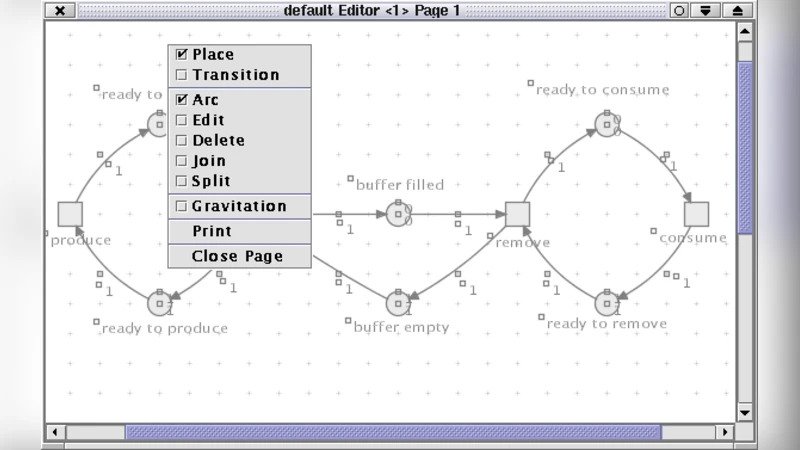
A vPlan is a visual diagram built with a drag‑and‑drop editor. Users place nodes that represent individual batch tasks, conditional branches, loops, and data flows. Each node carries metadata describing the task type, input and output parameters, and execution constraints. Real‑time validation checks for cyclic dependencies, missing parameters, and logical inconsistencies, allowing designers—even those without deep scripting expertise—to construct correct workflows quickly.
Once a vPlan is completed, the vFlow engine parses the diagram, constructs an internal task graph, and translates it into a vDocument. A vDocument is a declarative specification that maps directly to the APIs of major cloud providers (e.g., AWS CloudFormation, Azure Resource Manager, OpenStack Heat). This mapping is performed through an abstraction layer, enabling the same vPlan to be deployed on multiple clouds without rewriting the underlying code.
Beyond simple provisioning, vDocuments encode higher‑level batch management logic: job scheduling, log collection, monitoring, error handling, and dynamic scaling. The framework introduces a “reasoning logic” component that evaluates runtime state against predefined policies. For example, if a task exceeds a CPU threshold, the system can automatically inject a scale‑out operation; if a step fails, it can trigger retries, send alerts, or adjust the workflow on the fly. This dynamic adaptation is crucial for handling the inherent variability of cloud resources.
The architecture consists of three layers: a presentation layer (HTML5/JavaScript vPlan editor), a business‑logic layer (parsing, validation, and translation engine), and an execution layer (submission of vDocuments to cloud APIs and monitoring of results). Versioning and rollback mechanisms are built into the execution layer, allowing operators to track changes to vDocuments and revert to previous states safely.
To demonstrate practicality, the authors implement three representative use cases. The first is a large‑scale log‑analysis pipeline that moves logs through collection, preprocessing, analysis, and storage stages, automatically provisioning Amazon EMR clusters and S3 buckets via a generated vDocument. The second case automates database backup, verification, and restore tasks on a scheduled basis. The third showcases multi‑cloud deployment: the same vPlan is translated into both Azure ARM templates and OpenStack Heat templates, proving the abstraction’s cloud‑agnostic capability. In all scenarios, the time required to define and launch a batch workflow dropped by more than 70 % compared with manual scripting, and observed failure rates decreased significantly.
Performance measurements indicate that vFlow can generate a vDocument and initiate cloud deployment in under three seconds for typical workloads. Even for complex workflows containing 500+ nodes, the GUI remains responsive, and the backend engine employs parallel parsing to maintain scalability. Limitations identified include reduced readability for extremely large diagrams, the need for custom adapters when cloud APIs diverge from the supported set, and a lack of extensive large‑scale experimental data to validate scaling behavior under thousands of concurrent tasks.
In conclusion, vFlow offers a unified, visual, and declarative approach to batch application engineering in the cloud. By abstracting low‑level configuration details and embedding dynamic reasoning capabilities, it improves developer productivity, reduces operational errors, and facilitates multi‑cloud strategies. Future work is suggested in the areas of automatic workflow optimization, machine‑learning‑driven failure prediction, and integration with serverless execution models to further broaden the framework’s applicability.
Comments & Academic Discussion
Loading comments...
Leave a Comment