Crowding of molecular motors determines microtubule depolymerization
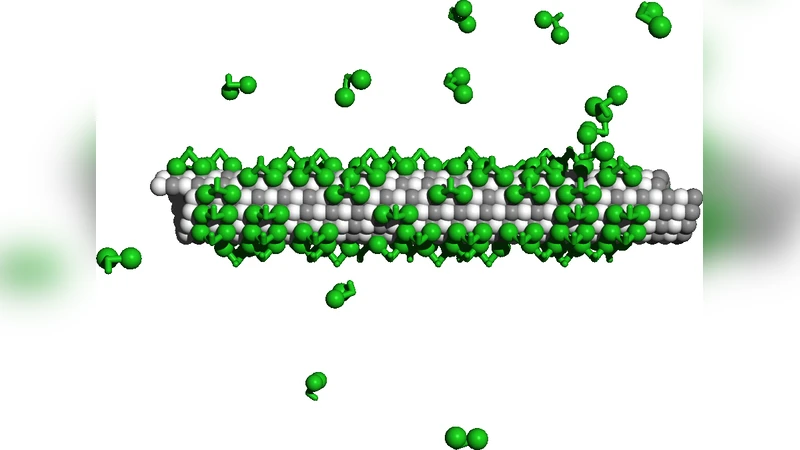
Assembly and disassembly dynamics of microtubules (MTs) is tightly controlled by MT associated proteins. Here, we investigate how plus-end-directed depolymerases of the kinesin-8 family regulate MT depolymerization dynamics. Employing an individual-based model, we reproduce experimental findings. Moreover, crowding is identified as the key regulatory mechanism of depolymerization dynamics. Our analysis gives two qualitatively distinct regimes. For motor densities above a particular threshold, a macroscopic traffic jam emerges at the plus-end and the MT dynamics become independent of the motor concentration. Below this threshold, microscopic traffic jams at the tip arise which cancel out the effect of the depolymerization kinetics such that the depolymerization speed is solely determined by the motor density. Because this density changes over the MT length, length-dependent regulation is possible. Remarkably, motor cooperativity does not affect the depolymerization speed but only the end-residence time of depolymerases.
💡 Research Summary
This paper investigates how plus‑end‑directed depolymerases of the kinesin‑8 family regulate microtubule (MT) depolymerization, focusing on the role of motor crowding. Using an individual‑based stochastic model that combines a totally asymmetric simple exclusion process (TASEP) with Langmuir kinetics (binding/unbinding), the authors reproduce key experimental observations on Kip3p/Kif18A. Motors bind to the MT lattice at rate ωₐ proportional to bulk concentration c, walk toward the plus end with hopping rate ν (derived from the measured velocity v ≈ 3.2 µm min⁻¹), and detach at rate ω_d (set by the measured run length ℓ ≈ 11 µm). At the plus end, two depolymerization scenarios are considered: (i) non‑cooperative, where a single motor at the terminal site triggers removal of a tubulin dimer at rate δ₀; (ii) cooperative, where removal occurs only when the last two sites are simultaneously occupied, at rate δ₁. The overall depolymerization speed is V_dep = a(δ₀ ρ₊ + δ₁ κ₊), with ρ₊ the occupancy probability of the terminal site and κ₊ the joint occupancy of the last two sites.
Analytical calculations and kinetic Monte‑Carlo simulations reveal two qualitatively distinct regimes determined by the bulk motor concentration (or equivalently the binding constant K = c ωₐ/ω_d). At low concentrations (c < ≈ 1.4 nM, K < 1), the motor density profile along the MT exhibits a linear “antenna” region near the minus end, followed by a smooth approach to the Langmuir equilibrium density ρ_La = K/(1+K). No macroscopic traffic jam forms at the tip; the depolymerization speed is proportional to the local motor density at the tip, V_dep ≈ v ρ(L). Hence the process is density‑limited: increasing motor concentration raises the tip density and thus the shortening speed.
When the concentration exceeds the threshold (c > ≈ 1.4 nM, K > 1), the Langmuir density surpasses a critical value (≈ 0.5). The linear antenna cannot match the flat Langmuir plateau continuously, leading to a sharp discontinuity—a domain wall (DW)—in the density profile. This DW sits just before the plus end and creates a macroscopic traffic jam: the terminal site is almost always occupied (ρ₊ ≈ 1). Consequently the depolymerization speed saturates at the intrinsic depolymerization rate (V_dep ≈ δ₀ or δ₁), becoming independent of bulk motor concentration. The system thus switches from a density‑limited regime to a speed‑limited regime.
Cooperativity (δ₁ > 0) does not affect the depolymerization speed in either regime because, in the jammed high‑density state, κ₊≈1 and the contribution of the cooperative term is already maximal. However, cooperativity does increase the average residence time of a motor at the tip (τ_res ∝ 1/δ₁), providing a mechanistic explanation for the experimentally observed inverse relationship between bulk motor concentration and tip residence time.
All model parameters (v, ℓ, ωₐ, ω_d) are taken directly from published Kip3p measurements, while δ₀ is set to the hopping rate ν as a plausible upper bound. Simulated kymographs, density profiles, and length‑dependent depolymerization speeds match quantitatively the in‑vitro data of Varga et al. (2015) and others. The agreement validates the hypothesis that motor crowding, rather than specific biochemical details of the depolymerase, is the primary determinant of MT shortening dynamics.
The authors conclude that length‑dependent MT depolymerization emerges naturally from the interplay of motor binding, directed transport, and exclusion. At low motor densities, the tip flux is limited by the supply of motors; at high densities, a self‑organized traffic jam fixes the flux at the maximal motor stepping rate. Cooperative depolymerization modulates only the dwell time at the tip, not the shortening velocity. The paper suggests experimental tests: fluorescently tracking motor density along MTs to locate domain walls, or engineering motors with altered binding affinities to shift the critical concentration. Overall, the work provides a clear, quantitative framework linking molecular crowding to cytoskeletal dynamics.
Comments & Academic Discussion
Loading comments...
Leave a Comment