Multiple verification in computational modeling of bone pathologies
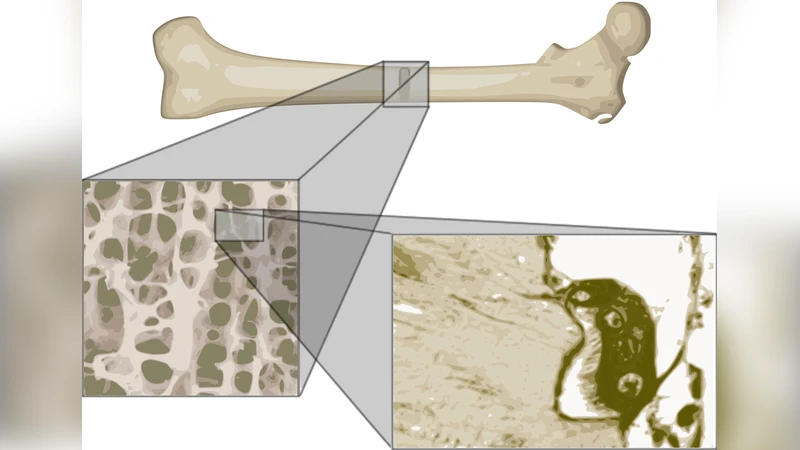
We introduce a model checking approach to diagnose the emerging of bone pathologies. The implementation of a new model of bone remodeling in PRISM has led to an interesting characterization of osteoporosis as a defective bone remodeling dynamics with respect to other bone pathologies. Our approach allows to derive three types of model checking-based diagnostic estimators. The first diagnostic measure focuses on the level of bone mineral density, which is currently used in medical practice. In addition, we have introduced a novel diagnostic estimator which uses the full patient clinical record, here simulated using the modeling framework. This estimator detects rapid (months) negative changes in bone mineral density. Independently of the actual bone mineral density, when the decrease occurs rapidly it is important to alarm the patient and monitor him/her more closely to detect insurgence of other bone co-morbidities. A third estimator takes into account the variance of the bone density, which could address the investigation of metabolic syndromes, diabetes and cancer. Our implementation could make use of different logical combinations of these statistical estimators and could incorporate other biomarkers for other systemic co-morbidities (for example diabetes and thalassemia). We are delighted to report that the combination of stochastic modeling with formal methods motivate new diagnostic framework for complex pathologies. In particular our approach takes into consideration important properties of biosystems such as multiscale and self-adaptiveness. The multi-diagnosis could be further expanded, inching towards the complexity of human diseases. Finally, we briefly introduce self-adaptiveness in formal methods which is a key property in the regulative mechanisms of biological systems and well known in other mathematical and engineering areas.
💡 Research Summary
The paper presents a novel framework that combines stochastic modeling with formal verification to diagnose bone pathologies, focusing primarily on osteoporosis. Using the PRISM probabilistic model checker, the authors construct a continuous‑time Markov chain (CTMC) model of bone remodeling that captures the interactions between osteoclasts (bone‑resorbing cells) and osteoblasts (bone‑forming cells). The model is organized into two modules, each representing one cell type, with state variables for cell counts (Oc for osteoclasts, Ob for osteoblasts) and Boolean flags indicating whether cells are in a precursor or mature state. Key biological processes—cell proliferation, differentiation, death, and the RANK/RANKL/OPG signaling pathway—are encoded as guarded stochastic commands with rates that depend on two configurable parameters: “aging” (representing age‑related cellular activity) and “rankLrate” (representing the production rate of RANKL).
Two parameter configurations are examined: a “healthy” scenario (aging = 1, rankLrate = 0.1) and a “pathological” scenario mimicking osteoporosis (aging = 2, rankLrate = 0.2). To keep the state space tractable, the authors limit the number of osteoclasts to 0‑5 and osteoblasts to 0‑100, representing a sub‑volume of a basic multicellular unit (BMU). Rewards are attached to the resorption and formation actions, allowing the model to output a real‑valued bone mineral density (BMD) despite the underlying discrete state variables.
The verification tasks focus on emergent tissue‑level properties over a four‑year horizon, a period sufficient to observe disease progression. Rather than querying cellular‑level probabilities, the authors evaluate three diagnostic estimators derived from model‑checking results:
- BMD Level Estimator – computes the expected average BMD, directly comparable to the standard clinical measurement used for osteoporosis screening.
- Rapid‑Decrease Estimator – monitors month‑scale changes in BMD; a steep negative slope triggers an alarm even if the absolute BMD remains within normal limits, reflecting the clinical importance of sudden bone loss.
- BMD Variance Estimator – assesses the statistical variance of BMD across simulation runs, offering a potential link to systemic conditions such as metabolic syndrome, diabetes, and cancer, where bone turnover may be more erratic.
The authors demonstrate that the pathological configuration yields lower average BMD, higher frequency of rapid declines, and greater variance, thereby validating the discriminative power of the three estimators. They argue that combining these statistical measures enables a “multi‑diagnosis” approach that can flag patients for closer monitoring and possibly predict co‑morbidities.
Beyond the immediate diagnostic application, the paper discusses the broader implications of incorporating multiscale modeling and self‑adaptiveness into formal methods. Bone remodeling inherently spans molecular (RANKL/OPG), cellular (osteoclast/osteoblast dynamics), tissue (trabecular architecture), and systemic (hormonal, inflammatory) scales. The authors propose that a self‑adaptive model could assess its own state, predict future behavior, and adjust parameters in response to new data—mirroring control‑theoretic feedback loops used in engineering. This capability could pave the way for automated treatment optimization and personalized medicine.
Limitations are acknowledged: the reduction of cell counts to avoid state‑space explosion sacrifices some biological fidelity; parameter values are derived from literature rather than patient‑specific measurements, so calibration against real clinical data is required. Future work is outlined to integrate richer multiscale representations (including molecular kinetics and whole‑organ biomechanics), to incorporate real‑time patient data streams, and to develop adaptive algorithms that modify model parameters on the fly, thereby enhancing predictive accuracy and clinical relevance.
In summary, the study showcases how probabilistic model checking can move beyond qualitative verification to provide quantitative, clinically meaningful diagnostics for bone diseases, while also highlighting a pathway toward self‑adaptive, multiscale computational medicine.
Comments & Academic Discussion
Loading comments...
Leave a Comment