Top-Down Causation by Information Control: From a Philosophical Problem to a Scientific Research Program
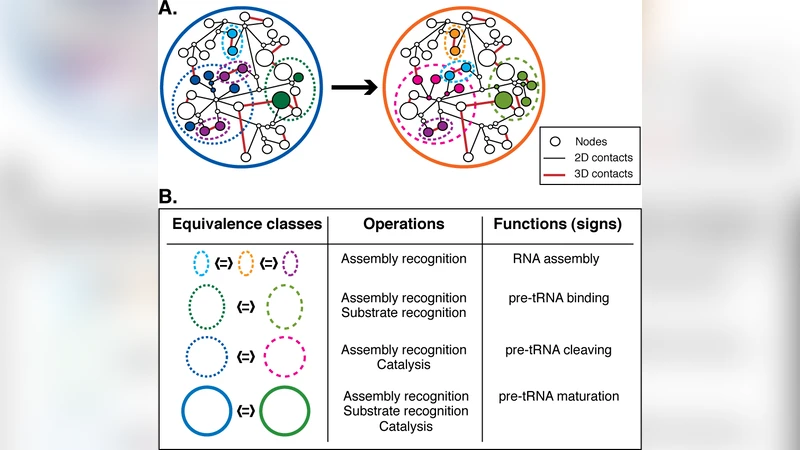
It has been claimed that different types of causes must be considered in biological systems, including top-down as well as same-level and bottom-up causation, thus enabling the top levels to be causally efficacious in their own right. To clarify this issue, important distinctions between information and signs are introduced here and the concepts of information control and functional equivalence classes in those systems are rigorously defined and used to characterise when top down causation by feedback control happens, in a way that is testable. The causally significant elements we consider are equivalence classes of lower level processes, realised in biological systems through different operations having the same outcome within the context of information control and networks.
💡 Research Summary
The paper tackles the longstanding philosophical debate over whether higher‑level structures in biological systems can exert genuine causal influence on lower‑level processes—a notion often termed “top‑down causation.” The authors argue that the debate has been hampered by vague terminology and a lack of operational definitions. To resolve this, they introduce a rigorous distinction between “information” (the semantic content that encodes a system’s goal) and “signs” (the physical carriers of that information). With this conceptual scaffolding they develop the notion of “information control,” which they define as a feedback‑driven mechanism whereby a higher‑level entity specifies a desired outcome, monitors the system’s state, and adjusts lower‑level processes to keep the outcome within acceptable bounds.
Central to their framework is the idea of “functional equivalence classes.” A set of lower‑level processes—each possibly implemented by different enzymes, molecular pathways, or neural connections—is said to belong to the same equivalence class if, under the current informational constraints, they all produce the same functional result (i.e., they satisfy the same goal). This allows the higher level to treat a diverse collection of micro‑processes as a single controllable unit, focusing only on the output rather than the detailed mechanistic route.
The authors formalize the scheme mathematically. Let (x) denote the state vector of the system, (u) the control variables, and (G(x)) the goal function that encodes the higher‑level target (e.g., a target concentration of ATP or a desired behavioral response). A feedback function (F) monitors the discrepancy between (G(x)) and its set point and generates corrective signals that bias the selection of lower‑level processes. The set of all processes ({P_i}) that satisfy (G(x)=G^*) constitutes a functional equivalence class. Top‑down causation, in this view, is the dynamic re‑weighting of the probability distribution over ({P_i}) induced by the feedback loop.
To demonstrate empirical relevance, two case studies are presented. The first concerns cellular metabolism: despite fluctuations in individual enzyme activities, cells maintain a stable ATP concentration through the action of AMP‑activated protein kinase, which senses ATP levels and modulates enzyme expression accordingly. Different enzyme activity patterns thus belong to the same equivalence class because they all achieve the ATP target. The second case involves neural circuits governing a simple avoidance behavior. Various synaptic weight configurations can generate the same behavioral output; the dopaminergic reward system provides a feedback signal that reinforces those configurations that meet the behavioral goal, effectively selecting among equivalence classes of circuit implementations. In both examples, the higher‑level goal is monitored, and lower‑level processes are adjusted without the higher level prescribing a unique micro‑mechanism.
The paper argues that this framework overcomes the criticism that top‑down causation is merely a “constraint” without genuine efficacy. By grounding causation in measurable feedback signals (e.g., ATP concentration, neural firing rates) and in the selection among functional equivalence classes, the authors provide a testable account of how higher‑level goals can actively shape lower‑level dynamics.
Finally, the authors explore broader implications. In evolutionary biology, the emergence of new functional equivalence classes (e.g., novel metabolic pathways) can be evaluated against existing higher‑level goals; those that improve fitness are retained, suggesting that top‑down information control can operate as an evolutionary filter. In developmental biology, changing goals during morphogenesis (e.g., tissue patterning) dynamically reshape the equivalence classes of cellular behaviors, illustrating a developmental instance of top‑down causation.
In sum, the paper proposes a concrete, mathematically articulated research program that redefines top‑down causation as information‑driven feedback control over equivalence classes of lower‑level processes. This approach bridges philosophical discourse and empirical science, offering clear criteria for experimental validation and opening new avenues for investigating hierarchical causation across biology.
Comments & Academic Discussion
Loading comments...
Leave a Comment