Controlling spatiotemporal chaos and spiral turbulence in excitable media: A review
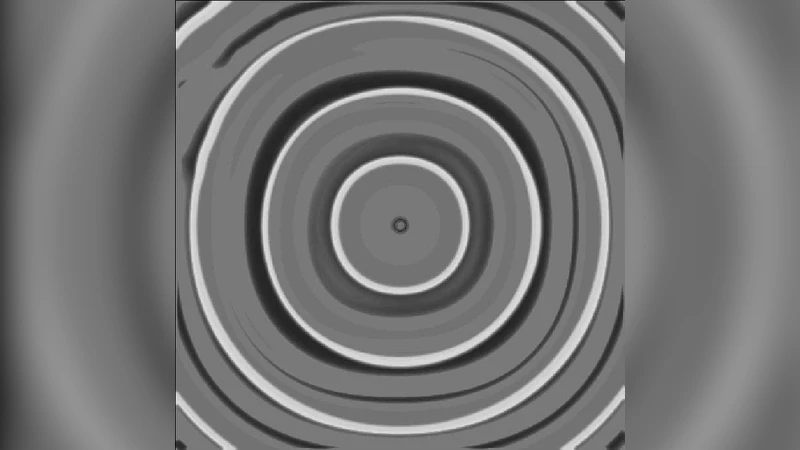
Excitable media are a generic class of models used to simulate a wide variety of natural systems including cardiac tissue. Propagation of excitation waves in this medium results in the formation of characteristic patterns such as rotating spiral waves. Instabilities in these structures may lead to spatiotemporal chaos through spiral turbulence, which has been linked to clinically diagnosed conditions such as cardiac fibrillation. Usual methods for controlling such phenomena involve very large amplitude perturbations and have several drawbacks. There have been several recent attempts to develop low-amplitude control procedures for spatiotemporal chaos in excitable media which are reviewed in this paper. The control schemes have been broadly classified by us into three types: (i) global, (ii) non-global spatially-extended and (iii) local, depending on the way the control signal is applied, and we discuss the merits and drawbacks for each.
💡 Research Summary
This review paper provides a comprehensive overview of low‑amplitude control strategies for spatiotemporal chaos and spiral turbulence in excitable media, with a particular focus on cardiac tissue where such dynamics underlie life‑threatening arrhythmias such as ventricular fibrillation. The authors begin by summarizing the fundamental properties of excitable media, describing canonical mathematical models (FitzHugh‑Nagumo, Barkley, Luo‑Rudy, etc.) that capture the interaction between a fast activation variable (membrane voltage) and a slower recovery variable. In these models, rotating spiral waves can form and remain stable under a range of parameters, but perturbations, heterogeneities, or parameter drift can destabilize the spiral core, leading to wavebreak, the creation of multiple spirals, and ultimately a turbulent state characterized by chaotic, a‑periodic activation patterns.
Traditional control methods—high‑energy defibrillation shocks or strong electrical pulses—are effective at terminating turbulence but carry significant drawbacks, including tissue damage, electrode degradation, and patient discomfort. Consequently, the field has shifted toward low‑energy, low‑amplitude interventions that aim to reset or synchronize the medium with minimal invasiveness. The authors classify these interventions into three broad categories based on how the control signal is applied: (i) global control, (ii) non‑global spatially‑extended control, and (iii) local control.
Global control applies a uniform stimulus across the entire medium. Techniques include periodic low‑amplitude voltage pulses, continuous low‑frequency electric fields, and optically induced uniform photostimulation. By delivering a stimulus that is phase‑locked to the spiral rotation period, the entire field can be forced into a synchronized state, causing all spirals to collapse simultaneously. The main advantages are rapid synchronization and high success rates (>90 % in simulations). However, implementing a truly global stimulus in a biological organ requires extensive electrode coverage or invasive field generators, leading to high energy consumption and a risk of electroporation or other tissue injury.
Non‑global spatially‑extended control targets only a subset of the medium—often the boundaries or a designated “control zone”—and relies on wave propagation to spread the effect throughout the tissue. Representative schemes include boundary current injection, sweeping control (a moving wave of stimulation that “sweeps” spirals out of the domain), and gradient control (spatially varying model parameters that gradually suppress excitability). These approaches dramatically reduce the number of required electrodes and lower overall energy usage (often 2–3 times less than global control) while still achieving moderate success rates (60–80 %). Their efficacy, however, is highly sensitive to tissue heterogeneity, anisotropic conduction, and the precise geometry of the control region.
Local control concentrates the stimulus on one or a few critical sites. Classic examples are pacing protocols that deliver regular low‑amplitude pulses at a specific location to entrain the tissue into a normal rhythm, feedback‑based control that triggers a pulse only when a local voltage exceeds a threshold, and optogenetic control where light‑sensitive ion channels are expressed in targeted cells, allowing precise, minimally invasive stimulation. Local control offers the lowest energy consumption and can be implemented with implantable devices, making it attractive for chronic therapy. The principal limitation is that a single or few sites may be insufficient to suppress complex, multi‑spiral turbulence, leading to variable success rates (40–70 % depending on initial conditions).
The authors present extensive numerical simulations comparing these three families across several metrics: termination probability, control latency, energy expenditure, and implementation complexity. Global control consistently yields the fastest termination but at the cost of the highest energy demand. Non‑global spatially‑extended control offers a balanced trade‑off, while local control excels in energy efficiency and minimal invasiveness but may require supplementary strategies for robust performance. Notably, hybrid schemes—such as combining low‑amplitude pacing with a weak global field—demonstrated synergistic effects, improving success rates by up to 15 % in scenarios with dense spiral turbulence.
Beyond the algorithmic analysis, the review discusses physiological considerations critical for translating these methods into clinical practice. Cardiac tissue exhibits anisotropic conduction, spatially varying refractory periods, and complex electrode‑tissue impedance, all of which can modulate the effectiveness of a given control protocol. Consequently, the authors advocate for adaptive, patient‑specific optimization using computational models calibrated to individual electrophysiological data. They also highlight emerging research directions: (1) development of non‑invasive optogenetic tools for precise local stimulation, (2) integration of machine‑learning‑based real‑time feedback controllers that adjust stimulus timing and amplitude on the fly, (3) systematic in‑vivo validation in animal models and early‑phase human trials, and (4) exploration of multimodal control that combines electrical, magnetic, and optical modalities for maximal flexibility.
In summary, this paper synthesizes the state‑of‑the‑art low‑amplitude control techniques for excitable media, categorizes them by spatial application, evaluates their strengths and weaknesses through rigorous simulation studies, and outlines a roadmap for future experimental and clinical translation. The authors conclude that while no single method universally outperforms the others, hybrid and adaptive strategies that exploit the complementary advantages of global, spatially‑extended, and local control hold the greatest promise for safe, effective suppression of spiral turbulence in the heart and other excitable systems.
Comments & Academic Discussion
Loading comments...
Leave a Comment