Quantum coherent contributions in biological electron transfer
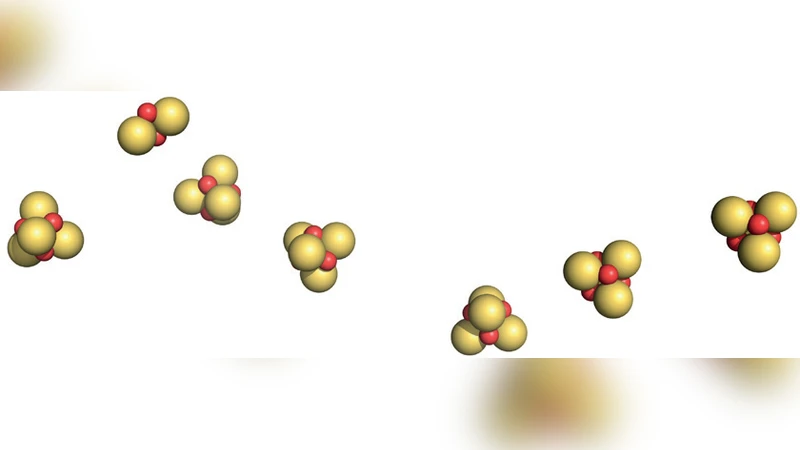
Many biological electron transfer (ET) reactions are mediated by metal centres in proteins. NADH:ubiquinone oxidoreductase (complex I) contains an intramolecular chain of seven iron-sulphur (FeS) clusters, one of the longest chains of metal centres in biology and a test case for physical models of intramolecular ET. In biology, intramolecular ET is commonly described as a diffusive hopping process, according to the semi-classical theories of Marcus and Hopfield. However, recent studies have raised the possibility that non-trivial quantum mechanical effects play a functioning role in certain biomolecular processes. Here, we extend the semi-classical model for biological ET to incorporate both semi-classical and coherent quantum phenomena using a quantum master equation based on the Holstein Hamiltonian. We test our model on the structurally-defined chain of FeS clusters in complex I. By exploring a wide range of realistic parameters we find that, when the energy profile for ET along the chain is relatively flat, just a small coherent contribution can provide a robust and significant increase in ET rate (above the semi-classical diffusive-hopping rate), even at physiologically-relevant temperatures. Conversely, when the on-site energies vary significantly along the chain the coherent contribution is negligible. For complex I, a crucial respiratory enzyme that is linked to many neuromuscular and degenerative diseases, our results suggest a new contribution towards ensuring that intramolecular ET does not limit the rate of catalysis. For the emerging field of quantum biology, our model is intended as a basis for elucidating the general role of coherent ET in biological ET reactions.
💡 Research Summary
**
The paper investigates whether quantum coherent effects can contribute to biological electron transfer (ET) in the mitochondrial enzyme NADH:ubiquinone oxidoreductase (complex I). Complex I contains a chain of seven iron‑sulphur (Fe‑S) clusters that shuttle electrons from the flavin mononucleotide (FMN) to the quinone binding site. Traditionally, ET in proteins is described by semi‑classical Marcus–Hopfield theories, which treat the process as a diffusive hopping sequence. Recent suggestions that quantum mechanics may play a functional role in biology motivate the authors to develop a hybrid model that incorporates both classical hopping and quantum coherent transport.
Model Construction
The authors start from a Holstein Hamiltonian that couples an electron on each Fe‑S site to a local vibrational mode. The Hamiltonian includes on‑site energies (E_i), nearest‑neighbour tunnelling amplitudes (t_{j,j+1}), vibrational frequencies (\nu_i), and electron‑phonon coupling constants (g_i). Using density‑functional theory (DFT) and experimental data they assign realistic values: a common vibrational frequency of 10 THz (334 cm⁻¹), inner‑sphere reorganisation energy (\lambda_{\text{in}}=0.2) eV giving (g\approx22) THz, and tunnelling amplitudes ranging from 1 to 95 GHz. A Lang‑Firsov transformation yields an effective Hamiltonian where the electron‑phonon interaction is absorbed into renormalised on‑site energies (E_i^{}=E_i-\Delta_i) and a temperature‑dependent suppression of the tunnelling matrix elements (t_{j,j+1}^{}=t_{j,j+1}\exp
Comments & Academic Discussion
Loading comments...
Leave a Comment