Force-velocity relations for multiple-molecular-motor transport
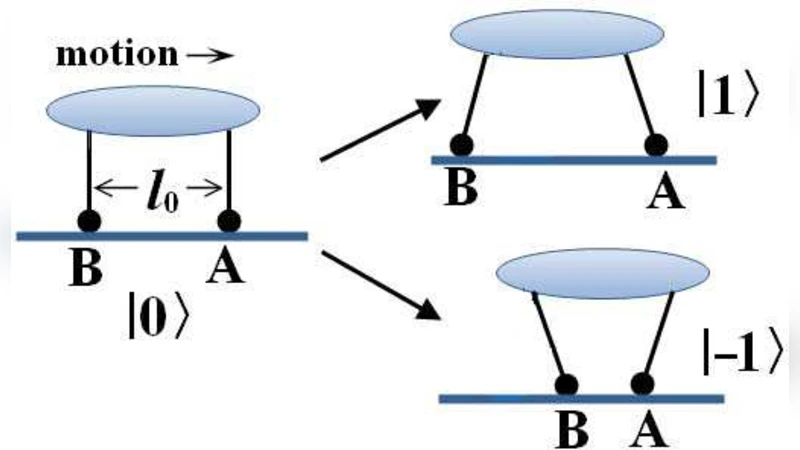
A transition rate model of cargo transport by $N$ molecular motors is proposed. Under the assumption of steady state, the force-velocity curve of multi-motor system can be derived from the force-velocity curve of single motor. Our work shows, in the case of low load, the velocity of multi-motor system can decrease or increase with increasing motor number, which is dependent on the single motor force-velocity curve. And most commonly, the velocity decreases. This gives a possible explanation to some recent
💡 Research Summary
The paper introduces a stochastic transition‑rate framework to describe cargo transport by a collection of N molecular motors operating on a common filament. Starting from the experimentally measured force‑velocity (F‑v) relationship of a single motor, the authors construct forward (k⁺) and backward (k⁻) stepping rates that depend explicitly on the load experienced by the motor. In the multi‑motor configuration the cargo is assumed to experience a total external load F_ext, which is shared equally among the attached motors; consequently each motor feels a reduced load f_i = F_ext/N. Under the steady‑state assumption, the average cargo velocity v_N is given by the net stepping rate multiplied by the motor step size d: v_N = d
Comments & Academic Discussion
Loading comments...
Leave a Comment