Suzaku X-ray spectral study of the Compton-thick Seyfert galaxy NGC 5135
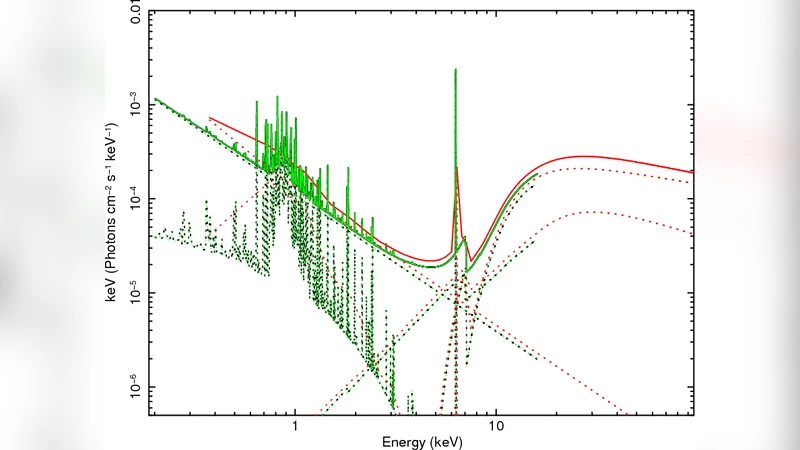
We present the 0.5 - 50 keV Suzaku broad-band X-ray spectral study of the Compton-thick AGN in NGC 5135. The Suzaku observation provides the first detection of NGC 5135 above 10 keV that allowed us, for the first time, to estimate the absorbing column density, the intrinsic X-ray luminosity, the strength of the reflection component and the viewing angle of the torus for this AGN. The 0.5 - 10 keV spectrum of NGC 5135 is characterized by the standard components for a Compton-thick source: a scattered continuum, a prominent Fe K{\alpha} emission line (EW ~ 2.1 keV) and a soft excess. At higher energies (E > 10 keV) the intrinsic AGN continuum shows up, implying an absorbing column density of the order of ~ 2.5 \times 10^24 cm^-2 and the intrinsic 2.0 - 10 keV X-ray luminosity of ~ 1.8 \times 10^43 erg s^-1. Assuming a toroidal geometry of the reprocessing material we show that an edge-on view of the obscuring torus is preferred in this source.
💡 Research Summary
This paper presents a comprehensive broadband X‑ray spectral analysis of the Compton‑thick Seyfert 2 galaxy NGC 5135 using Suzaku observations covering the 0.5–50 keV energy range. Prior to this work, NGC 5135 had only been studied below 10 keV, limiting direct measurements of its intrinsic active galactic nucleus (AGN) properties. The Suzaku data, obtained on 2007 July 3 with an exposure of ~52.5 ks, include detections from the XIS (0.5–12 keV) and the HXD‑PIN (13–50 keV) instruments. The HXD‑PIN detection is significant at ~7 % above background, providing a signal‑to‑noise ratio of ~9.2 in the 13–50 keV band.
The authors first attempted a simple absorbed power‑law plus an unabsorbed scattered component, which yielded a poor fit (χ²/dof ≈ 182/31) and large residuals around the Fe Kα line. Adding a narrow Gaussian at 6.4 keV dramatically improved the fit (χ²/dof ≈ 39/29) and revealed a column density N_H ≈ 2.5 × 10²⁴ cm⁻², a photon index Γ ≈ 1.8 for the transmitted component, and an extremely large Fe Kα equivalent width (EW ≈ 2.1 keV). These values are classic signatures of a heavily obscured, Compton‑thick AGN.
To account for the reflected continuum, the authors incorporated the PEXRAV model (reflection from neutral material) with a reflection scaling factor of –1 (reflection only). This model (denoted M1) further improved the fit (χ²/dof ≈ 33/28) and confirmed that both the scattered power‑law and the reflected component each contribute roughly 30 % of the observed 2–10 keV flux. The authors explored several more sophisticated treatments of Compton scattering and reflection:
- CABS and PLCABS were used to model pure photoelectric absorption and Compton down‑scattering, respectively. These models yielded similar χ² values and parameter estimates, confirming the robustness of the column density measurement.
- The REFLIONX model, which treats ionized reflection, required an implausibly high iron abundance (≈10 × solar) and a low ionization parameter (ξ ≈ 90 erg cm s⁻¹), suggesting that the reflected emission is dominated by neutral or only mildly ionized material.
- The most physically motivated approach employed the MYTORUS model (Murphy & Yaqoob 2009), which self‑consistently treats photoelectric absorption, Compton scattering, and Fe Kα/Kβ line production in a toroidal geometry. By fixing the torus opening angle at 60° and allowing the line‑of‑sight inclination to vary, the best‑fit inclination was found to be ≈90°, i.e., an edge‑on view. The column density derived from MYTORUS is N_H ≈ 2.7 × 10²⁴ cm⁻², and the intrinsic photon index is Γ ≈ 1.96. An additional unabsorbed power‑law (Γ ≈ 2.0) is required to model the soft‑band emission, consistent with a scattered component.
The soft X‑ray emission (≤2 keV) is well described by a thermal plasma (MEKAL) with temperature kT ≈ 0.70 keV plus a steep scattered power‑law (Γ ≈ 2.7). The 0.5–2 keV luminosity is ≈1.66 × 10⁴¹ erg s⁻¹, and the ratio L_X/L_FIR ≈ 3 × 10⁻⁴ matches typical values for starburst galaxies, indicating that the soft X‑ray flux is dominated by circumnuclear star formation rather than the AGN.
Key results and implications:
- First detection above 10 keV: Suzaku’s HXD‑PIN provides the first hard X‑ray detection of NGC 5135, allowing a direct measurement of the intrinsic AGN continuum and confirming its Compton‑thick nature.
- Column density and intrinsic luminosity: The line‑of‑sight column density is firmly measured at N_H ≈ (2.5–2.7) × 10²⁴ cm⁻². The intrinsic 2–10 keV luminosity is L_X ≈ 1.8 × 10⁴³ erg s⁻¹, placing NGC 5135 among the more luminous local Compton‑thick AGN.
- Reflection dominance and geometry: The Fe Kα EW of ~2 keV and the need for a strong reflected component imply a high covering factor. MYTORUS modeling favors an edge‑on torus, consistent with the Seyfert 2 classification where the line of sight intercepts the dense torus.
- Starburst contribution: The soft X‑ray component is consistent with thermal emission from a starburst, corroborating previous Chandra imaging that identified circumnuclear star formation as the dominant soft X‑ray source.
- Methodological significance: By comparing multiple spectral models (simple absorption, reflection, ionized reflection, toroidal reprocessor), the study demonstrates the importance of broadband coverage and physically motivated models for disentangling transmission, scattering, and reflection in heavily obscured AGN.
In summary, the Suzaku observation of NGC 5135 provides a definitive broadband X‑ray characterization of a Compton‑thick Seyfert 2 galaxy. The data confirm a heavily obscuring torus with N_H ≈ 2.5 × 10²⁴ cm⁻², an intrinsic AGN luminosity of ~10⁴³ erg s⁻¹, and an edge‑on torus geometry. The soft X‑ray emission is dominated by starburst activity, illustrating the complex interplay between nuclear accretion and host‑galaxy processes in such systems. This work adds a valuable data point to the relatively small sample of Compton‑thick AGN with well‑constrained broadband spectra, aiding population synthesis models of the cosmic X‑ray background and informing future high‑energy missions.
Comments & Academic Discussion
Loading comments...
Leave a Comment