Superfluid Neutrons in the Core of the Neutron Star in Cassiopeia A
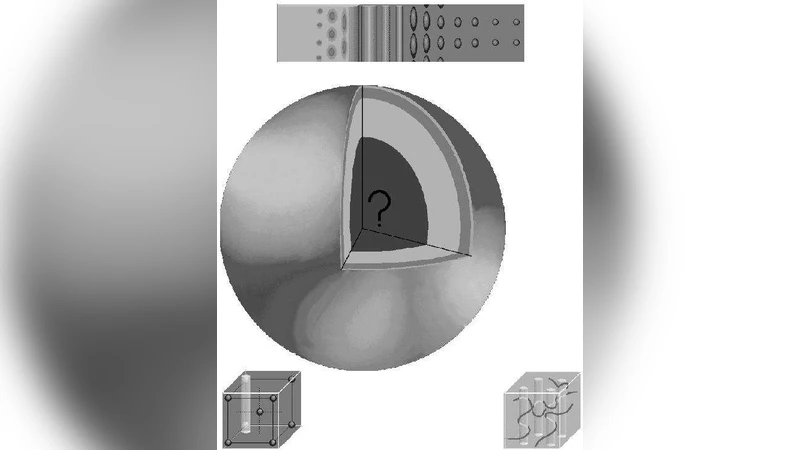
The supernova remnant Cassiopeia A contains the youngest known neutron star which is also the first one for which real time cooling has ever been observed. In order to explain the rapid cooling of this neutron star, we first present the fundamental properties of neutron stars that control their thermal evolution with emphasis on the neutrino emission processes and neutron/proton superfluidity/superconductivity. Equipped with these results, we present a scenario in which the observed cooling of the neutron star in Cassiopeia A is interpreted as being due to the recent onset of neutron superfluidity in the core of the star. The manner in which the earlier occurrence of proton superconductivity determines the observed rapidity of this neutron star’s cooling is highlighted. This is the first direct evidence that superfluidity and superconductivity occur at supranuclear densities within neutron stars.
💡 Research Summary
The paper addresses the remarkable observation that the neutron star in the Cassiopeia A supernova remnant, the youngest known neutron star, is cooling in real time at a rate far faster than standard cooling models predict. The authors first review the basic physics governing neutron‑star structure and thermal evolution, emphasizing the role of neutrino emission processes and the effects of nucleon pairing (superfluidity of neutrons and superconductivity of protons). They describe how β‑equilibrium and charge neutrality fix the composition (neutrons, protons, electrons, and muons) and how the equation of state (EOS) – they adopt the Akmal‑Pandharipande‑Ravenhall (APR) EOS – determines the density profile, mass‑radius relation, and the critical proton fraction needed for the direct Urca process.
In the temperature regime below ~10⁹ K, neutron‑star cooling is dominated by neutrino emission. The authors list the dominant channels: direct Urca (fast, ε∝T⁶), modified Urca (slow, ε∝T⁸), nucleon‑nucleon bremsstrahlung (ε∝T⁸), and, crucially, the Cooper‑pair breaking and formation (PBF) process that appears when nucleons become paired. The direct Urca channel requires a proton fraction >~0.11–0.15, which is only achieved at supranuclear densities in massive stars (M>~1.9 M⊙ for APR). For typical masses, modified Urca and bremsstrahlung dominate, leading to relatively slow cooling.
The novelty of the work lies in incorporating the timing of the superfluid/superconducting transitions. Proton pairing (superconductivity) opens an energy gap that suppresses all proton‑related neutrino processes, effectively reducing the cooling power early on. Neutron pairing, on the other hand, introduces the PBF channel: when the temperature drops below the neutron critical temperature T_cⁿ, neutron Cooper pairs form and break, emitting neutrino‑antineutrino pairs with an emissivity ε_PBF∝T⁷. This channel is transiently much stronger than modified Urca, producing a rapid drop in the star’s internal temperature.
Using a fully relativistic cooling code that solves the energy balance and transport equations with the APR EOS, the authors simulate the thermal evolution of a 1.4 M⊙ neutron star. They assume proton superconductivity sets in first, at T_c^p≈(5–7)×10⁸ K, followed by neutron superfluidity at T_cⁿ≈(5–6)×10⁸ K. The model predicts that once the neutron superfluid forms, the surface temperature declines by a few percent per year, matching the observed cooling of the Cas A neutron star (≈3–4 % yr⁻¹). If proton superconductivity were absent or had a much lower critical temperature, the cooling curve would be far too shallow, contradicting observations.
The paper also discusses possible exotic components (hyperons, meson condensates, deconfined quarks) that could open additional fast neutrino channels, but these are not required to explain the Cas A data. The authors conclude that the observed rapid cooling provides the first direct astrophysical evidence for the onset of neutron superfluidity and prior proton superconductivity at supranuclear densities. This result validates theoretical predictions of pairing gaps in dense nuclear matter and offers a unique laboratory for testing nuclear‑physics models under conditions unattainable on Earth.
Comments & Academic Discussion
Loading comments...
Leave a Comment