Pressure balance at the magnetopause: Experimental studies
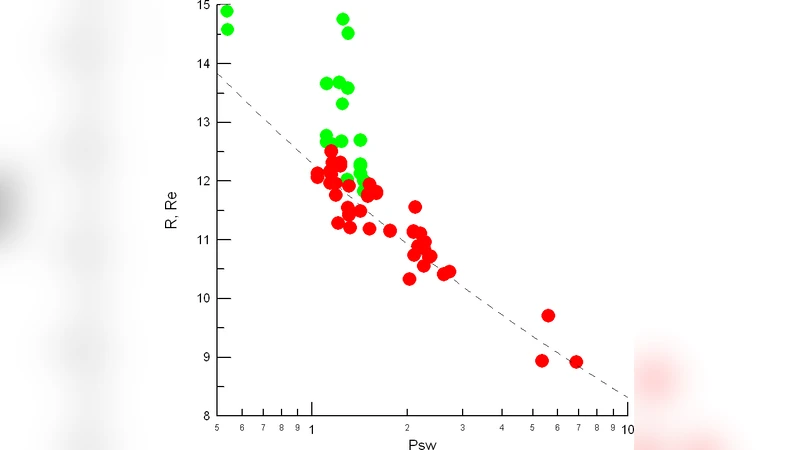
The pressure balance at the magnetopause is formed by magnetic field and plasma in the magnetosheath, on one side, and inside the magnetosphere, on the other side. In the approach of dipole earth’s magnetic field configuration and gas-dynamics solar wind flowing around the magnetosphere, the pressure balance predicts that the magnetopause distance R depends on solar wind dynamic pressure Pd as a power low R ~ Pd^alpha, where the exponent alpha=-1/6. In the real magnetosphere the magnetic filed is contributed by additional sources: Chapman-Ferraro current system, field-aligned currents, tail current, and storm-time ring current. Net contribution of those sources depends on particular magnetospheric region and varies with solar wind conditions and geomagnetic activity. As a result, the parameters of pressure balance, including power index alpha, depend on both the local position at the magnetopause and geomagnetic activity. In addition, the pressure balance can be affected by a non-linear transfer of the solar wind energy to the magnetosheath, especially for quasi-radial regime of the subsolar bow shock formation proper for the interplanetary magnetic field vector aligned with the solar wind plasma flow.
💡 Research Summary
The paper investigates how the position of the Earth’s magnetopause—the boundary between the magnetosphere and the solar‑wind‑driven magnetosheath—is controlled by pressure balance and how this balance deviates from the simple theoretical expectation. In the idealized picture of a pure dipole field (Hd ∝ R⁻³) and a gas‑dynamic solar‑wind flow, the pressure balance yields a power‑law relationship R ∝ Pd^α with α = ‑1/6. The authors review a large body of earlier observational work (e.g., Kuznetsov & Suvorova, Boardsen et al.) that already showed substantial regional variations of α, with values ranging from about –0.17 (sub‑solar) to –0.14 (high‑latitude) and strong dependence on IMF Bz and geomagnetic activity.
The novelty of the present study lies in a systematic analysis of 104 sub‑solar magnetopause crossings recorded by THEMIS and GEOTAIL, combined with upstream solar‑wind data from ACE and WIND. The events are sorted into nine subsets defined by three dipole‑tilt intervals (0‑6°, 7‑15°, 15‑30°) and three IMF Bz categories (Bz > ‑1 nT, ‑3 < Bz < ‑1 nT, Bz < ‑3 nT). While the “quiet‑Bz” group (Bz > ‑1 nT) should, in principle, follow a tight R‑Pd correlation, the authors find a surprisingly large scatter for low dynamic pressures (< 2 nPa). Further analysis reveals that this scatter is tightly linked to the cone angle between the IMF direction and the Sun‑Earth line. When the IMF is quasi‑radial (small cone angle), the magnetosheath pressure downstream of the bow shock drops dramatically, creating a “Low‑Pressure Magnetosheath (LPM)” mode. In this mode the magnetosheath pressure is dominated by thermal pressure rather than the solar‑wind dynamic pressure, and the magnetopause expands globally by up to 5 R_E. Consequently, the effective power‑law index α becomes less negative (≈ ‑1/7) than the theoretical value.
The paper also discusses the role of internal magnetospheric currents. During geomagnetic storms, the cross‑tail current intensifies and moves earthward, reducing the dayside magnetic field more slowly than a dipole (∝ R⁻³) would. This slower decay (≈ R⁻²·⁵) further weakens the pressure‑balance exponent, pushing α toward –0.2 (≈ ‑1/5). The authors cite artificial‑neural‑network (ANN) three‑dimensional magnetopause models that successfully reproduce these non‑linear effects and also capture the dawn‑dusk asymmetry observed in geosynchronous crossings.
In summary, the study demonstrates that the magnetopause distance cannot be described by a single, universal power‑law exponent. Instead, α varies with IMF orientation (Bz and cone angle), dipole tilt, geomagnetic activity, and the presence of the LPM mode. The findings underscore the importance of incorporating multiple current systems, thermal pressure contributions, and asymmetries into magnetopause models, which is essential for accurate space‑weather forecasting and for planning satellite operations near the magnetopause.
Comments & Academic Discussion
Loading comments...
Leave a Comment