Wikipedia Edit Number Prediction based on Temporal Dynamics Only
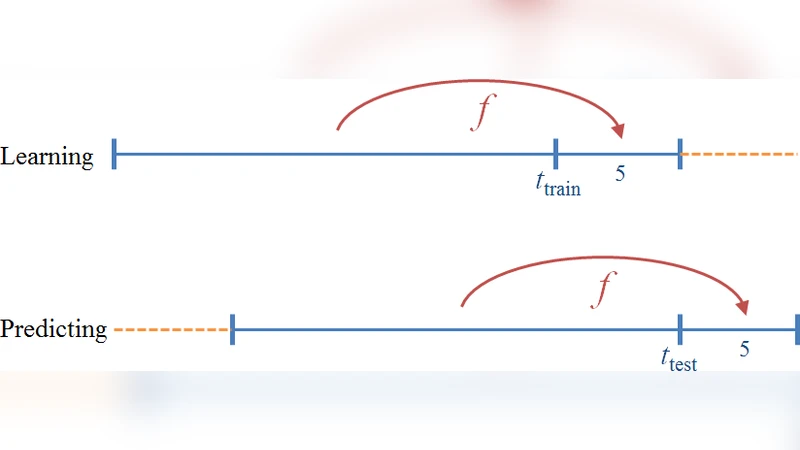
In this paper, we describe our approach to the Wikipedia Participation Challenge which aims to predict the number of edits a Wikipedia editor will make in the next 5 months. The best submission from our team, “zeditor”, achieved 41.7% improvement over WMF’s baseline predictive model and the final rank of 3rd place among 96 teams. An interesting characteristic of our approach is that only temporal dynamics features (i.e., how the number of edits changes in recent periods, etc.) are used in a self-supervised learning framework, which makes it easy to be generalised to other application domains.
💡 Research Summary
The paper presents a solution to the Wikipedia Participation Challenge, which asks participants to predict how many edits each Wikipedia editor will make in the next five months. The authors’ team, “zeditor”, achieved a 41.7 % improvement over the Wikimedia Foundation (WMF) baseline and placed third out of 96 teams. The distinguishing feature of their approach is that it relies exclusively on temporal‑dynamics features derived from each editor’s past edit history, without any semantic, network‑based, or content‑based information.
Self‑supervised learning framework
The authors treat the prediction problem as a self‑supervised regression task. For a target prediction time t_test (the end of the official training period, September 1 2010), they move five months back to define a training time t_train = t_test − 5 months. The actual number of edits each editor made in the interval
Comments & Academic Discussion
Loading comments...
Leave a Comment