Astrophysics of Galactic charged cosmic rays
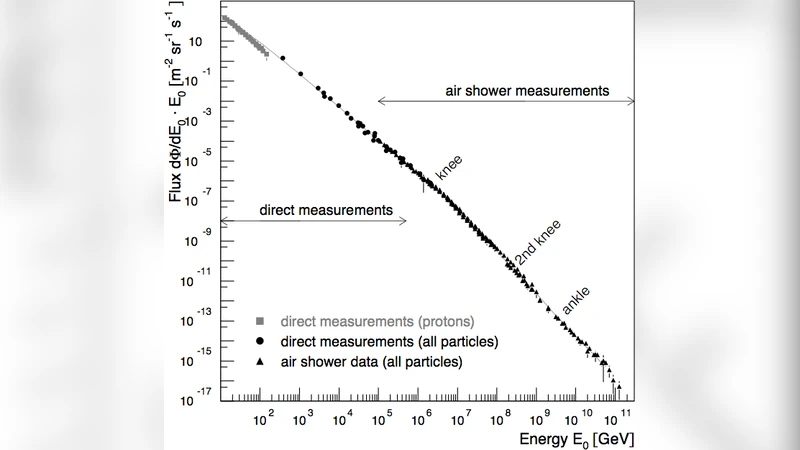
A review is given of the main properties of the charged component of galactic cosmic rays, particles detected at Earth with an energy spanning from tens of MeV up to about 10^19 eV. After a short introduction to the topic and an historical overview, the properties of cosmic rays are discussed with respect to different energy ranges. The origin and the propagation of nuclei in the Galaxy are dealt with from a theoretical point of view. The mechanisms leading to the acceleration of nuclei by supernova remnants and to their subsequent diffusion through the inhomogeneities of the galactic magnetic field are discussed and some clue is given on the predictions and observations of fluxes of antimatter, both from astrophysical sources and from dark matter annihilation in the galactic halo. The experimental techniques and instrumentations employed for the detection of cosmic rays at Earth are described. Direct methods are viable up to 10^14 eV, by means of experiments flown on balloons or satellites, while above that energy, due to their very low flux, cosmic rays can be studied only indirectly by exploiting the particle cascades they produce in the atmosphere. The possible physical interpretation of the peculiar features observed in the energy spectrum of galactic cosmic rays, and in particular the so-called “knee” at about 4x10^15 eV, are discussed. A section is devoted to the region between about 10^18 and 10^19 eV, which is believed to host the transition between galactic and extragalactic cosmic rays. The conclusion gives some perspectives on the cosmic ray astrophysics field. Thanks to a wealth of different experiments, this research area is living a very flourishing era. The activity is exciting both from the theoretical and the instrumental sides, and its interconnection with astronomy, astrophysics and particle physics experiences non-stop growth.
💡 Research Summary
The paper provides a comprehensive review of the charged component of Galactic cosmic rays (GCRs) over an enormous energy range, from a few tens of MeV up to about 10¹⁹ eV. After a brief historical introduction that traces the discovery of cosmic radiation from the pioneering balloon flights of Victor Hess to modern satellite and ground‑based experiments, the authors organize the discussion by energy domain, emphasizing the different observational techniques required in each regime.
In the low‑energy domain (∼100 MeV/n to 100 TeV/n) the review focuses on the diffusion equation that governs particle transport in the interstellar medium. It explains how secondary‑to‑primary ratios such as boron‑to‑carbon (B/C) constrain the rigidity dependence of the diffusion coefficient (K∝R^δ) and how direct measurements from balloon‑borne and satellite instruments (e.g., BESS, PAMELA, AMS‑02, ACE/CRIS) provide high‑precision elemental spectra. The authors discuss the over‑abundance of light secondary nuclei (Li, Be, B) as a clear signature of spallation during propagation, and they outline how the observed spectra can be de‑convolved to infer source spectra, taking into account energy losses, re‑acceleration, and convection. Antimatter measurements (positrons, antiprotons) are presented as probes of both conventional astrophysical sources and possible dark‑matter annihilation signals.
The intermediate‑energy region (∼100 TeV/n to 100 PeV/n) is dominated by indirect detection through extensive air‑shower (EAS) techniques. The paper describes the physics of air‑shower development, the key observables (e.g., depth of shower maximum X_max, muon content, lateral distribution), and the major ground arrays (KASCADE‑Grande, IceTop, Tibet‑ASγ, Pierre Auger Observatory, Telescope Array). The central feature of this region is the “knee” in the all‑particle spectrum at ≈4 PeV. Two broad classes of explanations are examined: (i) a source‑limited scenario in which the maximum energy attainable by diffusive shock acceleration (DSA) in supernova remnants scales with rigidity (E_max∝Z·B·L·β_shock), leading to a rigidity‑dependent cut‑off; and (ii) a propagation‑limited scenario where the escape time from the Galaxy decreases with energy faster than the diffusion coefficient, causing a leakage‑induced steepening. The authors also discuss alternative ideas such as interactions with background neutrinos, photodisintegration, or new hadronic physics at ultra‑high energies.
The highest‑energy domain (above ∼100 PeV, up to 10¹⁹ eV) is where the transition from Galactic to extragalactic cosmic rays is believed to occur. The review compares three main transition models: the “dip” model, in which e⁺e⁻ pair production of extragalactic protons on the cosmic‑microwave background (CMB) creates a spectral dip around the second knee; the “mixed” model, which assumes a composition similar to the Galactic component but with a gradual shift toward heavier nuclei; and the traditional “ankle” model, where a flattening (the ankle) marks the crossover between a steep Galactic component and a flatter extragalactic one. The authors stress that composition and anisotropy measurements in this energy range are crucial discriminants among these scenarios.
Anisotropy studies are covered in a dedicated section. Large‑scale dipole anisotropies at the 10⁻³–10⁻⁴ level have been detected, providing clues about the structure of the Galactic magnetic field and possible nearby sources. Point‑source searches, though still limited by statistics, are discussed with reference to candidate objects such as Vela, Cygnus X‑3, and nearby pulsar wind nebulae.
The final part looks ahead to future prospects. On the direct‑detection side, missions such as DAMPE, CALET, HERD, and the continued operation of AMS‑02 promise improved measurements of elemental spectra, antimatter, and possible dark‑matter signatures up to ∼10 TeV. In the indirect domain, upgrades like AugerPrime, TA×4, and next‑generation radio‑detection arrays (GRAND, POEMMA) aim to extend composition sensitivity and anisotropy studies well beyond 10¹⁸ eV. The authors also highlight the emerging role of multi‑messenger astronomy—γ‑rays, neutrinos, and gravitational waves—in pinpointing cosmic‑ray accelerators and constraining propagation models.
Overall, the review synthesizes a vast body of experimental data and theoretical work, illustrating how the field of cosmic‑ray astrophysics has matured into a highly interdisciplinary science that bridges particle physics, plasma astrophysics, and observational astronomy. It underscores that despite remarkable progress, key questions—such as the exact nature of the knee, the identity of the sources responsible for the highest energies, and the possible contribution of exotic physics—remain open and will drive research in the coming decade.
Comments & Academic Discussion
Loading comments...
Leave a Comment