An Ontology-Based Method for Semantic Integration of Business Components
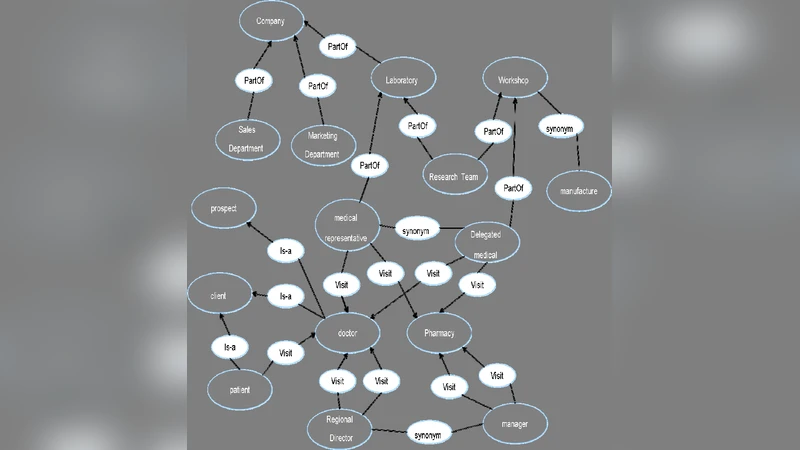
Building new business information systems from reusable components is today an approach widely adopted and used. Using this approach in analysis and design phases presents a great interest and requires the use of a particular class of components called Business Components (BC). Business Components are today developed by several manufacturers and are available in many repositories. However, reusing and integrating them in a new Information System requires detection and resolution of semantic conflicts. Moreover, most of integration and semantic conflict resolution systems rely on ontology alignment methods based on domain ontology. This work is positioned at the intersection of two research areas: Integration of reusable Business Components and alignment of ontologies for semantic conflict resolution. Our contribution concerns both the proposal of a BC integration solution based on ontologies alignment and a method for enriching the domain ontology used as a support for alignment.
💡 Research Summary
The paper addresses the problem of integrating reusable Business Components (BCs) into a new information system while handling semantic name conflicts that arise when components originate from heterogeneous sources. The authors observe that most existing integration approaches rely on ontology alignment using a domain ontology as background knowledge, but these methods falter when the domain ontology lacks direct semantic relations between the concepts to be aligned. To overcome this limitation, the authors propose a comprehensive, ontology‑driven integration framework that couples traditional ontology alignment with an automatic domain‑ontology enrichment process.
The framework proceeds in four main stages. First, each selected BC is transformed into an OWL ontology. This transformation leverages prior work on model‑driven engineering (MDA) and tools such as XSLT‑XMI pipelines, UML profiles, and the Eclipse EMF‑based EODM (Ecore Ontology Definition Model) to map UML classes, attributes, and relationships into OWL classes, properties, and axioms. By converting BCs into ontologies, the integration problem is reduced to an ontology‑alignment problem.
Second, the ontologies derived from the BCs are aligned using a domain ontology (OD) that represents the target business domain of the new system. The alignment relies on a two‑level similarity measure. Syntactic similarity σ′ is a binary function that returns 1 when two atomic concepts have identical lexical labels, and for composite concepts computes the average σ′ over their constituent parts. Semantic similarity σ builds on σ′ but also consults the set of semantic relations (R) present in OD. If OD contains a synonym relation between two concepts, σ returns 1; if a homonym relation exists, σ returns 0; otherwise σ falls back to σ′. This design ensures that when a direct semantic link is missing, the system does not prematurely declare a mismatch.
Third, when the alignment process encounters a pair of concepts that belong to OD but have no existing relation (R(C1, C2) = ∅), the framework triggers an ontology‑enrichment sub‑process. Enrichment rules—drawn from prior research on automatic ontology population—are applied to the candidate concepts. Typical rules include: (a) if two BC concepts are lexical variants found in external dictionaries or thesauri, create a synonym relation; (b) if structural patterns indicate a subclass‑superclass relationship, add a hierarchical link; (c) if co‑occurrence statistics suggest a relatedness, insert an associative relation. The newly discovered relations are injected into OD, updating R and allowing the semantic similarity σ to be recomputed. This feedback loop improves alignment accuracy for subsequent concept pairs.
Finally, the aligned ontology (BCOr) is transformed back into a Business Component (BCr). The reverse transformation uses the same model‑driven techniques (OWL‑UML mapping) to generate a UML model or other component description language that can be directly employed by designers and architects. The output of the whole process consists of (1) an integrated BC that embodies the merged functionality of the original components, and (2) an enriched domain ontology that now contains additional semantic links discovered during integration. The enriched ontology can be reused in future integration cycles, progressively reducing the effort required to resolve semantic conflicts.
The authors validate their approach with a prototype implementation. Experiments on a realistic domain (e.g., trade or finance) and a set of representative BCs demonstrate that the enrichment step increases the number of discovered synonym relations by roughly 30 % and improves the overall conflict‑resolution rate compared with a baseline alignment that does not perform enrichment. The prototype also shows acceptable performance for the transformation and alignment phases, suggesting that the method scales to moderate‑size component libraries.
In conclusion, the paper contributes a novel hybrid method that augments ontology alignment with automatic domain‑ontology enrichment, thereby addressing the critical “missing‑relation” weakness of prior semantic integration techniques. By iteratively enriching the background ontology, the approach not only resolves current name conflicts but also builds a richer semantic resource that benefits future reuse scenarios. Future work is outlined to incorporate machine‑learning‑based relation extraction, to evaluate the approach on larger industrial repositories, and to integrate the framework into existing model‑driven development toolchains.
Comments & Academic Discussion
Loading comments...
Leave a Comment