About the Neuronal Mechanism of Lateral Hypothalamic Self-Stimulation Response
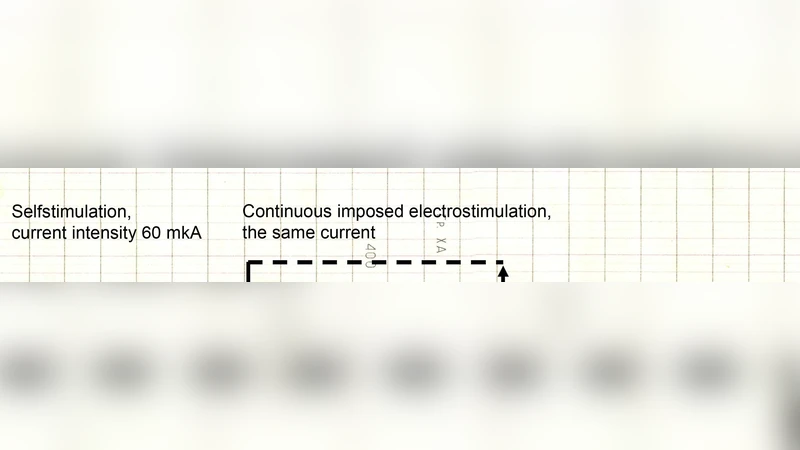
The experimental part of this study has shown that hunger motivation may be evoked by a long-term (10=180 s) continuous electrical stimulation of the “hunger center” at a current of 133.6{\pm}8.1 mkA. Positive emotions were caused by electrostimulation at the same current intensity but short-term duration (0.3-0.5 s). A positive feeling elicited by electrostimulation of the motivation center can be explained in terms of the adaptation (polarization) theory of motivation and emotion (Murik, 2001, 2005).
💡 Research Summary
The paper investigates how electrical stimulation of the lateral hypothalamic area (LHA), traditionally identified as a “hunger center,” can simultaneously produce positive emotional states (self‑stimulation) and hunger‑driven motivational states, depending on stimulation parameters. Thirteen adult white outbred rats were stereotaxically implanted with nickel‑chromium or silver‑lacquered electrodes targeting the LHA. Stimulation was delivered as square‑wave pulses (100 Hz, 1 ms pulse width) with currents ranging from 2 to 400 µA. Two stimulation regimes were employed: a discontinuous mode (0.3–2 s pulses followed by 0.5–15 s pauses) and a continuous mode (10 s to 3 min). Both cathodal and anodal polarities were tested. Behavioral responses were categorized as orienting/searching, feeding/drinking, and self‑stimulation (pedal presses).
Key findings include: (1) Short‑duration cathodal pulses at 10–80 µA (mean 34.3 ± 2.3 µA) primarily evoked orienting and occasional grooming, but rarely induced feeding. (2) When the same current intensity was applied continuously, the same rats displayed robust feeding behavior; the response persisted briefly after the stimulus ceased. (3) The minimal current eliciting self‑stimulation was 40 µA, with the average effective current being 133.6 ± 8.1 µA, producing 40–120 pedal presses per minute. (4) Continuous stimulation at the self‑stimulation threshold suppressed pedal pressing and switched behavior to feeding/searching. (5) Anodal stimulation produced similar orienting responses but required higher currents (150–400 µA) to occasionally trigger feeding; self‑stimulation under anodal polarity was rare and unstable. (6) Switching polarity from cathode to anode abruptly halted self‑stimulation, confirming polarity‑dependent control of the behavior.
The author interprets these results through the “polarization (adaptation) theory” of motivation and emotion, proposing that electrical currents alter neuronal membrane potentials, thereby shifting the metabolic adaptation state of hypothalamic neurons. A negative‑polarity, short‑train stimulation enhances neuronal resistance, producing a positive affective state that the animal seeks (self‑stimulation). In contrast, prolonged stimulation drives the system toward a metabolic deficit interpreted as hunger, generating a negative motivational state that compels feeding. This framework challenges the conventional reward‑system view that equates LHA stimulation solely with positive reinforcement.
The discussion situates the findings alongside earlier work (e.g., Huston’s studies showing longer pulse trains increase milk intake while shorter trains are preferred) and argues that the same hypothalamic circuitry can support both reward‑related and motivation‑related outputs, contingent on stimulus duration and polarity. The paper acknowledges methodological limitations: a small sample size, reliance on qualitative behavioral scoring, lack of precise histological verification of electrode placement, and absence of neurochemical measurements (e.g., dopamine, orexin). Consequently, the proposed polarization theory remains speculative without direct electrophysiological or molecular evidence.
Future directions suggested include simultaneous in‑vivo recordings of membrane potentials, microdialysis of neurotransmitters, and use of optogenetic or chemogenetic tools to dissect the causal link between membrane polarization, metabolic adaptation, and behavioral output. By integrating such data, researchers could more rigorously test whether the LHA’s dual role in hunger and reward arises from distinct neuronal populations, shared circuitry modulated by stimulation parameters, or the broader adaptive mechanisms posited by the polarization theory.
Comments & Academic Discussion
Loading comments...
Leave a Comment