Confined Shocks inside Isolated Liquid Volumes -- A New Path of Erosion?
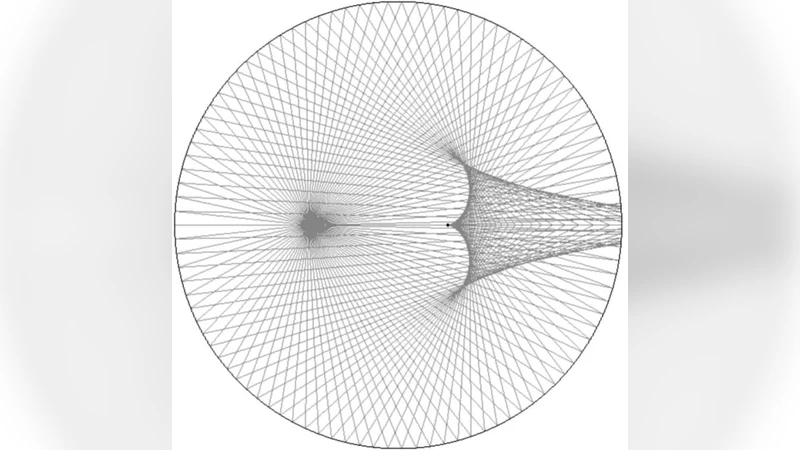
The unique confinement of shock waves inside isolated liquid volumes amplifies the density of shock-liquid interactions. We investigate this universal principle through an interdisciplinary study of shock-induced cavitation inside liquid volumes, isolated in 2 and 3 dimensions. By combining high-speed visualizations of ideal water drops realized in microgravity with smoothed particle simulations we evidence strong shock-induced cavitation at the focus of the confined shocks. We extend this analysis to ground-observations of jets and drops using an analytic model, and argue that cavitation caused by trapped shocks offers a distinct mechanism of erosion in high-speed impacts (>100 m/s).
💡 Research Summary
The paper investigates how shock waves behave when they are confined inside isolated liquid volumes such as drops or jets, where the free surface acts as a perfect reflector. Using a combination of micro‑gravity experiments, smoothed‑particle hydrodynamics (SPH) simulations, and an analytical ray‑tracing model, the authors demonstrate that reflected shocks focus energy into a narrow “catacaustic” region, producing intense secondary cavitation far from the original shock source.
In the experimental campaign, spherical water drops (diameter 16–26 mm) were generated aboard a parabolic flight. A pair of electrodes released a 10 ns discharge inside the drop, creating a point‑plasma that expands into a spherical shock wave and a primary cavitation bubble. High‑speed imaging (up to 120 kfps, 50 µm spatial resolution) captured the evolution of the shock and the ensuing cavitation. About 10 µs after shock initiation, a dense cloud of sub‑millimetric bubbles appeared on the side opposite the shock origin. The bubbles grew to ~0.5 mm and collapsed within 20–50 µs, consistent with Rayleigh’s collapse model. By varying drop size, shock energy (3–20 mJ), and eccentricity ε (the offset of the shock source from the drop centre), the authors observed that the bubble cloud’s geometry is dictated solely by ε: low ε yields a single concentrated region, while ε > 0.5 produces a characteristic two‑wing pattern.
To interpret these observations, the authors built an SPH model with 10⁵ particles representing the shock shell. Each particle propagates at the speed of sound (c ≈ 1500 m s⁻¹) and reflects elastically at the free surface. Shock energy decays exponentially with a time constant τ ≈ 20 µs, and the dissipated energy is deposited into the liquid via a 3‑D Gaussian kernel. The resulting 3‑D energy‑density field, when projected onto a 2‑D image plane and corrected for optical refraction, reproduces the experimental bubble patterns with remarkable fidelity, confirming that the cavitation originates from the dissipated energy of the reflected shock.
The analytical model reduces the 3‑D problem to a 2‑D circular wave reflecting inside a circle. The envelope of intersecting reflected rays forms a catacaustic curve; the point of highest ray density lies on the symmetry axis at a distance µ from the centre, given by µ = −ε/(2ε + 1). This simple expression accurately predicts the location of the strongest cavitation observed in both experiments and simulations.
Finally, the authors explore the implications for erosion. In high‑speed impacts (> 100 m s⁻¹), a shock generated at the point of contact can reflect off the free surface and focus on the opposite side of the drop, where the secondary cavitation bubbles persist long enough to be intersected by the incoming solid. The condition for erosion is t_c + t_R ≥ t_v, where t_c ≈ 4D/(3c) is the travel time of the reflected shock, t_R is the bubble lifetime, and t_v ≈ 2D/(3v) is the time for the solid to reach the same location. Solving yields a minimum impact velocity v ≥
Comments & Academic Discussion
Loading comments...
Leave a Comment