The LTP Experiment on LISA Pathfinder: Operational Definition of TT Gauge in Space
The European Space Agency (ESA) and the National Aeronautics and Space Administration (NASA) are planning the Laser Interferometer Space Antenna (LISA) mission in order to detect GW. The need of accurate testing of free-fall and knowledge of noise in a space environment similar to LISA’s is considered mandatory a pre-phase for the project. Therefore the LISA Pathfinder mission has been designed by ESA to fly the LISA Technology Package (LTP), aiming at testing free-fall by measuring the residual acceleration between two test-bodies in the dynamical scheme we address as “drag-free”. The spectral map of the residual acceleration as function of frequency will convey information on the local noise level, thus producing a picture of the environmental working conditions for LISA itself. The thesis contains abundant material on the problem of compensating static gravity, the development of a theory of orthogonalization of reference and cross-talk for the LTP experiment. The construction of the laser detection procedure starting from GR and differential geometry arguments is carried on. Effort was put in pointing out the physical motivations for the choices made in several other papers by the author and colleagues. In this perspective the thesis is meant as a summary tool for the LTP collaboration. In the second part of the thesis we summarize our contributions for a measurement of G onboard LTP and review on possible tests of fundamental physics the mission might embody. A wide part of the thesis is now part of the LTP Operation Master Plan, describing the real science and operations onboard LISA Pathfinder. This thesis was defended on September 26th, 2006 at the University of Como, Italy.
💡 Research Summary
The dissertation by Michele Armando presents a comprehensive technical account of the LISA Technology Package (LTP) on board the LISA Pathfinder mission, focusing on the operational definition of the transverse‑trace (TT) gauge in space and its relevance for the forthcoming LISA gravitational‑wave observatory. The work is organized into five main chapters, each addressing a distinct aspect of the experiment, from theoretical foundations to practical implementation and prospective fundamental‑physics applications.
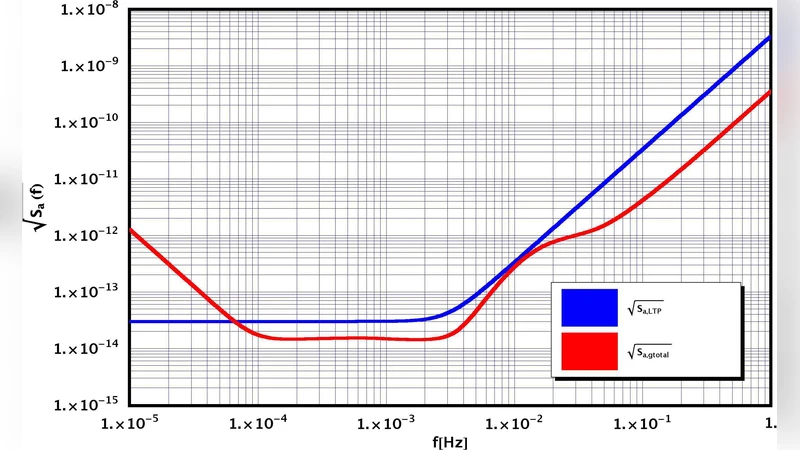
Chapter 1 establishes the conceptual basis for constructing a global reference frame in a relativistic setting. Using only the local generators of the Lorentz group, the author shows that a laser beam between two freely‑floating mirrors can serve as an absolute ruler. The phase variation Δθₗₐₛₑᵣ(t) is derived to be directly proportional to the time derivative of the gravitational‑wave strain h(t), leading to equation (1). This relationship justifies the use of laser interferometry as an unbiased estimator of spacetime curvature. The chapter then translates the interferometric observable into a power‑spectral‑density (PSD) description of noise, and derives the acceleration‑noise requirement for LISA (≈ 3 × 10⁻¹⁵ m s⁻² Hz⁻¹ᐟ² at 1 mHz). By comparison, the LTP specification is about a factor of seven higher (≈ 3 × 10⁻¹⁴ m s⁻² Hz⁻¹ᐟ²), which is still sufficient for a technology‑demonstration mission.
Chapter 2 builds the full Newtonian dynamics of the two test masses (TMs) and the spacecraft (SC). Equations of motion are written for each degree of freedom, and the drag‑free (DF) and low‑frequency suspension (LFS) control loops are introduced as transfer functions ω²_df and ω²_lfs. The principal interferometric read‑out, denoted IFO(x₂ − x₁), is expressed in equation (4) and subsequently simplified in equation (5) to show how the differential acceleration Δgₓ is mapped onto the laser phase via the factor ω² Δx. This mapping guarantees that the measured quantity is gauge‑invariant under the TT gauge, i.e., it directly reflects the Riemann curvature without contamination from coordinate artefacts.
Chapter 3 provides an exhaustive inventory of noise sources. Thermal fluctuations, Brownian motion, magnetic disturbances (both spacecraft‑generated and interplanetary), charge‑induced forces, cross‑talk between sensing axes, and read‑out electronics noise are quantified and listed in Table 1. The total noise budget is plotted in Figure 2, demonstrating that across the measurement bandwidth (0.1 mHz – 1 Hz) the summed noise lies comfortably below the LTP requirement curve. The author emphasizes that many of these contributions are correlated over the short baseline of the Pathfinder, making the differential measurement a worst‑case scenario for LISA.
Chapter 4 addresses the critical issue of static gravitational imbalance along the measurement axis. Because any residual static force translates into an electrostatic stiffness and associated force noise, the thesis proposes a set of compensation masses (CMs) strategically placed within the spacecraft. A Newtonian point‑mass model combined with rotational geometry and finite‑element meshing is used to compute the optimal CM configuration that cancels the imbalance while adding minimal stiffness. The chapter also details the calibration of forces applied to the TMs and the methodology for measuring the accumulated charge on each TM, both essential for the proper operation of the Gravitational Reference Sensor (GRS).
Chapter 5 explores ancillary fundamental‑physics experiments that could be performed with LTP acting as a high‑precision accelerometer. Proposed studies include an on‑board measurement of the Newtonian constant G, tests of the inverse‑square law at sub‑millimetre scales, and investigations of Modified Newtonian Dynamics (MOND) signatures. Although the original plan involved a parallel NASA ST‑7 mission carrying a Disturbance Reduction System (DRS), the author acknowledges that these experiments remain largely conceptual at the present stage.
Two appendices supplement the main text. Appendix A offers a concise review of gravitational‑wave generation mechanisms, source classes, and characteristic amplitudes for readers less familiar with relativistic astrophysics. Appendix B derives the TT‑gauge conditions directly from the metric perturbation and connection coefficients, and presents the geodesic‑deviation equation from both a covariant and a linearised perspective, thereby grounding the earlier interferometric analysis in solid differential‑geometry foundations.
In the conclusions, Armando asserts that the LTP demonstrates the feasibility of achieving drag‑free operation under TT‑gauge conditions, that the static‑gravity compensation scheme and cross‑talk mitigation strategies are viable, and that the Pathfinder will deliver a detailed noise map essential for LISA’s final design. The thesis also contributed to the LTP Operation Master Plan, the real‑time driver for the RS‑422 serial interface, and several internal ESA documents, underscoring its practical impact on the mission.
Overall, the dissertation provides a thorough theoretical and experimental framework for the LTP, establishing it as a critical stepping stone toward the full LISA gravitational‑wave observatory.
Comments & Academic Discussion
Loading comments...
Leave a Comment