A comparative study of process mediator components that support behavioral incompatibility
Most businesses these days use the web services technology as a medium to allow interaction between a service provider and a service requestor. However, both the service provider and the requestor would be unable to achieve their business goals when there are miscommunications between their processes. This research focuses on the process incompatibility between the web services and the way to automatically resolve them by using a process mediator. This paper presents an overview of the behavioral incompatibility between web services and the overview of process mediation in order to resolve the complications faced due to the incompatibility. Several state-of the-art approaches have been selected and analyzed to understand the existing process mediation components. This paper aims to provide a valuable gap analysis that identifies the important research areas in process mediation that have yet to be fully explored.
💡 Research Summary
**
The paper addresses the problem of behavioral incompatibility between Web services and investigates how process mediators can automatically resolve such mismatches. After introducing the concept of behavioral incompatibility, the authors classify mismatches into four hierarchical levels: signature/data, functional, protocol, and deadlock. The signature/data level concerns structural and type differences in message elements; the functional level deals with mismatched offered versus requested capabilities (equal, plug‑in, subsume, intersecting, disjoint); the protocol level is further broken down into five concrete patterns—extra messages, missing messages, one‑to‑many, many‑to‑one, and wrong order; finally, deadlock arises when the interaction cannot reach a final state.
The paper distinguishes two principal mechanisms for addressing these mismatches: adaptation and mediation. Adaptation creates adapters that transform or translate interface and protocol differences, effectively “patching” the service endpoints. Mediation introduces a third‑party mediator that intelligently coordinates the message exchange, often leveraging semantic annotations and ontologies to resolve higher‑level mismatches. The authors review several semantic Web service frameworks (OWL‑S, WSMO, SAWSDL) that provide ontology‑based descriptions to support automated matching at the signature and functional levels.
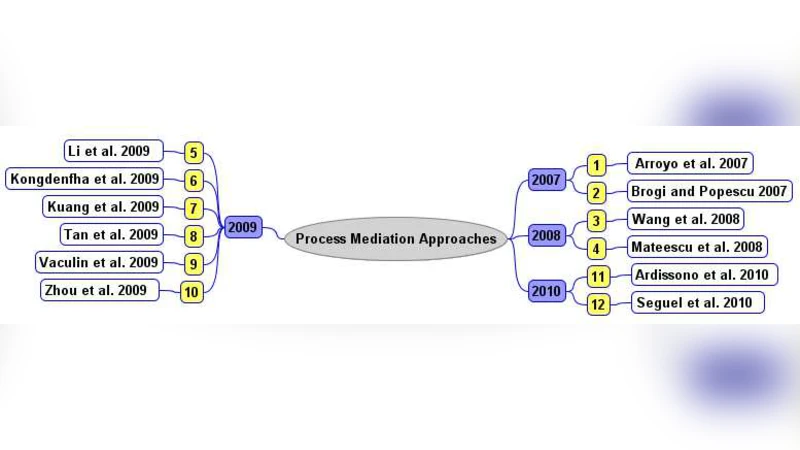
Methodologically, the authors conduct a systematic literature review (SLR), selecting roughly thirty representative papers from the early 2000s to the present. They evaluate each work against traditional criteria—expressiveness, automation, correctness, completeness—and augment these with three new dimensions: scalability, real‑time performance, and domain dependence. The resulting comparative matrix highlights that most existing approaches concentrate on protocol‑level mismatches, while signature/data and functional mismatches remain largely manual, requiring developer intervention.
Key insights from the analysis include: (1) the necessity of a unified framework that simultaneously addresses all four mismatch levels; (2) the limitation of pure adaptation techniques in handling complex, multi‑step protocol flows; (3) the dependency of mediation solutions on high‑quality ontologies and accurate semantic mappings; (4) the lack of thorough performance and scalability assessments for real‑time service compositions. Consequently, the authors propose a hybrid approach that combines adaptive adapters for low‑level transformations with a semantic‑driven mediator for higher‑level coordination. This hybrid model would benefit from an advanced ontology‑matching engine capable of dynamic, context‑aware reasoning, reducing the need for manual tuning.
The paper concludes by outlining future research directions: (i) development of end‑to‑end mediation frameworks that integrate signature, functional, protocol, and deadlock resolution; (ii) enhancement of ontology generation and alignment tools to improve automation; (iii) design of lightweight, high‑throughput mediators suitable for cloud‑native environments; (iv) establishment of standard benchmarks and evaluation platforms to objectively measure mediator performance across the newly defined metrics. In sum, while substantial progress has been made in protocol‑level mediation, a comprehensive, automated solution for behavioral incompatibility remains an open challenge that warrants further investigation.
Comments & Academic Discussion
Loading comments...
Leave a Comment