An evolving network model with modular growth
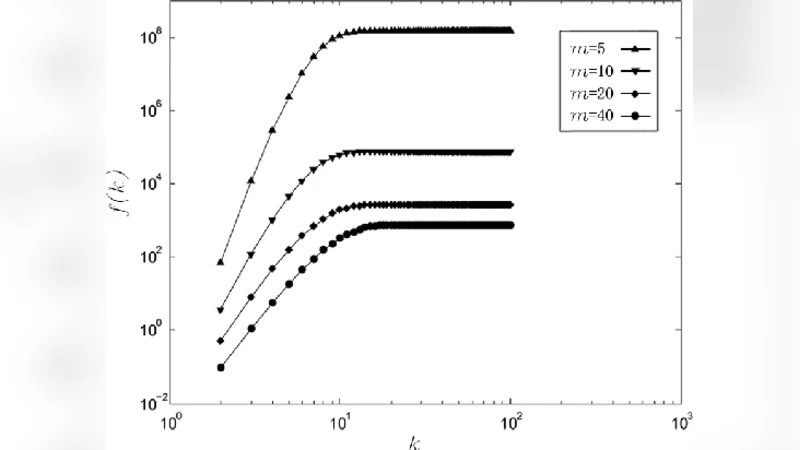
In this paper, we propose an evolving network model growing fast in units of module, based on the analysis of the evolution characteristics in real complex networks. Each module is a small-world network containing several interconnected nodes, and the nodes between the modules are linked by preferential attachment on degree of nodes. We study the modularity measure of the proposed model, which can be adjusted by changing ratio of the number of inner-module edges and the number of inter-module edges. Based on the mean field theory, we develop an analytical function of the degree distribution, which is verified by a numerical example and indicates that the degree distribution shows characteristics of the small-world network and the scale-free network distinctly at different segments. The clustering coefficient and the average path length of the network are simulated numerically, indicating that the network shows the small-world property and is affected little by the randomness of the new module.
💡 Research Summary
The paper introduces a novel evolving network model that grows by adding entire modules rather than single nodes, aiming to capture the modular growth observed in many real‑world complex systems such as scientific collaboration networks, protein interaction networks, and urban transportation systems. Each module is a small‑world network generated by the Watts‑Strogatz (WS) procedure: a regular lattice of s nodes with average degree K is rewired with probability α, allowing the internal structure to range from a perfectly regular lattice (α=0) to a random graph (α=1). At each discrete time step a new module is created, its internal edges are formed according to the WS rule, and then m inter‑module edges are added. The inter‑module edges are attached to existing nodes in the whole network by preferential attachment, i.e., the probability that an existing node i receives a new link is proportional to its current degree k_i.
The authors first discuss related work, pointing out that classic WS and Barabási‑Albert (BA) models capture either the small‑world effect or the scale‑free degree distribution, but not both simultaneously, and that they ignore the modular organization that many empirical networks display. They then formally define the growth process with equations describing the creation of internal edges, the rewiring probability α, and the preferential attachment rule for inter‑module connections.
A modularity measure Q, based on the Newman‑Girvan definition, is derived analytically. Q depends on the ratio of intra‑module edges to total edges (p_in). By varying the number of inner‑module edges versus inter‑module edges, the model can produce a wide range of Q values; for p_in≈0.8 the modularity exceeds 0.3, comparable to values reported for real networks. The analysis shows that increasing the number of inter‑module edges reduces Q roughly linearly, while the rewiring probability α only mildly affects Q when α≤0.3.
Using mean‑field theory, the degree evolution of a node i is described by the differential equation ∂k_i/∂t = m·k_i / (2E(t)), where E(t) is the total number of edges at time t. Solving this yields k_i(t)=m·(t/t_i)^β with β=m/(2E_0+mt). Consequently, the asymptotic degree distribution follows a power law P(k)∝k^{-γ} with exponent γ=1+1/β≈2+2E_0/(ms). Numerical simulations confirm this prediction: for low degree values the distribution reflects the WS‑induced exponential cutoff, while for high degrees a clear power‑law tail emerges. Thus the network simultaneously exhibits small‑world clustering at the local level and scale‑free connectivity at the global level.
Clustering coefficient C is dominated by the intra‑module structure. Analytical approximations show that for small α, C≈(3K−4)/(4(K−1)), which remains high even after many modules have been added. Simulations report C≈0.62 for α=0.1, decreasing to 0.38 for α=0.5, with only minor dependence on the number of inter‑module edges m. The average shortest‑path length L grows logarithmically with the total number of nodes N (L∝log N), confirming the small‑world property. Increasing m slightly reduces L but does not change its logarithmic scaling, indicating that the addition of inter‑module shortcuts is sufficient to keep the network navigable.
The paper also discusses limitations: the module size s, internal degree K, and rewiring probability α are kept constant, whereas real systems often display heterogeneous module sizes and evolving internal topologies. The mean‑field approach assumes continuous degree growth, ignoring discrete stochastic fluctuations and degree‑degree correlations. Moreover, only degree‑based preferential attachment is considered; other factors such as node attributes, spatial constraints, or community‑aware attachment could be incorporated.
In the concluding section the authors suggest extensions: allowing variable module sizes, time‑dependent α, and mixed attachment mechanisms; applying the model to empirical data sets to validate its ability to reproduce observed modularity, clustering, and degree distributions; and integrating community‑detection algorithms to study how emergent modules align with known functional groups. Overall, the proposed modular growth model provides a flexible framework that bridges the gap between small‑world and scale‑free paradigms while explicitly accounting for the modular architecture characteristic of many complex networks.
Comments & Academic Discussion
Loading comments...
Leave a Comment