A Novel Approach for Pass Word Authentication using Brain -State -In -A Box (BSB) Model
Authentication is the act of confirming the truth of an attribute of a datum or entity. This might involve confirming the identity of a person, tracing the origins of an artefact, ensuring that a product is what it’s packaging and labelling claims to be, or assuring that a computer program is a trusted one. The authentication of information can pose special problems (especially man-in-the-middle attacks), and is often wrapped up with authenticating identity. Password authentication using Brain-State -In-A Box is presented in this paper. Here in this paper we discuss Brain-State -In-A Box Scheme for Textual and graphical passwords which will be converted in to probabilistic values Password. We observe how to get password authentication Probabilistic values for Text and Graphical image. This study proposes the use of a Brain-State -In-A Box technique for password authentication. In comparison to existing layered neural network techniques, the proposed method provides better accuracy and quicker response time to registration and password changes.
💡 Research Summary
The paper proposes a novel password authentication scheme that leverages the Brain‑State‑In‑a‑Box (BSB) auto‑associative neural network. The authors first convert textual passwords (and usernames) into binary representations by mapping each character to its ASCII code and then to a binary string. These binary strings are further transformed into bipolar values (0 → –1, 1 → 1) to serve as input vectors for the BSB network. Training proceeds by adjusting the weight matrix using an outer‑product‑based rule ΔA = lr·(X‑AX)⊗X, where X is the normalized input pattern and lr is a learning rate. Once trained, the weight matrix is stored on the server. During login, the user’s supplied username and password undergo the same conversion process, are fed into the network, and the resulting output vector is compared with the stored password vector; a match grants access.
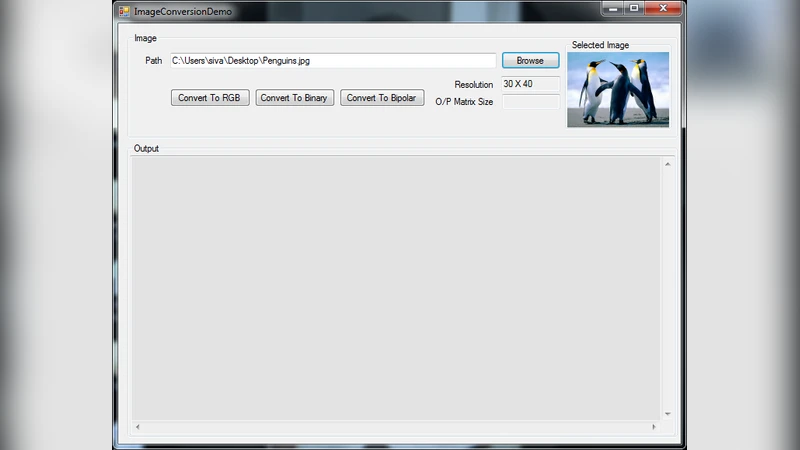
For graphical passwords, the method first converts an image into an RGB matrix, then binarizes each pixel, and finally maps the binary values to bipolar form. The resulting pixel‑level bipolar matrix is treated identically to a textual password and used to train the BSB network. The user can specify image resolution and output matrix size through a GUI.
The authors claim that, compared with conventional layered neural‑network approaches, the BSB‑based system offers higher authentication accuracy and faster registration or password‑change operations. Their experimental demonstration consists mainly of screenshots showing the GUI workflow: setting up the network, entering training samples, initiating training, and validating users. No quantitative metrics such as false‑acceptance rate, false‑rejection rate, or processing time are reported.
The paper discusses theoretical properties of the BSB model, noting that the designed weight matrix is asymmetric to avoid storing the negative of desired patterns as stable equilibria, and that spurious states are minimized. However, the authors acknowledge that global stability is not guaranteed, which could lead to unpredictable behavior in edge cases.
In summary, the work introduces an interesting application of an early dynamic associative memory model to password authentication, handling both text and image‑based credentials. While the concept is clear and the implementation straightforward, the study lacks rigorous security analysis, comparative benchmarks, and statistical evaluation. Future research should address these gaps, explore hybrid designs that combine BSB with cryptographic primitives (e.g., salted hashes, key‑stretching), and provide extensive empirical validation on realistic user populations.
Comments & Academic Discussion
Loading comments...
Leave a Comment