Rapid, Impartial and Comprehensive (RIC) publishing: A new concept for scientific journals
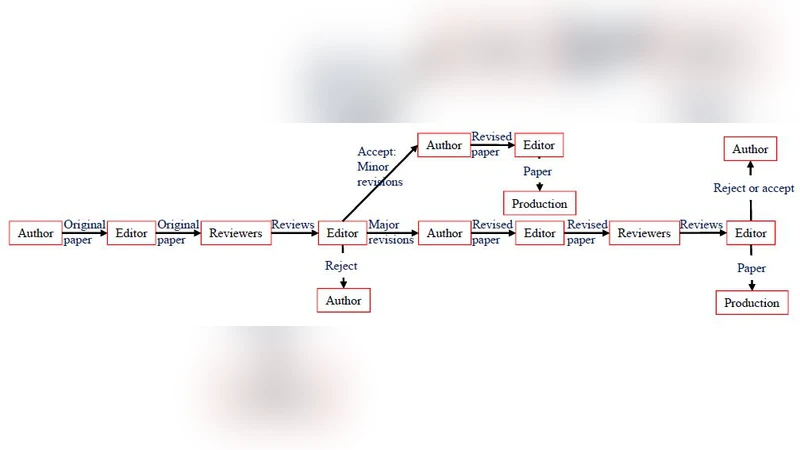
Publishing scientific journals governed by editors relying on anonymous peer reviewing is slow (even one round of reviewing involves several communications between authors, editor and reviewers), partial (arguments of authors can hardly overrule those of reviewers) and not using all available scientific material (even the most thorough and insightful reviews remain for the eyes of authors and editors only). Here I propose a new concept for scientific journals that ensures rapid, impartial and comprehensive (RIC) publishing. RIC concept is based on implementation of two novel publishing principles: the first (rapid) editorial screening of a submitted manuscript should result in its either “rejection” or “acceptance with optional revisions”, and, in the latter case, the optionally revised (taking into account open reviews) paper should be published along with all (positive and negative) reviews, presenting thereby to the scientific community all available scientific material on the topic in question.
💡 Research Summary
The paper by Sergey I. Bozhevolnyi presents a critical examination of the current scholarly publishing system, which relies heavily on anonymous peer review. The author identifies three core deficiencies: slowness, partiality, and incompleteness. The review process typically involves multiple rounds of communication—initial editorial assessment (about a week), reviewer selection and report writing (2–4 weeks), and final editorial decision (1–2 weeks). This timeline delays research progress, especially when reviewers request additional experiments that may not be essential. Moreover, because reviewers’ opinions often carry decisive weight, authors have limited ability to contest unfavorable judgments, leading to perceived bias and unnecessary burdens. Finally, the reviews themselves, which can contain valuable analyses, critiques, and even new insights, remain hidden from the broader scientific community, representing a loss of scholarly material.
To address these issues, the author proposes a “Rapid, Impartial, and Comprehensive” (RIC) publishing model. RIC consists of two novel principles. First, a rapid editorial screening decides instantly whether a manuscript is rejected or “accepted with optional revisions.” In the latter case, authors may choose to revise the paper based on the reviews, but the decision to publish does not hinge on the extent of revision; the paper proceeds to publication regardless. Second, all peer‑review reports—both positive and negative—are published alongside the article, each receiving its own DOI and citation metadata. This makes reviews citable scholarly outputs, increases transparency, and ensures that the full spectrum of scientific discourse is accessible.
The model builds on practices already present in many journals, such as initial desk rejections and the publication of invited review papers. However, it extends these practices by making the editorial decision immediate and by mandating the open dissemination of all reviews. Implementation would require several practical and cultural adjustments. Reviewers often prefer anonymity; the author acknowledges survey data indicating reluctance to reveal identities. To encourage participation, incentives such as formal citation credit for reviews, reviewer reputation scores, or monetary compensation could be introduced. Quality control mechanisms for reviews would also be necessary, perhaps through editorial pre‑screening of reports or community‑based rating systems, to prevent the publication of low‑quality or unconstructive critiques.
Ethical considerations arise when reviews become public. Reviewers may feel exposed when delivering harsh criticism, potentially straining professional relationships. Clear guidelines for constructive reviewing, conflict‑of‑interest disclosures, and optional mediation services could mitigate these risks. Additionally, the “optional revisions” pathway must retain a robust editorial gatekeeping function: manuscripts that fail to meet a baseline scientific standard should still be rejected outright, preventing the system from devolving into a de‑facto “publish everything with reviews.”
From a stakeholder perspective, RIC promises several benefits. Authors gain faster decisions, reducing the time lost waiting for multiple review cycles. Reviewers receive public acknowledgment for their intellectual labor, turning reviews into citable contributions. Readers obtain a richer context for each article, accessing both the authors’ arguments and the full spectrum of expert commentary. Publishers could streamline workflows, reduce administrative overhead, and market themselves as champions of fair, transparent publishing.
Nevertheless, challenges remain. Transitioning to RIC would require substantial changes to editorial policies, manuscript handling platforms, and indexing services to accommodate review DOIs. The cultural shift toward open reviewing may encounter resistance, especially in fields where anonymity is deemed essential for candid critique. Moreover, the risk of “review overload”—where reviewers feel compelled to produce highly polished, publicly visible reports—could increase the time burden per review, potentially offsetting the speed gains from rapid editorial decisions.
In summary, the RIC concept offers a compelling vision for a more efficient, equitable, and comprehensive scholarly communication system. By decoupling the decision to publish from the depth of revision and by treating peer reviews as first‑class scholarly artifacts, it aims to eliminate the principal inefficiencies of the current model. Successful adoption, however, will depend on carefully designed incentives for reviewers, robust quality‑control mechanisms for open reports, and clear editorial standards that preserve scientific rigor while embracing transparency. If these conditions are met, RIC could substantially improve the speed, fairness, and informational richness of academic publishing.
Comments & Academic Discussion
Loading comments...
Leave a Comment