Open Input: A New Way for Websites to Grow
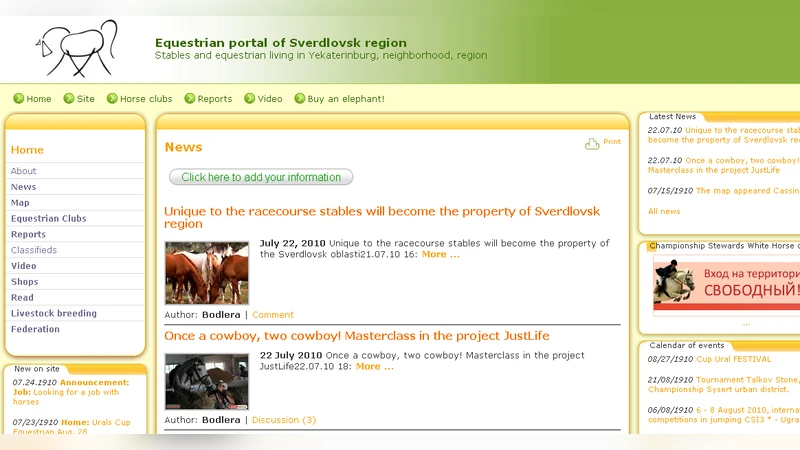
Regardless of current web 2.0 and 3.0 trends, there are still a lot of websites made in web 1.0 style. These websites have fixed pages which are editable only by owner and not by community. It is normal for a lot of cases, but looks like not modern and engaging approach. Are there any ways to make these sites closer to life? This paper is devoted to open input technique, a way for websites of web 1.0 era to grow and evolve community. The idea of open input, in general, means that anybody from the web can add information to any section of the website even without registration on that website. People can add news, billboard announcements, testimonials, questions, pictures, videos etc - whatever site owner permitted. We have tested this idea in practice and have positive results approving that open input is a vital approach for collaboration on the web.
💡 Research Summary
The paper addresses a persistent problem in many legacy “Web 1.0” sites: their content is static and can only be edited by the site owner, which makes them appear outdated and limits user engagement. To bridge the gap between such static sites and the collaborative expectations of modern Web 2.0/3.0 users, the authors propose a technique called Open Input. The core idea is simple yet powerful: a site owner designates certain sections of the website as open for public contribution and specifies which content types (text, image, video, etc.) are allowed in each section. Visitors—without any registration or authentication—can click an “Add your information” button, fill out the same CMS form that the administrator uses, and submit the data. The submission is stored with a “pending” status and routed to a moderation queue. The owner receives an email notification and can approve or reject the entry with a single AJAX‑driven click, after which the content becomes publicly visible (or is discarded).
The authors implemented this mechanism in LineAct CMS, a modest Russian‑language content management system that originally lacked any user‑generated content features and even registration capabilities. Implementation required only two technical changes: (1) adding a status field (pending/accepted/declined) to the content table, and (2) inserting an “Add your information” button on each section. The moderation interface was built to be lightweight: owners can process pending items in 5‑10 minutes per day for small‑ to medium‑size sites.
A nine‑month field trial began in August 2009. During this period the Open Input feature was deployed on 526 LineAct sites; 128 of those sites remained active (live) at the time of reporting, out of a total of 387 active LineAct installations. Users contributed 7 226 content elements of various semantic types, of which 4 061 (≈56 %) were approved and published. The distribution of content types shows both built‑in categories (testimonials, billboard announcements, Q&A, news, corporate info) and custom types (free‑form text, image galleries, video, links). Notably, the top 41 sites accounted for 3 149 entries (≈44 % of all submissions), indicating that once a community forms around a site, the Open Input mechanism can generate substantial user‑driven content.
The paper situates Open Input among existing collaborative platforms. Wiki systems provide structured page editing, social blogging offers a more controlled publishing flow, and forums enable unstructured discussion. Compared with these, Open Input distinguishes itself by (a) minimal interaction steps—a single click to open a form, (b) no requirement for user registration, reducing friction, (c) high flexibility, allowing the same mechanism to emulate billboards, forums, news feeds, or recipe collections, and (d) ease of integration, as it re‑uses existing CMS forms and requires only modest database changes.
However, the authors acknowledge several limitations. First, moderation still relies on manual review; as submission volume scales, owners may face a bottleneck. Second, the free‑form nature of inputs hampers automatic indexing, categorization, and analytics, suggesting a need for standardized metadata or templating. Third, non‑authenticated contributors receive no edit‑link unless they voluntarily provide an email address, which can limit post‑submission corrections and reduce long‑term engagement.
Future work is outlined along four axes: (1) Smart moderation using machine‑learning classifiers to pre‑filter spam or inappropriate content, (2) Structured input templates that embed semantic markup (e.g., JSON‑LD) for better search engine visibility, (3) Incentive mechanisms such as points, badges, or reputation scores to encourage repeat contributions from anonymous users, and (4) Cross‑CMS validation by porting the Open Input model to popular platforms like WordPress or Joomla to test portability and broader applicability.
In conclusion, the study demonstrates that Open Input is a viable, low‑cost strategy for retrofitting legacy static websites with a collaborative layer. The empirical data—over seven thousand user submissions and a steady adoption rate across more than a hundred live sites—supports the claim that allowing unauthenticated, moderated contributions can revitalize “Web 1.0” properties, making them more interactive without demanding extensive development resources. The technique thus offers a practical bridge between static content management and the participatory expectations of modern web users.
Comments & Academic Discussion
Loading comments...
Leave a Comment