Separation Number and Generalized Clustering Coefficient in Small World Networks based on String Formalism
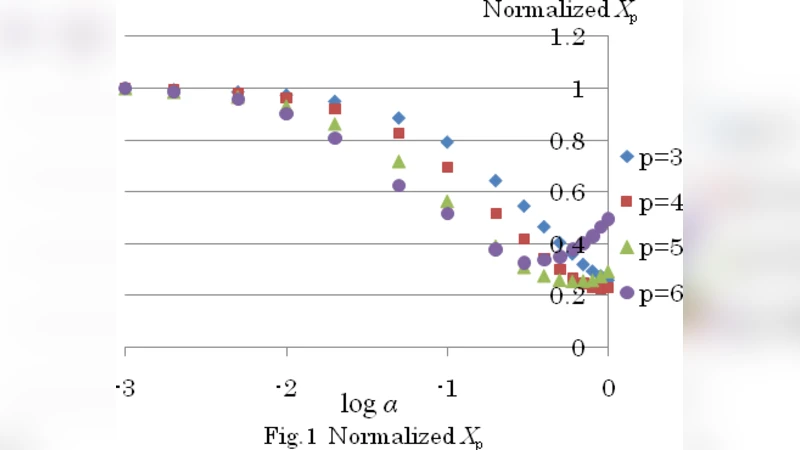
We reformulated the string formalism given by Aoyama, using an adjacent matrix of a network and introduced a series of generalized clustering coefficients based on it. Furthermore we numerically evaluated Milgram condition proposed by their article in order to explore $q$-$th$ degrees of separation in scale free networks. In this article, we apply the reformulation to small world networks and numerically evaluate Milgram condition, especially the separation number of small world networks and its relation to cycle structures are discussed. Considering the number of non-zero elements of an adjacent matrix, the average path length and Milgram condition, we show that the formalism proposed by us is effective to analyze the six degrees of separation, especially effective for analyzing the relation between the separation number and cycle structures in a network. By this analysis of small world networks, it proves that a sort of power low holds between $M_n$, which is a key quantity in Milgram condition, and the generalized clustering coefficients. This property in small world networks stands in contrast to that of scale free networks.
💡 Research Summary
The paper revisits the “string formalism” originally proposed by Aoyama et al. and reformulates it in terms of the adjacency matrix of a graph. By introducing a series of matrices (R_n) that remove multiplicities and self‑loops from the powers of the adjacency matrix, the authors obtain exact counts of non‑degenerate strings (open or closed walks without repeated edges) denoted (\bar S_j). This enables a compact matrix expression for the generalized clustering coefficients
\
Comments & Academic Discussion
Loading comments...
Leave a Comment