NESVM: a Fast Gradient Method for Support Vector Machines
Support vector machines (SVMs) are invaluable tools for many practical applications in artificial intelligence, e.g., classification and event recognition. However, popular SVM solvers are not suffici
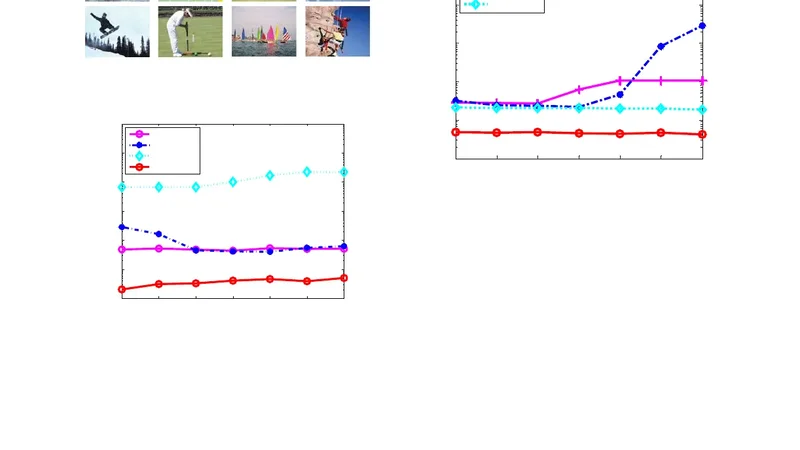
Support vector machines (SVMs) are invaluable tools for many practical applications in artificial intelligence, e.g., classification and event recognition. However, popular SVM solvers are not sufficiently efficient for applications with a great deal of samples as well as a large number of features. In this paper, thus, we present NESVM, a fast gradient SVM solver that can optimize various SVM models, e.g., classical SVM, linear programming SVM and least square SVM. Compared against SVM-Perf \cite{SVM_Perf}\cite{PerfML} (its convergence rate in solving the dual SVM is upper bounded by $\mathcal O(1/\sqrt{k})$, wherein $k$ is the number of iterations.) and Pegasos \cite{Pegasos} (online SVM that converges at rate $\mathcal O(1/k)$ for the primal SVM), NESVM achieves the optimal convergence rate at $\mathcal O(1/k^{2})$ and a linear time complexity. In particular, NESVM smoothes the non-differentiable hinge loss and $\ell_1$-norm in the primal SVM. Then the optimal gradient method without any line search is adopted to solve the optimization. In each iteration round, the current gradient and historical gradients are combined to determine the descent direction, while the Lipschitz constant determines the step size. Only two matrix-vector multiplications are required in each iteration round. Therefore, NESVM is more efficient than existing SVM solvers. In addition, NESVM is available for both linear and nonlinear kernels. We also propose “homotopy NESVM” to accelerate NESVM by dynamically decreasing the smooth parameter and using the continuation method. Our experiments on census income categorization, indoor/outdoor scene classification, event recognition and scene recognition suggest the efficiency and the effectiveness of NESVM. The MATLAB code of NESVM will be available on our website for further assessment.
💡 Research Summary
The paper introduces NESVM, a fast gradient‑based solver for support vector machines that achieves the optimal accelerated convergence rate of O(1/k²) while maintaining linear‑time per‑iteration complexity. The authors begin by observing that most widely used SVM solvers either operate on the dual problem (e.g., SVM‑Perf) with a sub‑optimal convergence bound of O(1/√k) or employ stochastic sub‑gradient methods (e.g., Pegasos) that converge at O(1/k). Both approaches become prohibitively slow when the training set contains hundreds of thousands of samples and the feature space is high‑dimensional.
To overcome these limitations, NESVM follows a three‑step design. First, the non‑differentiable components of the primal SVM objective—namely the hinge loss and the ℓ₁‑norm regularizer—are smoothed using Nesterov’s smoothing technique. The hinge loss max(0, 1 − yᵢ wᵀxᵢ) is replaced by a maximization over an auxiliary variable αᵢ∈
📜 Original Paper Content
🚀 Synchronizing high-quality layout from 1TB storage...